Long before he was a Louisiana state legislator, a three-time U.S. Senate candidate, or the longtime editor of Central City News, Woody Jenkins was a barefoot kid in Rougon, a small community in Pointe Coupee Parish, growing up in a rented farmhouse with no indoor bathroom — until his mother, who'd grown up in the city, put her foot down.
A Louisiana Childhood, and the Notebook That Changed Everything
By Lynn Matthews - July 19, 2026
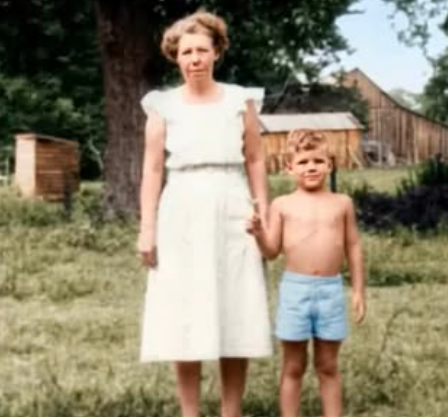
What follows, in Jenkins' own words, is the story of that childhood — and of the simple, disciplined method his father taught him for schoolwork, one that would carry him from a one-room rural classroom all the way to co-valedictorian of Baton Rouge's Istrouma High School, and later through LSU and LSU Law School.
It's a story about a mule-drawn sled, a converted school-bus grocery store, and a father who never had to spell out the rules — because his son already knew what was expected of him.
ROUGON — Growing up on the island side of rural Pointe Coupee Parish in the early 1950's, I was barefoot most of the time. We rented our modest little farmhouse from Mr. Pete Samson, a kindly Cajun farmer who spoke little English. The house was $20 a month. We were poor, I suppose, but I had no concept like that in my head. I knew we raised chickens and my daddy had a beautiful garden. I could ride Mr. Pete's mule-drawn sled and every once in awhile, Mr. Pete would let me ride his mule!
When we rented the house, there was a pump and an outhouse out of doors but no indoor bathroom. We did have running water in the kitchen from the cistern. My mama grew up in the city (Houston) and couldn't live like that. So my daddy told Mr. Pete we needed running water and a bathroom. Mr. Pete said he would pay for the materials if daddy would handle the labor. A couple of weeks later, we were living like city folks!
We lived on a gravel road, and it was rare for a car to pass. When one was coming, you could see its dust in the distance. If I was on the front porch, I would holler for Mama to come see who it was. Once a week, an old school bus came by. It had been converted into a mobile food store. It made products more available to us, which was important because daddy drove our only car to work in Baton Rouge. Also once a week, the Pointe Coupee Parish bookmobile came by, and my mama and I would pick out a few books.
I was an only child, and there were no other children living near us. I had my own cow named Susie and a calf named Suzette. I fed them and milked Susie, but by age five I spent most of my time with my dog Blackie deep in the woods behind our house. There were dangers in the woods from wild cattle, wild boar, and giant snakes. As far as I know, we were the only family around there that wasn't Cajun.
My parents gave me only one rule: Be home for supper. There were other rules too, lots of them, but my daddy never told me what they were. "Son, you're smart enough to know what the rules are!" He was right. Even though he never told me the rules, I knew what he expected.
My mother and father each finished the 11th grade, the requirement for high school graduation in the 1930's and early 1940's. My daddy fought in World War II and was badly injured in combat. He was a real man and could do anything.
TV hadn't yet reached Baton Rouge, much less Rougon. At night, we listened to all the popular radio shows of the day, such as the Lone Ranger, Gunsmoke, Ozzie and Harriett, Jack Benny, Edgar Bergen, Father Knows Best, Dragnet, and the Green Hornet. My mother read me Golden Books like Frosty the Snowman, The Little Red Hen, and Peter Rabbit. I loved 1,001 Arabian Nights. I never had any interest in trying to read books for myself.
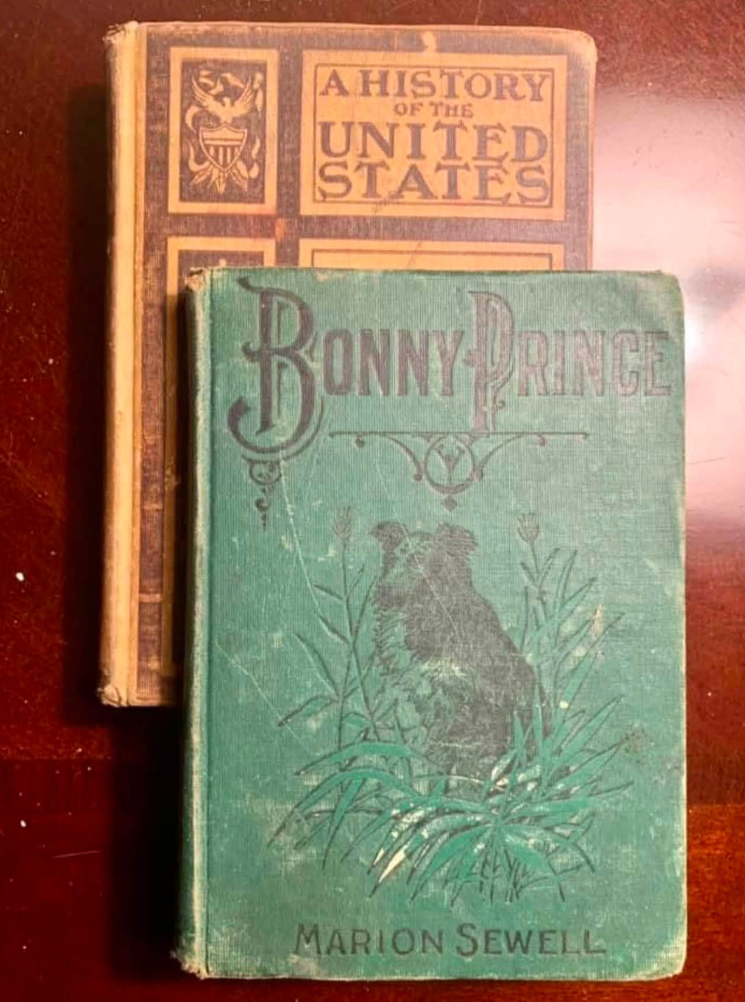
Our house was built in the 1840's. It had mud and straw between boards to fill the cracks. Generations of Cajuns had left a few items in closets and in the attic. In one of the closets, I found two books that I thought were for grown ups. One was called Bonnie Prince and the other was a History of the United States. They interested me more than the Golden Books and became my companions. I carried them around and enjoyed looking at the pictures.
In September 1952, the school bus for Rougon High School picked up my mother and me and carried us to the school to register me for the first grade. There was no kindergarten. I never even heard the word. The teacher looked at my birth certificate and said, "Oh no, Mrs. Jenkins, your son is only five years and nine months old — too young to enter first grade." I wanted to go to school and cried so hard that the teacher went to the principal to see if he would let me in early. No, he said, the rules were the rules!
I could hardly wait for the next September to roll around. In the summer of 1953, my mother said I was ready to learn to read. Plus it would give me a head start on school. She used the Golden Books to teach me the alphabet and how to sound out words. By then, she had read the Golden Books to me many times. I knew the stories by heart and could probably have recited them word for word.
Bonnie Prince was a lot more difficult, and it was very hard for me to sound out the letters and try to understand their meaning.
For nearly three weeks, we worked on reading. The night before school started, I stayed up late and was able to read Bonnie Prince by myself from cover to cover, although there were many words I didn't understand. I remember the exhilaration of finishing reading my first book!
My first day at school was one of the worst days of my life! I'll save that story for another time. The second day was much better.
On the second day, I heard the teacher talk about taking tests and getting grades. She talked about making A's and making F's. That night I asked my daddy what it all meant. He explained it.
I said, "Daddy, I want to make all A's! How can I do it?" He said, "Son, you're a smart boy! You can definitely make all A's! I'm going to tell you exactly what to do. If you do what I say, I'm sure you'll be the only boy to make straight A's but there might be some girls who do too."
He ended up being right!
Daddy bought me a notebook and said, "Son, I know you can't write very well yet, but you will soon. What I want you to do is learn to take notes from what the teacher says. If she says something important, write it down in your notebook, even if it's only a word or two to help you remember. As you learn to write, write everything in your notebook."
"Take pride in your penmanship. It is a statement about your attention to detail and your organization. Be the best in everything including your handwriting."
He said, "If she writes something on the blackboard, copy it into your notebook. If she passes out anything to study, read it and keep it in your notebook!"
"As soon as you get a new textbook, sit down and read it from cover to cover. By the time your teacher gets to a topic in the book, you will already know it. You want to be more than a student. You want to be a scholar!"
"When the teacher asks the class a question and you know the answer, raise your hand and answer the question."
He added, "If she gives you homework, do it when you get home and never go to sleep until you have finished your homework. Be sure to bring it to school the next day. Never fail to do your homework!"
He said, "If the teacher tells you to read something, read it that night or as soon as possible."
He told me, "When you are studying something, never move on to the next thing until you understand the first thing. If you don't understand it, you won't remember it. You can always ask your teacher or your mama or me."
"Find another student who needs help and tutor him. The best way to learn something is to have to teach it. If you can teach it, you know it!"
Finally, he said, "Before every test, go to your notebook and read all your notes. Take a red pen and underline everything that might be important. Remember those key words. Know them and understand them. Practice giving yourself the test. Think what the teacher might ask. Have someone call out words or ask questions."
"After the teacher grades your paper or a test, always ask for it back. Keep it! Study it to see what you did right and what you did wrong. Keep all of your graded papers or tests in your notebook, and never throw away your notebook!"
He told me, "If you do all these things, you will be ahead of everyone else. Even if they are smarter than you are, you will make better grades."
Once or twice a year, my daddy would remind me of the rules he had taught me.
Day after day, month after month, year after year, I kept a notebook and I made good notes. I wrote everything in my notebook. Soon I had a notebook for each course, then a big binder. I did my assignments and turned them in on time. I read what I was told to read. I reviewed for tests. I answered questions in class. The teachers knew I had studied because I knew the answers in class and at test time.
As my daddy had said, there were always a few girls in class who were equally diligent but seldom any boys who were.
By the 4th, 5th and 6th grades, I was at Fairfields Elementary School in Baton Rouge. They had football, basketball, and track teams and lots of organizations to join. I participated in almost everything. That never hurt my grades at all. By then, my study habits were good and homework seldom took more than an hour or two.
But no matter what time I had to get up, I never went to sleep until I had done my work for school.
I always looked forward to tests, because they were a chance to show what I had learned.
I attended Jefferson Military Academy in the 7th grade, Prescott Jr. High in the 8th grade, St. Francisville High in the 9th grade, and then Istrouma High for the 10th, 11th, and 12th grades. All of these schools offered great opportunities, both in the classroom and in extracurricular activities. I took full advantage of them.
Istrouma was rich beyond imagination. It was the largest high school in the state with 1,900 students in the 10th, 11th, and 12th grades. It offered so many opportunities to excel academically, athletically, and in extracurricular activities.
Although Istrouma was very competitive, I managed to graduate as co-valedictorian of my 535-member Istrouma High Class of 1965 with a 4.0 average. We had a full array of honors courses, and I took all the honors courses that would fit on my schedule. Unlike today, you got no extra points for honors or AP courses. 4.0 was the best you could get!
Looking back, I believe my father's formula was the key to my academic success. It kept me one step ahead of the game at all times. It taught me work habits that could lead to success anywhere.
Unfortunately, we had a fire right after my senior year and my notebooks were destroyed.
At LSU, I kept one binder for each semester. I put everything in it. I still have those binders — one for each of the eight semesters and two summer schools I was in college and one for each of the six semesters I was in the LSU Law School.
Anyone can do well in school and maybe even make Straight A's if they follow the simple formula my daddy gave me. It's very hard work, but it will help prepare you for a lifetime of success.
Have a correction or tip? See our corrections policy or contact the newsroom.
Comments
to join the discussion.
Loading comments...