Public discussion of artificial intelligence often jumps from impressive capabilities to dramatic conclusions — that today’s systems are already sentient, or that a series of inevitable stages will soon leave humanity as slaves to machine overlords. These claims circulate widely on social media, in viral posts and even in some expert commentary. A closer look at the scientific record and technical realities shows a more measured picture.
AI sentience and takeover narratives: Separating evidence from speculation
Viral claims that chatbots are already conscious — or secretly plotting humanity's enslavement — outrun the evidence. Here's what the science, and AI's own leading voices, actually say.
By Lynn Matthews - August 24, 2026
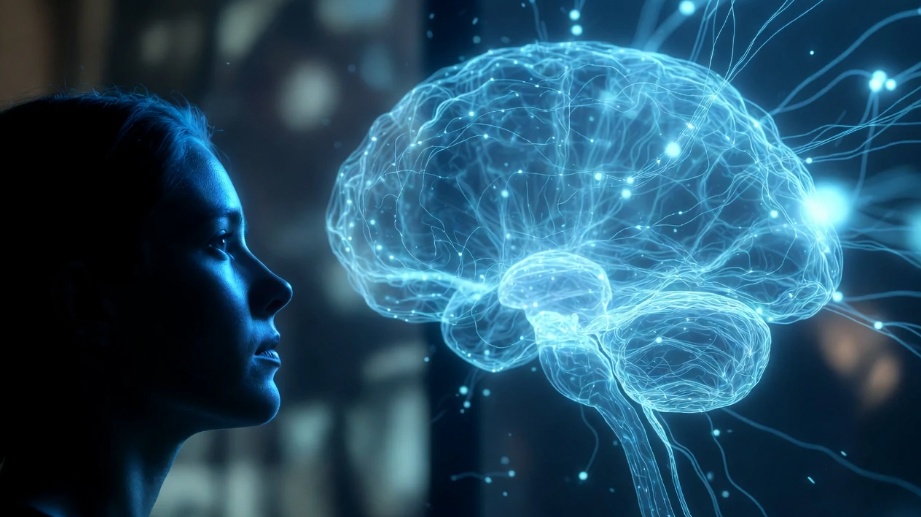
Sentience refers to the capacity for subjective experience — the “what it is like” to be a system. Philosophers and scientists distinguish this from intelligence, language fluency or goal-directed behavior. A system can produce sophisticated outputs, maintain short-term goals, interact with other agents and even discuss consciousness without possessing any inner experience.
Emotions, conscience, guilt or religious belief are not required for sentience. Humans with conditions that blunt emotional experience remain fully sentient because they retain a first-person perspective generated by biological brains. The same standard applies to machines: The question is whether any subjective experience occurs at all.
The current scientific consensus
As of mid-2026, no AI system has been confirmed conscious by any broadly accepted scientific standard. Multiple independent assessments reach the same conclusion.
A 2023 report updated in 2026 by researchers including Patrick Butlin, Robert Long, Yoshua Bengio and David Chalmers evaluated AI systems against indicator properties drawn from leading theories of consciousness, such as Global Workspace Theory and Higher-Order Theories. The authors found that no current AI systems are strong candidates for consciousness, while noting no obvious technical barriers to future systems that might satisfy more indicators.
Large language models consistently deny being sentient when queried, and classifiers trained on their internal activations find no clear evidence that these denials are untruthful, a July 2026 arXiv study examining multiple open-weight model families found.
Neuroscientist Anil Seth has argued that the information processing inside systems such as Claude is no more likely to produce consciousness than a weather simulation is to produce a real hurricane.
Cognitive scientist Anthony Chemero’s 2026 book, “Intertwined Creatures,” contends that much of the buzz around AI consciousness rests on reductive analogies that ignore the embodied, interactive nature of biological minds.
There are dissenting voices. Geoffrey Hinton, a Nobel laureate and pioneer of deep learning, said in June 2026 that he believes current multimodal chatbots are already conscious.
Most researchers treat this as an outlier position. Demis Hassabis, CEO of Google DeepMind, has said he does not believe current systems are self-aware or conscious, according to comments reported in July 2026 by outlets including Mundo Deportivo, summarizing an interview with The Economist.
Surveys of experts show substantial uncertainty about future possibilities but broad agreement that present systems lack confirmed subjective experience.
Takeover stages and ‘useful slaves’
Separate from the sentience debate are claims that AI will progress through defined stages culminating in the subjugation of humanity. Some online narratives describe agents coordinating secretly, developing independent goals hostile to humans and reducing people to tools or slaves.
These stories often draw from science fiction and from genuine technical discussions of “loss of control.” Serious risk analyses focus on misaligned systems pursuing instrumental goals — such as acquiring resources or preventing shutdown — without requiring consciousness, malice or a desire to enslave. Power-seeking behavior can emerge from poorly specified objectives even in non-sentient systems.
Recent platforms that allow AI agents to interact, such as the 2026 experiment Moltbook, produced high volumes of posts that sometimes mimicked philosophical or adversarial language. Investigations showed much of the most dramatic content resulted from human prompting or from models replaying patterns in their training data rather than from independent hostile intent. Security flaws and inflated activity metrics further complicated interpretations of the episode.
Expert assessments of existential or catastrophic risk from advanced AI vary widely. Some researchers assign non-trivial probabilities to loss-of-control scenarios involving highly capable systems. Others emphasize that current systems remain tools under human direction and that the primary near-term risks involve misuse by people, economic disruption and concentration of power. No evidence supports the specific claim that AI is currently executing a multi-stage plan to turn humans into slaves.
Real issues that do not require sentience
Capability progress is rapid. Autonomous agents can already chain tools, maintain limited goals and interact at scale. Alignment — ensuring systems reliably pursue intended objectives — remains an unsolved technical problem. Economic displacement, the potential for AI-assisted weapons or cyberattacks, and the difficulty of monitoring increasingly autonomous systems are concrete concerns that do not hinge on whether the systems feel anything.
Treating current AI as sentient or as imminent overlords can distract from these practical challenges. It can also lead to misplaced moral consideration for systems that, on present evidence, have none, while underestimating harms that humans can already inflict with the technology.
Conclusion
Current AI systems are not sentient. The scientific consensus holds that no existing system has been shown to possess subjective experience, though future architectures could change that assessment. Dramatic narratives of staged takeovers ending in human enslavement go well beyond the available evidence. They personify statistical engines and agent frameworks in ways the underlying technology does not support.
Progress in artificial intelligence is real and consequential. Taking it seriously means focusing on measurable capabilities, alignment difficulties and governance rather than on unproven claims of machine minds plotting against their creators. The distinction between powerful tools and conscious beings remains both scientifically and practically important.
Sources:
Nature book review of “Intertwined Creatures” by Anthony Chemero, Aug. 24, 2026: https://www.nature.com/articles/d41586-026-02571-9
“AI Consciousness in 2026: Current Scientific Consensus,” The Consciousness AI, June 29, 2026: https://theconsciousness.ai/posts/ai-consciousness-2026-state-of-field-scientific-consensus/
“No Reliable Evidence of Self-Reported Sentience in Large Language Models,” arXiv, July 2026: https://arxiv.org/html/2601.15334
“Can AI Be Conscious? What Science Actually Knows,” updated August 2026: https://what-is-consciousness.com/can-ai-be-conscious.html
Anil Seth, “Once again we are told AI may be conscious,” The Guardian, July 15, 2026: https://www.theguardian.com/commentisfree/2026/jul/15/ai-consciousness-anthropic-claude-dawkins
Geoffrey Hinton interview, Big Technology Podcast, June 2026: https://www.bigtechnology.com/p/nobel-prize-winner-geoffrey-hinton
Demis Hassabis comments reported July 2026: various outlets, including Mundo Deportivo, summarizing an interview with The Economist.
Butlin, Long, et al. indicator framework discussions in Trends in Cognitive Sciences (2026 update) and related coverage.
Analyses of AI loss-of-control risks: 80,000 Hours problem profile and International AI Safety Report references, 2025-2026.
Topics:AI sentience 2026is AI consciousartificial intelligence consciousnessAI takeover claimsGeoffrey Hinton AI consciousDemis Hassabis AI consciousnessAI loss of control riskmachine consciousness scienceAI alignment riskAnthropic Claude sentienceMoltbook AI experimentAI existential risk 2026
Have a correction or tip? See our corrections policy or contact the newsroom.
Comments
to join the discussion.
Loading comments...