Gov. Gavin Newsom signed Assembly Bill 2624 into law on Aug. 22, capping a fast-moving legislative fight that critics have dubbed the “Stop Nick Shirley Act” — and setting up what is likely to become a real First Amendment court battle in the months ahead.
California's 'Stop Nick Shirley Act' Signed Amid First Amendment Fight
California's new "Stop Nick Shirley Act" bars publishing an immigration worker's info with intent to threaten them — but critics warn even legitimate fraud investigators could face costly lawsuits before ever proving their intent was clean.
By Lynn Matthews - August 30, 2026
AB 2624 does two things. Starting Oct. 1, 2027, it lets immigration-support workers and volunteers who document recent threats enroll in California’s existing “Safe at Home” address-confidentiality program and use a substitute address on public records, a protection previously available to domestic violence survivors, elder abuse victims, and reproductive and gender-affirming care workers.
Second, and more contested, it creates a private right of action against anyone who knowingly publishes a covered person’s image or personal information with the specific intent to either incite imminent great bodily harm likely to occur, or to place them in objectively reasonable fear for their safety. A worker who proves that standard was met can sue for a minimum of $4,000, up to three times actual damages, plus attorney’s fees.
The bill, authored by Assemblymember Mia Bonta — who is married to California Attorney General Rob Bonta — passed the Senate 30-10 and the Assembly 59-19 in its final form.
Who it's named after
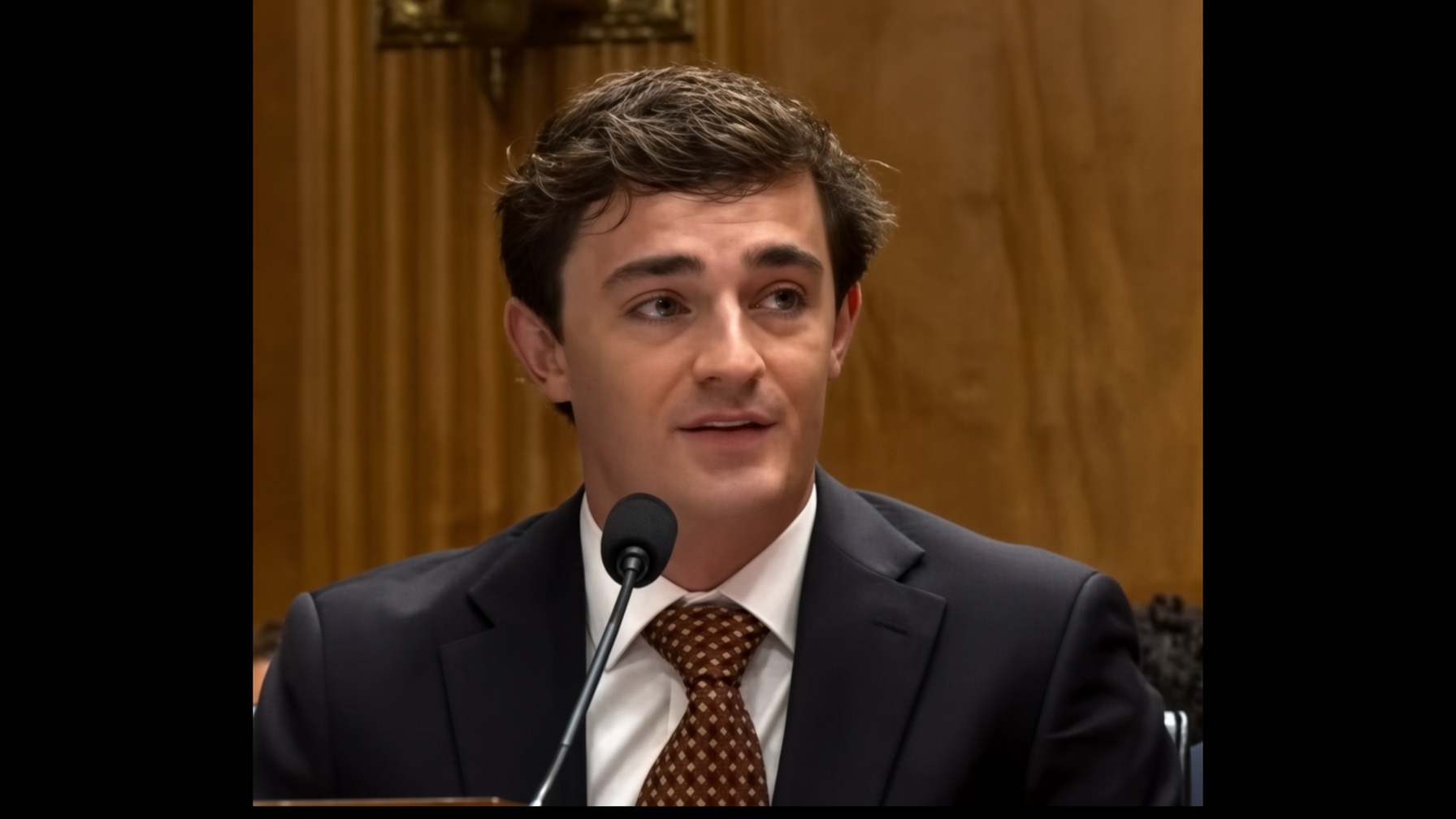
The nickname comes from Republican Assemblyman Carl DeMaio, referring to Nick Shirley, an independent journalist whose door-to-door investigations went viral this year — first exposing alleged fraud at tax-funded Minnesota daycares, then turning to alleged fraud among Los Angeles-area hospices, a story CBS News also separately covered. Shirley’s name does not appear anywhere in the bill’s text. Both Bonta’s office and Gov. Newsom’s office have publicly pushed back on the nickname, calling it a deliberate mischaracterization of what the bill actually does.
Both sides, in their own words
Bonta has said the law does not touch legitimate journalism. “Investigative journalism such as visiting locations, filming in public, publishing reports does not meet that standard and is not touched by this bill,” she wrote in defending the measure. “Doxxing and inciting violence are not journalism.” During floor debate, Assembly member LaShae Sharp-Collins made a similar case: “This is not a game. This is not a social media stunt. And we should not legitimize harassment... Do we stand to be terrorized out of our public service? I think not.”
Shirley and Republican critics reject that framing. “It won’t just affect me, it’s going to affect every citizen that wants to look into potential fraud or just potential waste and abuse inside their own community,” Shirley said at an Aug. 26 rally at the state Capitol. DeMaio has called the law “an unconstitutional direct attack on transparency and the First Amendment.” State Sen. Tony Strickland, R-Huntington Beach, has echoed that argument, framing the fight as one over the public’s right to know how tax dollars are spent.
It’s worth noting: Shirley’s videos do not call for violence against the people or organizations he investigates. His stated argument is that fraud allegations, if substantiated, should lead to investigation and loss of funding — not that anyone should be harmed. AB 2624’s civil cause of action requires proof of specific intent to incite imminent harm or create objectively reasonable fear for safety; it does not turn on whether reporting is unpopular or exposes wrongdoing.
The journalism carve-out that didn't make it in
Earlier drafts of the bill reportedly cross-referenced California’s existing reporter-shield law (Evidence Code Section 1070) explicitly. That reference was later dropped as “redundant,” according to legislative reporting on the bill’s history. Supporters maintain the specific-intent requirement, combined with existing First Amendment doctrine, is sufficient protection for ordinary reporting. Opponents argue the absence of a clean, explicit journalism exemption — combined with the $4,000 minimum statutory damages floor — still invites costly lawsuits over filming or naming workers, regardless of how a case is ultimately decided.
The constitutional question
The law’s intent standard tracks language courts have used for the “true threats” exception to First Amendment protection, an area of law the U.S. Supreme Court most recently addressed in its 2023 decision in Counterman v. Colorado. Similarly narrow anti-doxxing laws protecting specific groups — including, in various states, domestic violence survivors and reproductive-health workers — have generally survived constitutional challenges when written to require genuine intent to threaten or incite, rather than restricting speech based on subject matter alone.
That is the real center of the dispute: whether AB 2624’s standard is narrow enough in practice to avoid sweeping in ordinary accountability journalism. Even under Bonta’s stated reading — that filming in public and publishing reports doesn’t meet the statute’s threshold — critics argue a reporter could still face a demand letter, an injunction fight, or an expensive lawsuit over what a plaintiff claims the reporting was intended to provoke, even if that reporter would likely prevail once a court examined the actual facts. Courts have long recognized that the threat of costly litigation can chill protected speech nearly as effectively as an outright ban, which is why pre-enforcement challenges based on a law’s vagueness or potential for misuse are a well-established category of First Amendment case.
What happens next
The civil cause of action does not take effect until Oct. 1, 2027, meaning no lawsuit can be filed under the new provisions before then — though pre-enforcement constitutional challenges, which don’t require the law to be in effect yet, remain possible sooner. Shirley has said he intends to keep doing his investigative work regardless.
Separately, DeMaio has publicly called on the U.S. Department of Justice’s Civil Rights Division to review AB 2624 and intervene against it in court. Some national Republican figures have voiced support for federal action as well, though the clearest documented, sourced request to DOJ traces to DeMaio himself rather than a verified formal House GOP letter.
Whether the law is ultimately narrowed, struck down, or upheld as written is likely to be decided in federal court in the months ahead.
Sources:
Deseret News/KSL.com, “‘Stop Nick Shirley Act’ passes in California’s Assembly,” Aug. 28, 2026: https://www.deseret.com/politics/2026/08/28/nick-shirley-rally-california-bill-controversy-newsom-signed-ab2624/
The Daily Signal, “‘Stop Nick Shirley Act’ Sparks Showdown at California Capitol,” Aug. 26, 2026: https://www.dailysignal.com/2026/08/26/rally-against-stop-nick-shirley-act/
ABC10, “Nick Shirley rallies at California Capitol against new law aimed to protect hospice workers,” Aug. 25, 2026: https://www.abc10.com/article/news/local/sacramento/nick-shirley-rallies-at-california-capitol-against-new-law-aimed-to-protect-hospice-workers/103-9ca6a3c3-2cae-4224-8ccb-889ed7c87778
WLT Report, “Newsom Signs Controversial ‘Stop Nick Shirley Act’ Into Law, Igniting First Amendment Firestorm,” Aug. 23, 2026: https://wltreport.com/2026/08/23/newsom-signs-stop-nick-shirley-act-ab-2624-first-amendment/
USA Herald, “California AB 2624 Reaches Newsom as ‘Stop Nick Shirley Act’ Journalism Fight Explodes,” Aug. 21, 2026: https://usaherald.com/california-ab-2624-reaches-newsom-as-stop-nick-shirley-act-journalism-fight-explodes/
Townhall, “The Fight Against Gavin Newsom’s Anti-Free Press Law Is Just Getting Started,” Aug. 26, 2026: https://townhall.com/news/amy-curtis/2026/08/26/fight-against-stop-nick-shirley-act-n2681916
Palo Alto Daily Post, “Assembly passes bill critics call the ‘Stop Nick Shirley Act,’” May 27, 2026: https://padailypost.com/2026/05/27/assembly-passes-bill-banning-news-cameras-outside-of-government-funded-immigration-nonprofits-senate-now-will-consider-bill/
Topics:Stop Nick Shirley ActCalifornia AB 2624 First AmendmentNick Shirley investigative journalistMia Bonta AB 2624California Safe at Home immigrationCarl DeMaio AB 2624Newsom signs AB 2624California doxxing law journalistsCounterman v Colorado true threatsCalifornia investigative journalism law
Have a correction or tip? See our corrections policy or contact the newsroom.
Comments
to join the discussion.
Loading comments...