A campaign ad from Los Angeles Mayor Karen Bass went viral this week for an unusual reason: she was explaining, on camera, how city tax dollars turn into campaign cash for her own reelection bid.
The City Pays 6-to-1 for Campaign Cash — While Millions in Homeless Funds Sit Unspent
Mayor Karen Bass's reelection ad touting the city's donation-matching program went viral for the wrong reasons. The program itself has been on the books since 1990.
By Lynn Matthews - August 19, 2026
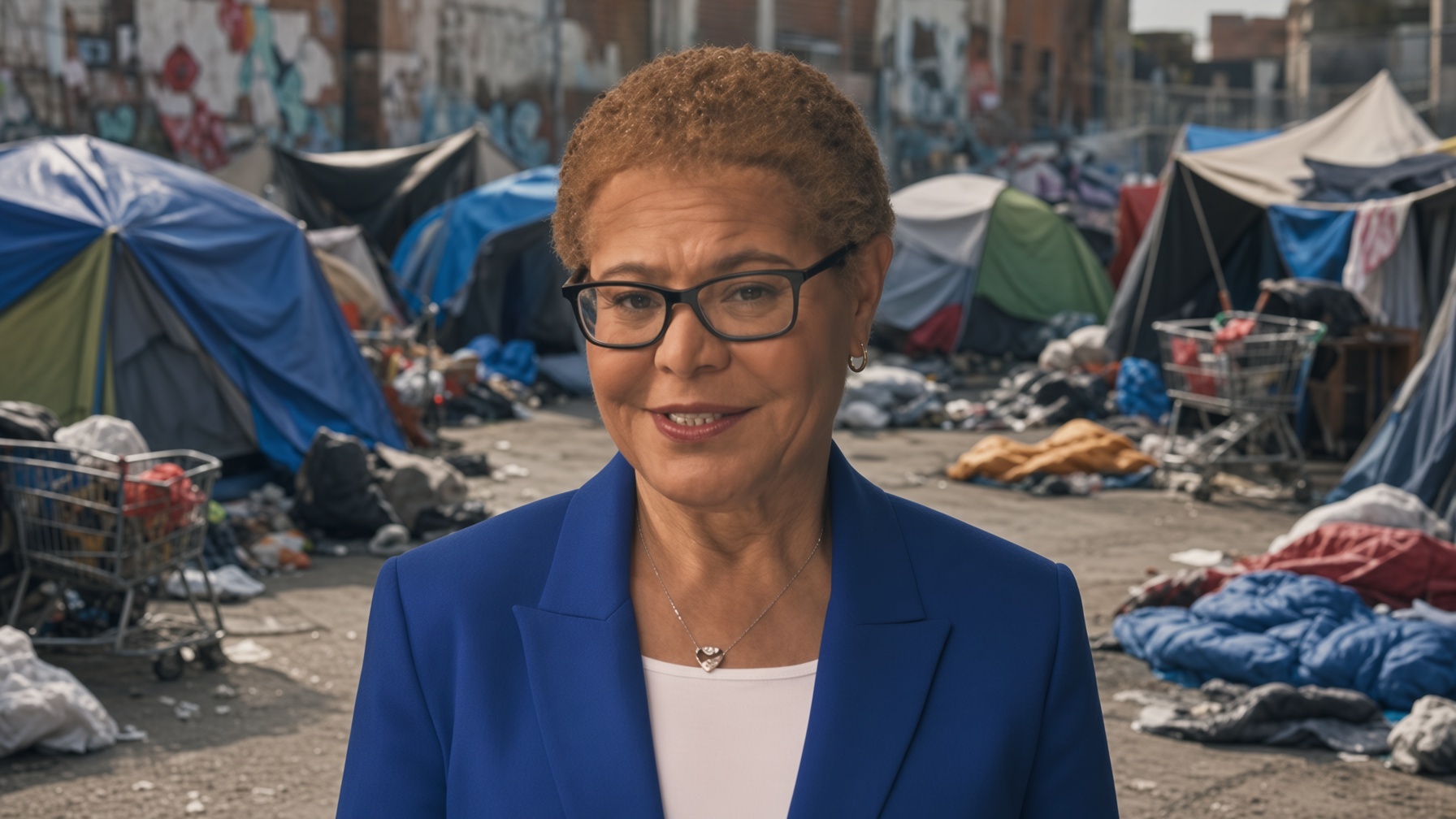
In the ad, posted to her campaign's account on X, Bass explained that the city matches qualifying donations from Los Angeles residents at a 6-to-1 rate, meaning “if you donate $5, the city turns it into $35.”
When you donate to our campaign, the city can match your donation 6 to 1! If you donate $5, the city turns it into $35. Our campaign is powered by YOU!
— Karen Bass (@KarenBassLA) August 18, 2026
Click the link in our bio to make your matching donation today!https://t.co/shTvSCpGGg pic.twitter.com/C4RTvTWIIi
The reaction was swift and sharply critical, drawing responses from national commentators and elected officials alike. Fox News reported that former Trump administration official Richard Grennell called the program “outrageous.” Replies on the post piled up with complaints about street repairs, homelessness and basic services, with critics questioning why the city was funding a sitting mayor's campaign at all.
The program Bass was describing, however, isn't new, secret, or unique to her. Here's what it is, how it works, and where the money actually comes from.
What the Program Actually Is
Los Angeles voters created the city's public matching funds program by ballot measure in 1990 — the same vote that created the City Ethics Commission, which administers it. The goal, as written into the City Charter, was to reduce candidates' reliance on large donors by giving small, local contributions more weight.
In 2019, following a push from the advocacy group California Common Cause, the City Council raised the match rate from a sliding scale as low as 1-to-1 up to a flat 6-to-1 — branded the “Supermatch” program — and lowered the bar for candidates to qualify.
For the 2026 election cycle, the city will match up to $257 of an individual donation to a citywide candidate like a mayoral hopeful, meaning a maxed-out $257 contribution can bring in as much as $1,542 in public funds. Total matching funds per candidate are capped, and only donations from individual Los Angeles residents qualify — corporate and PAC money isn't matched.
What Bass and Her Opponent Have Received This Cycle
Bass's campaign has qualified for more than $675,000 in public matching funds so far this general-election cycle, part of a fundraising haul that's put more than $1.1 million in her campaign account since June.
She isn't the only one drawing on the program. In the same reporting period, her general-election opponent, Councilmember Nithya Raman, received more than $500,000 in matching funds of her own — meaning the same city program critics zeroed in on for Bass is also funding the campaign trying to unseat her.
The Money's Place in a Much Bigger Budget
Bass signed a $14.85 billion city budget for fiscal year 2026-27, including an $8.59 billion general fund. Of that, roughly $788 million is allocated to homelessness response — the issue commenters most frequently invoked while criticizing the matching-funds program.
The city's relationship with that homelessness money has drawn its own scrutiny. A report from the Los Angeles City Controller found that $473 million budgeted for homeless services went unspent in fiscal year 2025, even as the city's unhoused population remained among the largest in the nation.
The matching-funds trust fund itself has also come under budget pressure. Facing a declared fiscal emergency in the 2025-26 budget year, the city withheld its usual annual appropriation into the matching-funds trust fund, relying instead on the fund's existing balance — which the Ethics Commission determined was sufficient to cover elections for several more years — to keep paying out matches like the ones Bass and Raman are now drawing on.
Legal, and Not Unique to LA
The program's legality isn't seriously in dispute. It's written into the City Charter, administered by the Ethics Commission under published rules, and structurally similar to small-donor matching programs long used in cities including New York and Seattle. It's also distinct from a type of public financing the U.S. Supreme Court struck down in 2011 — Arizona's system, which gave a publicly funded candidate extra money automatically whenever a privately funded opponent outspent them. The Court held that model unconstitutional because it penalized one candidate's spending by funding a rival in direct response, but it left ordinary matching-fund programs, like LA's, standing.
The Actual Disagreement
Supporters of the program argue it does what it was designed to do: let ordinary donors' contributions carry real weight, and reduce candidates' dependence on wealthy donors and outside spending groups — which, this cycle, have poured millions into independent expenditure committees backing both major candidates in the race.
Critics argue the money should go elsewhere — or nowhere near political campaigns at all — particularly at a moment when the city has declared fiscal emergencies, left hundreds of millions in homelessness funding unspent, and struggled to fund basic services like street repairs.
Both things can be true at once: the program is legal, has existed for 35 years, and is being used by candidates on both sides of this race — and it's still taxpayer money going into political campaigns rather than the services critics say the city is falling short on. Whether that trade-off is a good one is, ultimately, a question for voters.
Sources:
Fox News — Karen Bass ripped after viral video lays out taxpayer-funded match of campaign donations
LA Ethics Commission — Access to Public Matching Funds Significantly Increased for City Candidates
Common Cause California — Los Angeles Supermatch Public Financing Program
LA Ethics Commission — Contributor Guide, 2026 Elections
Los Angeles Sentinel — Karen Bass Announces Strongest Fundraising Haul of the Entire Campaign
KDH News — LA Mayor Bass outpaces challenger Raman in fundraising
Los Angeles Sentinel — Mayor Bass Signs $14.85 Billion Budget
CityWatch LA — L.A.'s Mayor's Proposed Homeless Budget for Fiscal Year 2026-27 Totals $788 Million
The LA Local — LA sat on nearly half a billion dollars in homelessness funds last year
Oyez — Arizona Free Enterprise Club's Freedom Club PAC v. Bennett
Topics:LA Supermatch programKaren Bass matching fundstaxpayer funded campaignsLA campaign finance6 to 1 matching fundsLos Angeles Ethics Commissionpublic campaign financingNithya Raman matching funds
Have a correction or tip? See our corrections policy or contact the newsroom.
Comments
to join the discussion.
Loading comments...