A growing revolt among University of California faculty over the system's test-blind admissions policy is colliding with a separate, largely unconnected story: mounting evidence that artificial intelligence tools are making it easier than ever for students to cheat on the very coursework, essays and take-home exams that colleges increasingly rely on in place of standardized tests.
UC went fully test-blind in 2020, dropping the SAT and ACT not just as optional but as something admissions readers are barred from considering even when applicants submit scores voluntarily. In the years since, faculty across the system say they've watched a growing share of incoming students arrive unprepared for college-level work. A UC San Diego Academic Senate work group documented a roughly thirtyfold increase between 2020 and 2025 in the share of entering first-years whose math skills tested below high school level — with 70% of those testing below middle school level. Berkeley's own diagnostics found at least a fifth of first-semester calculus students carrying significant math deficits across three consecutive years of testing.
The frustration has produced an unusually large faculty response. More than 1,400 UC faculty members signed a letter this spring calling for the return of the SAT/ACT math requirement for STEM applicants, and the New York Times' editorial board has since publicly urged the system to reverse course entirely, calling the test-blind policy a "terrible mistake." Among the signatories is Randy Schekman, a Nobel Prize-winning molecular biologist who has taught introductory biology at Berkeley since 1976. "I really feel we made a mistake," Schekman told Bloomberg, describing a growing number of students struggling with basic science concepts in his course. The UC Academic Senate has since convened an 18-member committee to formally study the question, with a decision expected from the Board of Regents by mid-2027.
UC isn't alone in reconsidering. Columbia University announced in June that it will require SAT or ACT scores again starting with the 2027-28 admissions cycle — the last Ivy League school to hold onto a test-optional policy, now reversing it after what the university called a multi-year faculty review finding test scores "a useful indicator of potential student success."
The Evidence Schools Chose Instead Is Just as Easy to Fake
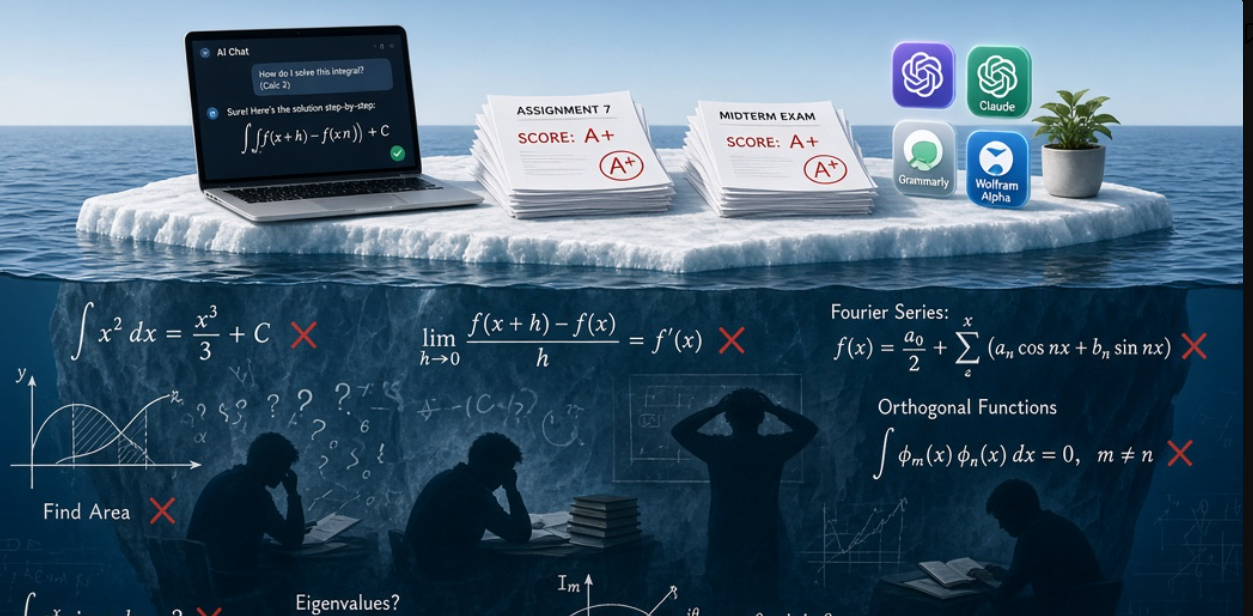
What's largely missing from this debate is a second, related problem: the alternative evidence schools leaned on instead of test scores — essays, homework, take-home exams, unproctored coursework — is proving far easier to fake than anyone anticipated when these policies were adopted.
The clearest example happened on the same campuses now fighting to bring testing back. Last fall, Google quietly rolled out a "homework help" button in its Chrome browser that used Google Lens to scan on-screen quiz and exam questions and generate instant AI-written answers — including during live tests. Professors at UCLA and UC Berkeley were among those who went public with objections, telling the Washington Post the tool made cheating trivially easy. Google temporarily disabled the feature after the backlash, though the underlying Lens and Gemini tools it was built on remain widely available and are not blocked from most school-issued devices.