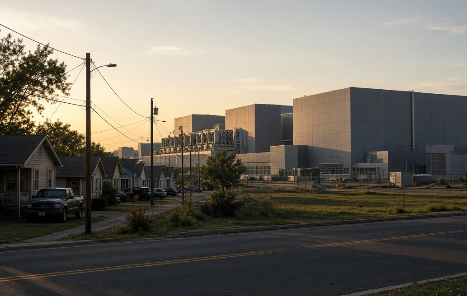
Drive past a new data center going up outside almost any American town right now, and you'll find a fight already underway. Neighbors show up to zoning meetings with printouts about water tables. Social media fills with claims that a single Google search "costs a bottle of water" — a line that usually refers to AI queries, not a web search. State legislators are introducing bills to slow permitting down. The backlash has become its own beat.
Do Data Centers Really Drain Your Water and Power Bill?
Data centers get blamed for water shortages and rising bills. Here's what the numbers actually show — and where the criticism is fair."
By Lynn Matthews - September 1, 2026
Some of it is warranted. Some of it isn't. Most of it skips the numbers entirely. Here's what's actually true.
The water number is real — but it's rarely put in context
The headline figure critics cite isn't made up: a single large data center can draw up to 5 million gallons of water a day for evaporative cooling, roughly what 16,000 households use, according to Business Insider's reporting on Meta's Mesa, Arizona, campus and Microsoft's original Goodyear, Arizona, plans. Nationally, U.S. data centers used about 17.4 billion gallons of cooling water in 2023, according to Lawrence Berkeley National Laboratory figures cited by the MOST Policy Initiative, with that figure projected to reach 38 billion to 73 billion gallons by 2028.
In fast-growing hubs like Phoenix, the demand curve is steeper still. A Ceres report, "Drained by Data," projects on-site cooling demand there could jump from about 385 million gallons a year to 3.7 billion — an 870% increase — as more facilities come online. Grist's coverage of the same region notes that even Ceres' high-end Phoenix estimate works out to roughly 1% of the metro area's residential water use, with agriculture still consuming far more.
That's a real number, and residents in drought-prone regions are right to ask questions about it. But it's almost never weighed against anything else the region actually uses water for. Nationally, golf courses still consume more water than data centers do, even counting the water tied up in generating the electricity a data center runs on. A NapkinQuest analysis built on LBNL and golf-industry figures puts golf's consumed water at roughly 425 billion gallons a year against data centers' 228 billion when indirect electricity-water use is included — or as much as 24 times more when comparing direct water draw alone. Nobody's protesting the 15th hole.
Two caveats belong next to that comparison. First, it's a national, present-day snapshot: golf's water use is flat to declining, while data centers' is rising fast — NapkinQuest's own analysis warns the gap is closing. Second, on-site cooling is only part of the footprint; the thermal power plants that generate a data center's electricity use plenty of water too.
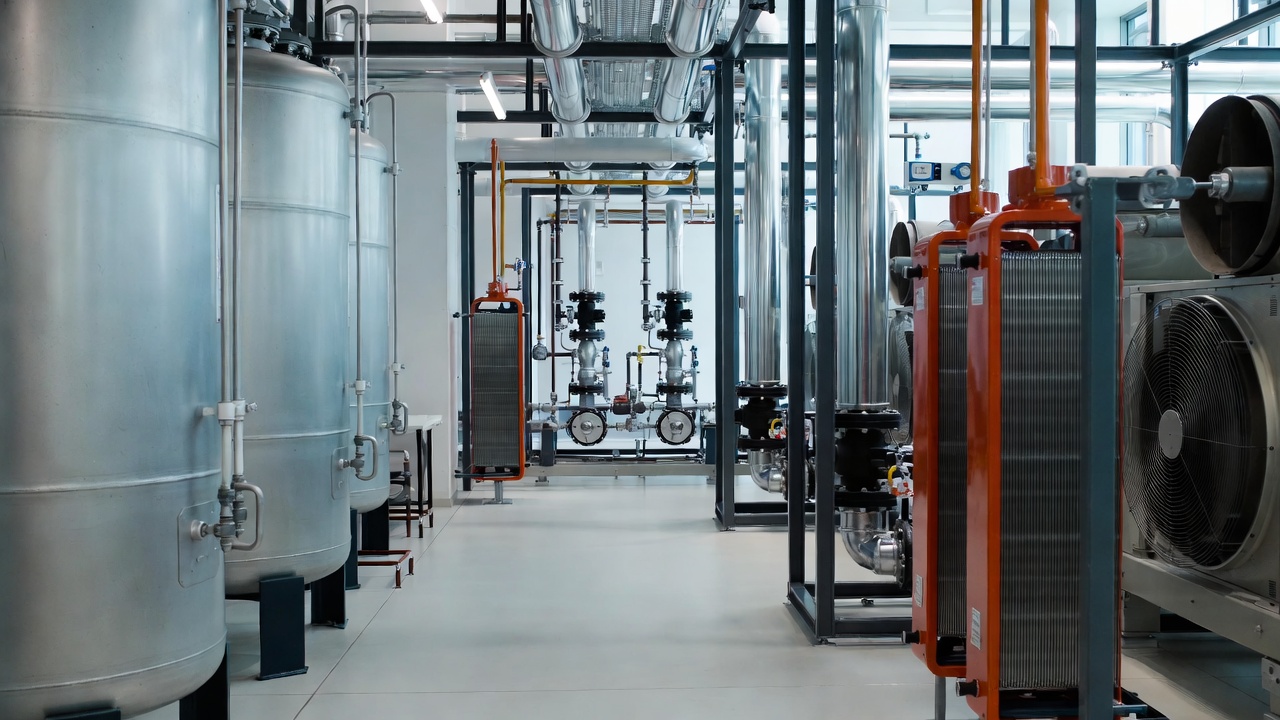
What rarely makes it into the angry social media post: the industry is already moving off the water-hungry evaporative cooling that produced those scary numbers in the first place. Microsoft says its newest closed-loop campuses — the same water recirculated instead of evaporated — use about as much water annually as a single restaurant, a comparison CEO Satya Nadella made and PCMag reported on. The company says it has cut its water usage effectiveness from 2.3 liters per kilowatt-hour to 0.27 through new direct-to-chip, closed-loop designs with no evaporative cooling in day-to-day operations. Oracle has announced similar sealed-loop builds, with its Project Jupiter campus averaging about 20,000 gallons a day, capped at 60,000 — and none of it drawn from local drinking supplies for cooling. Vantage Data Centers reports its Wisconsin campus uses about 22,000 gallons a day with closed-loop cooling, versus roughly 5 million gallons a day for a comparable evaporative-cooled facility — a 227-fold difference.
None of that makes every existing plant water-cheap; older evaporative-cooled facilities are still running, and they still draw millions of gallons a day. But "data centers will strip the world dry" is a claim that doesn't survive contact with the newer designs already being built.
The electricity story is more complicated, and less flattering
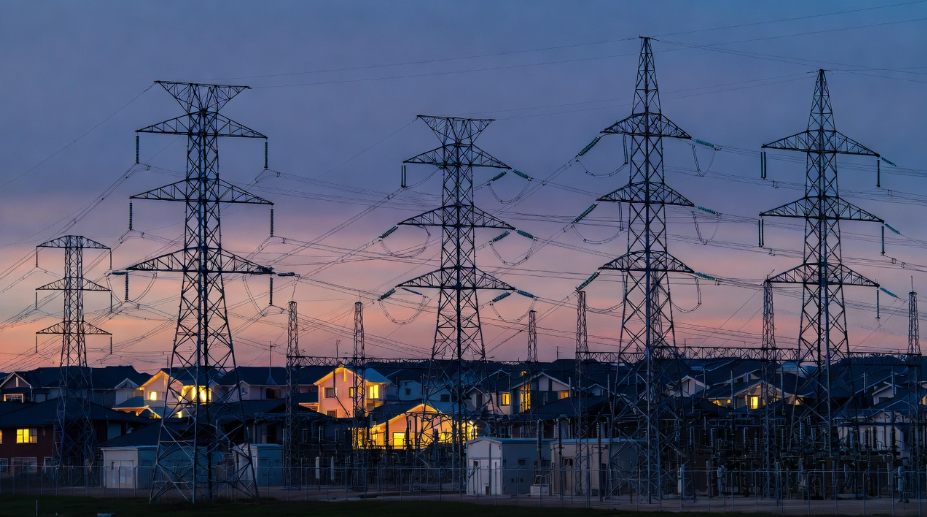
This is where the critics have the stronger case, and it's worth saying plainly: data centers are a real driver of rising electricity costs in the places where they're concentrated. In Virginia — the densest data center market in the country — wholesale prices at grid nodes near data center clusters have climbed as much as 267% over five years, according to Bloomberg's analysis of Grid Status and DC Byte location data. That's a wholesale figure, not a residential one — a WRAL fact-check rated a claim that conflated the two as "Mostly False," noting national residential electricity costs rose about 42% over the same five years, per U.S. Energy Information Administration data. Wholesale supply costs are only 30% to 50% of a typical bill.
The pass-through is still real enough to notice. Dominion Energy's fuel expenses in Virginia are up roughly 88% since 2021, Reuters reported, and Manassas homeowner John Steinbach told Consumer Reports his bill jumped from about $100 to $281 in January — "so far beyond any bill that I've ever had," he said, worrying rates would keep climbing "as the outsized electricity demand from AI data centers grows." A Consumer Reports survey of 2,146 U.S. adults found 78% at least somewhat concerned that new data centers will push their own household bills up. Pew Research found more Americans call data centers' effect on home energy costs mostly bad (38%) than mostly good (6%). That worry isn't irrational: generator interconnection queues nationwide still held roughly 1,312 gigawatts of proposed generation capacity at the end of 2025, according to LBNL's "Queued Up" report — a backlog that eased only slightly from the year before.
That's not a myth. It's the strongest argument critics have. Where the conversation usually goes wrong is treating every electricity price increase as a data center problem — inflation, aging grid infrastructure and fuel costs are pushing bills up in plenty of places with no data center in sight — and skipping past the regulatory pushback already underway. Virginia's State Corporation Commission approved a new large-load rate class, GS-5, for customers using more than 25 megawatts, effective January 2027, requiring those customers to pay a minimum of 85% of their contracted distribution and transmission demand and 60% of generation demand — plus sign 14-year contracts — specifically so build-out costs don't land entirely on residential bills. (A separate Dominion rate case this year raised typical residential bills by $11.24 a month, a cost tied to the utility's broader spending, not the GS-5 class itself.) It's a genuine tradeoff, not a hoax, and it deserves to be litigated town by town rather than settled by slogan.
The money is real, and it's landing somewhere
The number critics don't like to bring up: data centers pay. DeKalb, Illinois, has collected $72 million in additional property tax revenue since Meta's data center there went online, according to reporting from IPM Newsroom and WNIJ, with most of it going to schools. That revenue helped build the Dr. Leroy A. Mitchell Elementary School, which opened last year serving 400 kids. "The economic impact has been beyond our wildest dreams," City Manager Bill Nicklas said. Aurora, Illinois, pulls in roughly $1 million a year in utility tax alone from a single 98-megawatt facility, WGLT reported.
It's also true that the jobs pitch gets oversold. Data centers are capital-heavy, not labor-heavy — a facility that costs a billion dollars to build might permanently employ a few dozen people once construction wraps, and researchers have found little evidence that data centers spark broader local tech-job growth the way a new manufacturing plant might. That's a fair complaint, and it's the one that should actually be part of every zoning negotiation: not "will this bring jobs," but "what tax terms are we getting, and for how long."
So — good or bad?
Neither, cleanly. Data centers are physical infrastructure with physical costs, the same way a power plant or a highway is, and pretending otherwise — in either direction — is how these fights turn into shouting matches instead of negotiations. The water fear is overstated and aging, tied hardest to evaporative cooling the industry is already replacing in new builds. The electricity fear is mostly legitimate and worth pushing state regulators hard on. The tax revenue is real when the deal is structured well, and communities that treat it as free money without spelling out the terms are the ones who end up feeling burned.
What doesn't hold up is the version of this story that shows up in comment sections — that a data center is a silent monster draining a town's water and lights for nothing in return. It isn't nothing. It's a tradeoff. The places doing this well are the ones asking hard questions about the actual terms, not the ones running the developer out of town on a rumor.
Sources:
Business Insider, "How Data Centers Are Deepening the Water Crisis" (2025)
MOST Policy Initiative, science note on data center water use, citing LBNL (2026)
Ceres, Drained by Data: The Cumulative Impact of Data Centers on Regional Water Stress
Grist, "Arizona's water fight with data centers and semiconductors"
NapkinQuest, "Golf uses more water than data centers"
PCMag, "Microsoft CEO: New Data Centers Use the Same Amount of Water as a Restaurant"
Microsoft, "Inside Microsoft's Two-Decade Push to Cut Water Intensity While Scaling for Growth" (June 2026)
Oracle, "Closed-Loop Cooling in Oracle AI Data Centers" and "Project Jupiter Water Facts"
Vantage Data Centers, "Cooling Without the Drain: How Closed-Loop Systems Cut Day-to-Day Water Use" (April 2026)
Bloomberg, "Eye-Popping Power Prices Show AI's Cost to Consumers" (Sept. 30, 2025)
WRAL, fact-check on data center electricity bill claims (June 2026)
Reuters, "Virginia Data Center Boom Pushes Dominion Deeper Into Costly Power Market" (Aug. 11, 2026)
Consumer Reports, "AI Data Centers: Big Tech's Impact on Electric Bills, Water and More"
Consumer Reports, survey on Americans' skepticism of Big Tech's AI energy cost pledges (June 23, 2026)
Pew Research Center, "How Americans View Data Centers' Impact in Key Areas" (March 2026)
American Action Forum, "Virginia's New Data Center Electricity Rate Class"
Lawrence Berkeley National Laboratory, Queued Up: 2026 Edition
IPM Newsroom / WNIJ, "DeKalb and Aurora Are Flush With Data Center Cash. They Differ in How to Spend It."
Topics:data center water usagedata centers electricity billsdo data centers use a lot of waterdata center water usage mythAI data center water crisisdata center tax revenueclosed-loop cooling data center
Have a correction or tip? See our corrections policy or contact the newsroom.
Comments
to join the discussion.
Loading comments...