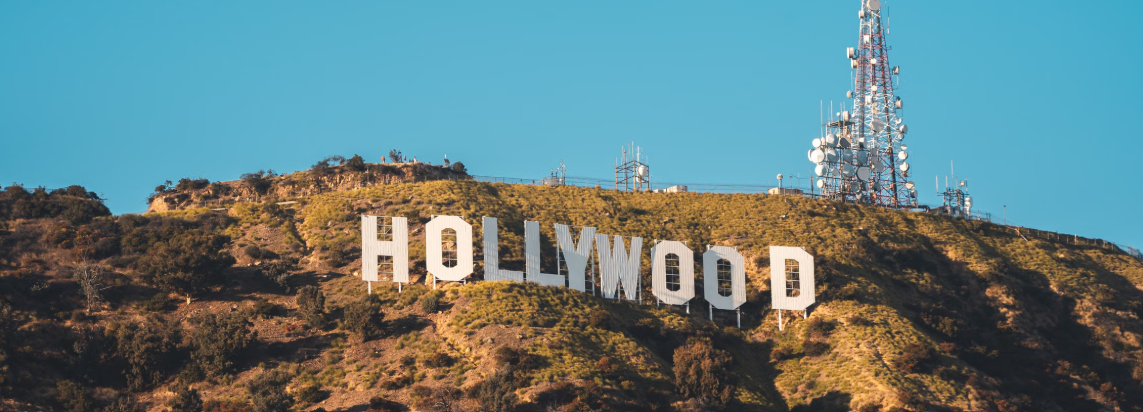
For decades, the movie and television business has operated on an assumption nobody bothered to argue for anymore: that the industry has to be in California. Not just headquartered there for tax or legacy reasons, but physically rooted there, with the writers, actors, executives, and studios all working inside the same small cluster of zip codes. California's grip on Hollywood was never written into law. It became self-reinforcing instead, one generation of industry insiders training the next inside the same neighborhoods, until leaving felt unthinkable rather than merely inconvenient.
David Ellison may be about to test whether that grip was ever load-bearing, though what he's actually proposing so far is narrower than a full industry exodus.
The Deal at the Center of It
Ellison, the CEO of Paramount Skydance and son of Oracle co-founder Larry Ellison, is trying to close a roughly $111 billion acquisition of Warner Bros. Discovery, structured as an $81 billion equity deal that Warner Bros. Discovery shareholders approved in April. If it closes, it would combine two of the largest studio-and-cable operations in the country under one roof, giving Ellison control of one of the largest studio-and-news combinations in modern Hollywood.
California Attorney General Rob Bonta is leading a coalition of 12 states suing to block the merger, arguing, in his words, that it would create an unprecedented concentration of power over what Americans watch. Those 12 states are led by Democratic attorneys general, which doesn't prove Ellison's later claim that the fight is really about CNN and politics, but it does explain why he's making that claim.
What often gets left out of the coverage: the deal has already cleared every regulator that has ruled on it so far. The Justice Department approved the merger in June. The European Commission cleared it in July, with conditions attached (Paramount has to exit its European film-distribution joint venture with Universal). The UK’s Competition and Markets Authority cleared it in August, with its own binding commitments. A Republican-appointed DOJ signed off; a Democratic-led coalition of 12 state attorneys general is the piece still standing in the way. Separately, the Writers Guild of America has filed its own lawsuit.
Labor is a live part of this fight, not a footnote to the antitrust case.
Then Ellison Raised Leaving
In a meeting with Paramount's leadership, Ellison floated moving the company's operations out of California. Reporting since then has described a short list rather than a locked decision, with Tennessee the most discussed option because of the family's own overlap there (his father's company, Oracle, is relocating its headquarters to Nashville), but with Texas also actively courting Ellison and Georgia mentioned as well. Multiple outlets have reported the idea was framed internally as a contingency plan rather than a finished decision, and Ellison himself has talked about a staged, multi-year process rather than an overnight move.
Bonta did not treat the idea as a business decision. He called it “another attempt to blackmail the state into letting an illegal deal through” and said flatly that it “won't work.” Ellison responded in a New York Times guest essay published August 4, arguing California's opposition has less to do with antitrust law and more to do with politics and unease over his family's ties to CNN, which the merger would bring under his control. Worth noting: Paramount already relocated its own corporate headquarters once before, from New York to Los Angeles, when the Skydance merger closed in August 2025. That history cuts both ways. It undercuts the idea that a California base was Hollywood's destiny, and it also undercuts the idea that packing up and leaving is simple.
The Deadline Doing the Real Negotiating
Whatever the rhetoric, money is what's actually moving this toward resolution. CNN, citing the Wall Street Journal, has reported the two sides are now in advanced settlement talks, though it wasn't a straight line getting there: Bonta canceled an earlier round of talks in August, accusing Paramount of leaking details and playing games. An October 1 deadline is now looming. If the deal isn't resolved by then, Paramount starts owing roughly $7 million a day in fees to Warner Bros. Discovery shareholders, not the other way around.
That deadline doesn't force a resolution by itself. A separate, court-ordered settlement conference is set for late October, after the fee clock has already started running. The Oct. 1 date starts the meter. The settlement conference is where an actual deal, if there is one, gets worked out.
The fee pressure appears to be reshaping the politics inside California itself. Los Angeles Mayor Karen Bass has publicly urged Bonta to engage in settlement talks, and Governor Newsom has pushed for a deal as well, both wary of what a Paramount exit would mean for the state's jobs and tax base. New York and Connecticut, two of the other states in the antitrust coalition, aren't under the same pressure. They have no relocation threat hanging over them, and they're reportedly holding out for tougher concessions than California appears willing to accept.