Campers at a site near Cheboygan, Michigan, this week faced an unusually tough combination: thick smoke from Canadian wildfires and intense mosquito swarms.
Double Whammy at a Cheboygan Michigan Campsite:
Wildfire Smoke and Heavy Mosquito Swarms
By Lynn Matthews - July 17, 2026
The air turned hazy and carried a strong campfire scent as smoke drifted south from active fires in Ontario and northern Minnesota. Air quality alerts (link-to-alert) covered northern Michigan, with readings reaching unhealthy to hazardous levels in the region. Visibility dropped and the sky took on a milky tone, changing the usual summer experience along the lakes and woods.
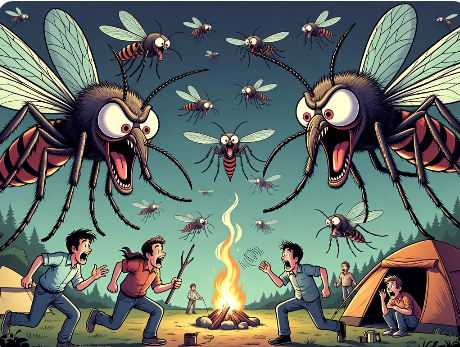
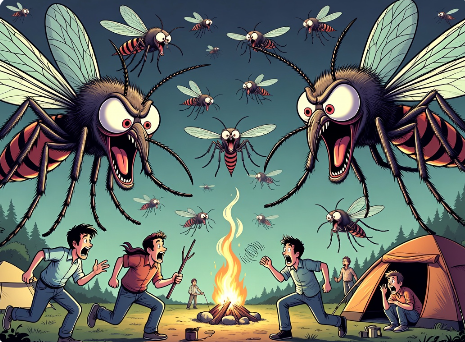
At the same time, mosquitoes appeared in unusually heavy numbers. Swarms made outdoor time difficult, forcing campers to rely on heavy repellent, long clothing, head nets, and frequent use of campfire smoke for relief. Northern Michigan’s wetlands and forested areas provide ideal breeding conditions in mid-July, and this year’s wet spring followed by warm weather contributed to strong hatches.
Steven Bolla, no stranger to outdoor activities, was camping at his site in Cheboygan. He reported that the smoke from the fires was pretty thick, but the mosquito swarms had him running to his car. “No amount of bug spray or thick clothing was repelling these little vampires.”
Simple campsite activities — cooking, sitting by the water, or relaxing in the evening — became challenging under the combined conditions. Campers reported needing to retreat to tents or vehicles more often than usual.
The smoke is expected to linger for at least another day or two before a weather shift potentially improves conditions, while mosquito activity will remain high through the rest of the summer.
For those planning trips to the Cheboygan area or other parts of northern Michigan right now, checking current air quality and packing strong insect protection is advised.
Have a correction or tip? See our corrections policy or contact the newsroom.
Comments
to join the discussion.
Loading comments...