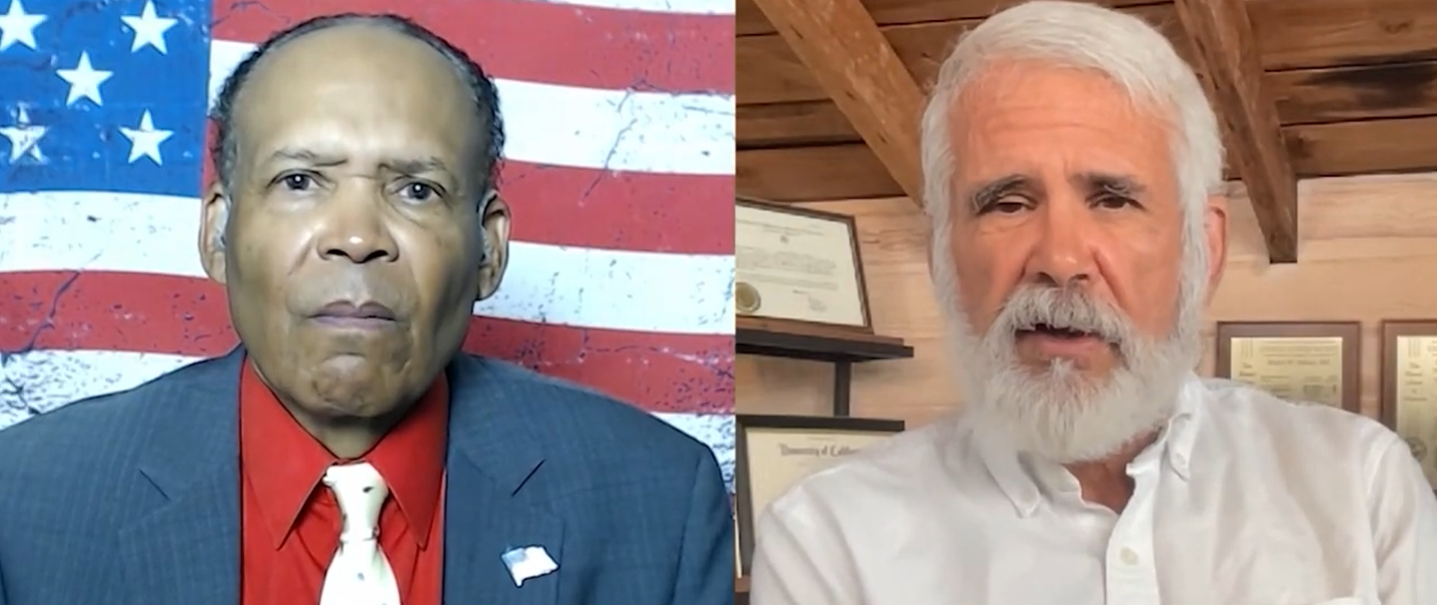
Dr. Robert Malone, the physician and vaccine researcher who became a prominent early critic of the government's COVID-era messaging, returned to Gary Binford's United Patriots Uprising for a wide-ranging conversation covering Anthony Fauci's recently surfaced diary entries, a hypothesis about Chinese Communist Party influence inside U.S. health agencies, and Malone's new book on homesteading, co-written with his wife, Dr. Jill Glasspool Malone.
Full Episode Click the video below or click here:
The Fauci diary and the lab-origin question
Malone pointed to documents surfacing from investigations led by Sens. Rand Paul and Ron Johnson, saying they show officials misled the public on “a wide variety of things.” He argued the lab-leak hypothesis for the virus's origin, once dismissed by many officials and platforms, is now “increasingly the accepted narrative,” and credited his earlier book, “Lies My Gov't Told Me,” with documenting what he described as coordinated censorship and delegitimization of dissenting scientists during the pandemic, efforts he said were directed in part by U.S. and British intelligence-linked entities.
A CCP-influence hypothesis Malone says Congress isn't pursuing
Malone's most striking claim was explicitly framed as unproven. He said he suspects, but cannot yet demonstrate, that Chinese Communist Party operatives had infiltrated U.S. health and intelligence agencies well before the pandemic, and that some of the government's pandemic-era decisions may have been influenced by that infiltration rather than by domestic actors alone. “I can't prove it,” Malone said. “It's a hypothesis.”
On Zohran Mamdani
Asked about accountability more broadly, Malone pivoted to New York City mayoral politics, describing Democratic candidate Zohran Mamdani as, in his words, a “democratic socialist,” which Malone said he considers “a euphemism for communist,” and called him a “threat to national security” and to the Constitution. Malone pointed to Florida's new high school curriculum requirements on the history of communism as a counter to what he called pro-socialist messaging in schools, and tied his Qatar-and-Turkey funding claim back into Mamdani's rise, describing what he called a “Qatari-Turkish” financing network he said is capitalizing on efforts to divide Americans. Binford, noting he lives near the Queens border, said he has family members and neighbors who lost relatives to COVID and are still supporting the same political figures Malone was criticizing.
Psychological warfare, at home
Much of the interview centered on Malone's second book, “PsyWar,” written with his wife, which argues that psychological-operations techniques developed for foreign combat were used domestically during the pandemic. Malone pointed to the U.S. military's psychological operations units and Britain's 77th Brigade, and argued a provision allowing military personnel to “advise civilian authorities” on psychological warfare blurred a line that's supposed to keep the military out of domestic affairs.
On accountability
Asked whether Fauci or others would ever face prosecution, Malone was skeptical. He said Fauci's most viable legal exposure comes from state-level prosecutions in places like Louisiana, Alabama and Florida, not federal action, and that civil suits against Fauci face a steep hurdle because he was acting as a federal employee, meaning plaintiffs effectively end up suing the federal government itself. He noted a former Fauci aide has pleaded guilty to destroying records, with sentencing pending, and said he doubts the current administration has the appetite to pursue the matter aggressively.
Homesteading for Health

The conversation closed on lighter ground. Malone and his wife's new book, “Homesteading for Health: One Farm Family's Guide to Food, Land, and Self-Sufficiency,” grew out of essays on their Substack, Malone.news, and covers the couple's decades running small farms, practical land and livestock advice, and a section on federal agricultural policy Malone argues favored large agribusiness at the expense of small farmers going back to the post-World War II victory-garden wind-down. “Anybody can do it,” Malone said, pointing to options as small as a window box or a raised garden bed for readers with no land at all.