The Trump administration is set to unveil what it calls an “economic D-Day” against Iran on Monday, describing the package of measures as the most comprehensive financial offensive ever directed at a single adversary and aimed at isolating Tehran from global commerce.
Economic D-Day
The Trump administration unveils what it calls the largest financial offensive ever aimed at a single country, as Iran threatens to shut down the Strait of Hormuz entirely.
By Lynn Matthews - August 24, 2026
Treasury Secretary Scott Bessent is scheduled to detail the sanctions at a 2 p.m. EDT news conference Monday. In an opinion piece published in the Financial Times and a related post on X, Bessent described the campaign as “the single greatest financial offensive ever marshaled against an adversary.” He wrote that the goal is to cut off every economic lifeline sustaining the Iranian government until it stands isolated.
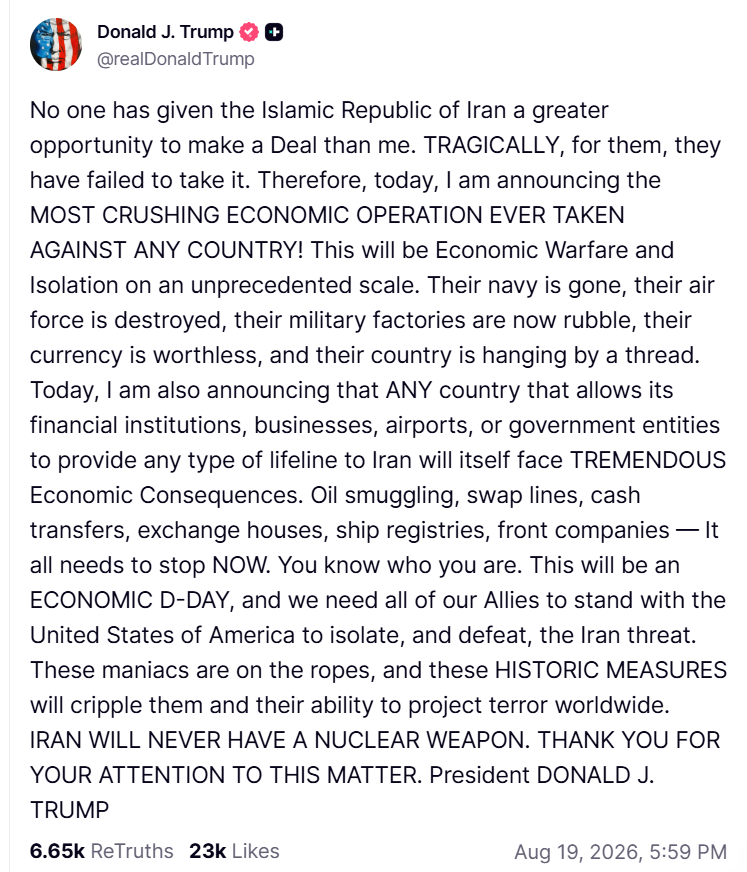
President Trump first laid out the campaign in a Truth Social post Aug. 19, framing it as the most severe economic operation ever directed at a single country. He warned that any nation allowing its financial institutions, businesses, airports or government entities to provide a “lifeline” to Iran would face serious consequences, specifically citing oil smuggling, currency swap lines, cash transfers, exchange houses, ship registries and front companies as targets.
Building on Prior Pressure
Bessent has described the effort as building on prior U.S. military action that the administration says already dismantled much of Iran's military infrastructure, factories and nuclear program. The new measures are expected to emphasize secondary sanctions targeting third countries and entities that continue trading with Iran, including those purchasing its oil or facilitating financial transactions. Officials have framed the shift as reducing the need for further large-scale military operations while increasing economic pressure amid stalled negotiations.
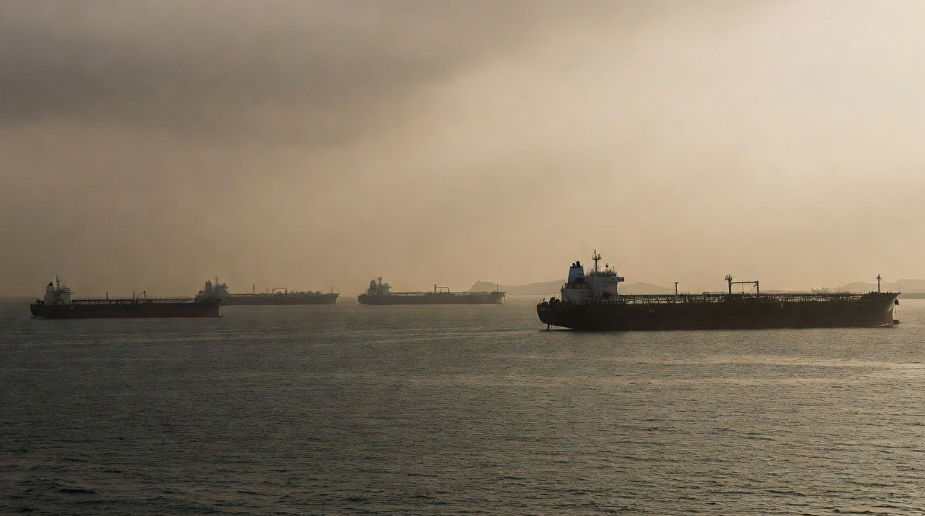
The announcement comes nearly six months into a conflict involving the United States, Israel and Iran. Direct military exchanges have been limited in recent weeks, but the Strait of Hormuz — a critical chokepoint for roughly one-fifth of the world's oil supply — has seen sharply restricted shipping flows. A 60-day memorandum of understanding aimed at ending hostilities expired without a lasting deal.
Iran's Response
Iran has rejected the U.S. framing entirely. Foreign Minister Abbas Araghchi dismissed the campaign as “economic terrorism,” arguing it distracts from America's own debt and interest-cost problems rather than addressing Iran's economy.
The so-called “Economic D-Day” is a diversion from America's own crisis: unprecedented debt & surging interest costs.
— Seyed Abbas Araghchi (@araghchi) August 20, 2026
Doubling down on failed policies will only bring further defeat—and enmity of Iranians. US economic terrorism threatens global economy and sovereignty worldwide pic.twitter.com/Qj5SzVBjvX
Mohsen Rezaei, secretary of Iran's Supreme National Security Council, warned that Iran would halt all oil exports through the Strait of Hormuz or anywhere in the Persian Gulf if the economic campaign continues, and said any country's participation in the sanctions would be treated as an act of war.
Iran's currency, the rial, has fallen to record lows amid the escalating threats. Analysts note that Iran has faced extensive U.S. and international sanctions for years, yet has maintained some oil exports — particularly to China — through various networks. The new secondary sanctions could heighten pressure on those channels and raise the risk of broader energy market disruption.
What's at Stake
Bessent has signaled that countries continuing to engage with Iran's economy risk becoming international pariahs, while those that sever ties could gain greater access to global capital and markets. Specific details of the sanctions package remain pending Monday's announcement.
Sources:
Nikkei Asia — US vows 'economic D-Day' as Iran threatens to halt all oil exports
BBC News — coverage of Bessent's economic D-Day warning
CNBC — Bessent on economic pressure strategy
New York Post — Trump announces Economic D-Day against Iran
Financial Times — Scott Bessent opinion piece
Times of Israel — US warns of economic D-Day for Iran as defiant Tehran set to hold talks on Hormuz
Topics:Economic D-Day IranBessent Iran sanctionsTrump Iran economic sanctions 2026Strait of Hormuz oil exportsIran secondary sanctionsAraghchi economic terrorismIran rial record low. Iran oil export halt
Have a correction or tip? See our corrections policy or contact the newsroom.
Comments
to join the discussion.
Loading comments...