Los Angeles’ Flea-Borne Typhus Cases Keep Rising. The County Already Knows the Environmental Risks.
Los Angeles just logged its first flea-borne typhus outbreak of 2026 — arriving right as the disease enters its worst season, and months after the county identified the environmental conditions still fueling it.
By Lynn Matthews - July 31, 2026
A localized outbreak of flea-borne typhus in Los Angeles’ Pico-Union neighborhood has put a once-uncommon disease back in the spotlight—but the five newest cases are only one part of a much larger story.
The Los Angeles County Department of Public Health announced July 29 that it is investigating an outbreak in Pico-Union involving five symptomatic cases identified this year. All five patients were hospitalized, and all have since recovered. The county is urging residents to take precautions against infected fleas and animals that may carry them.
The outbreak comes after Los Angeles County recorded 220 cases of flea-borne typhus in 2025—the highest number ever recorded in the county—following 187 cases in 2024. County officials say cases have been rising since 2010.
The numbers raise a straightforward public-health question:
Why is a disease transmitted through infected fleas continuing to increase in one of the nation’s largest metropolitan areas?
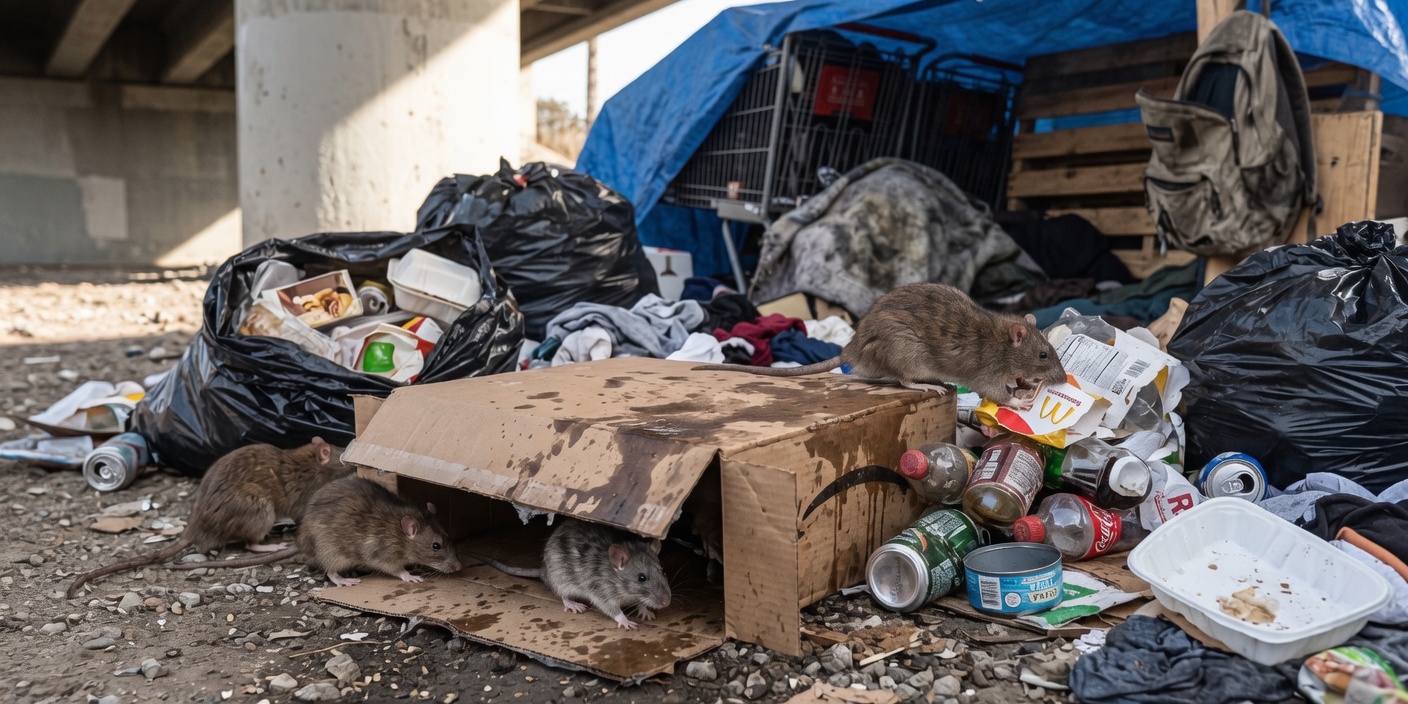
The answer is not simply “fleas.” The county’s own records point to a much broader environmental cycle involving rodents, free-roaming animals, trash, food sources, vegetation, animal harborage and, in some areas, homeless encampments.
And that means the discussion is about more than treating people after they become sick. It is also about the environment in which the disease is able to persist.
What Is Flea-Borne Typhus?
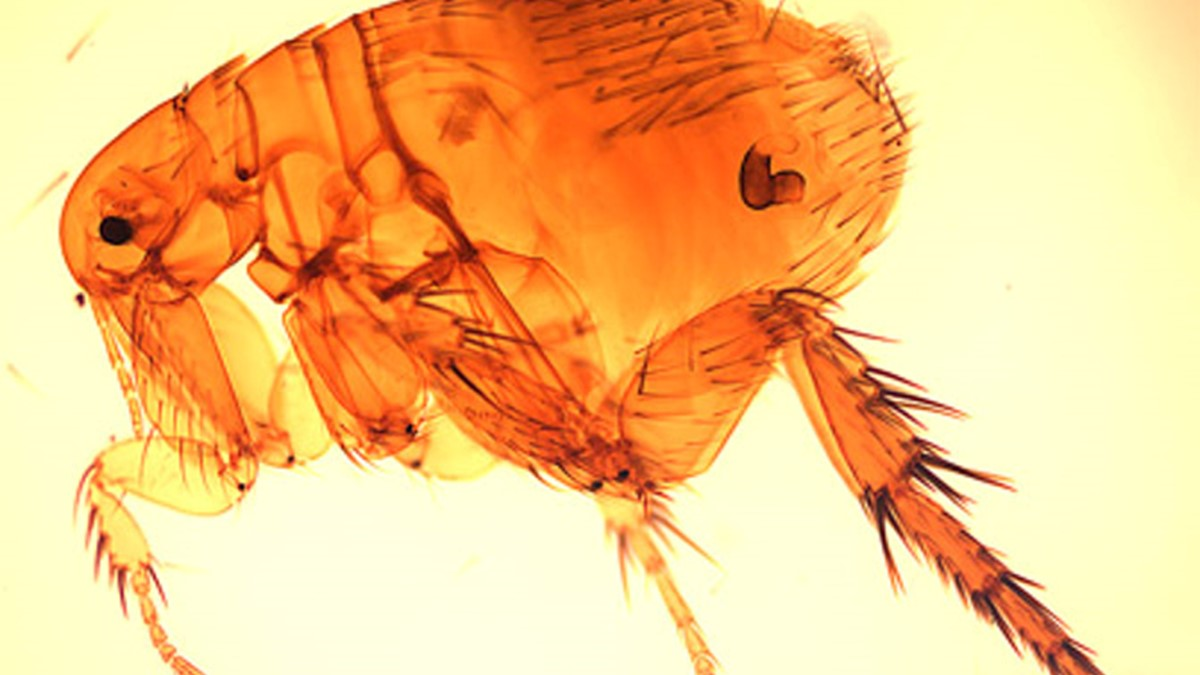
Flea-borne typhus, also called murine or endemic typhus, is caused by the bacterium Rickettsia typhi. It is not a virus, and it is not spread from person to person. Instead, humans become infected through contact with infected fleas or flea feces.
Fleas become infected after feeding on infected animals, including rats, cats and opossums. In the United States, the Oriental rat flea has historically been an important vector, while the cat flea is an important vector in suburban and urban environments and can be found on cats, opossums, dogs and rats.
When an infected flea feeds, its feces can enter the body through a bite, a cut or abrasion, or mucous membranes such as the eyes. People can also inhale infected flea dirt or rub it into their eyes. The CDC says people often do not remember being bitten by a flea.
That makes the disease difficult to recognize.
Symptoms can include fever, chills, headache, body aches, nausea, abdominal pain and rash. Symptoms generally begin within days to two weeks of exposure.
The disease is treatable with antibiotics, particularly doxycycline, and early treatment is important. However, severe illness can occur, and untreated infections can result in hospitalization or, in rare cases, death.
Los Angeles Has Been Watching the Numbers Rise
The increase did not begin with the Pico-Union outbreak.
According to the Centers for Disease Control and Prevention, Los Angeles County reported 31 flea-borne typhus cases in 2010 and 171 cases in 2022. Three flea-borne typhus-associated deaths occurred in Los Angeles County in 2022—the first such deaths reported there since 1993.
The trend continued.
Los Angeles County recorded 187 cases in 2024 and 220 in 2025, according to county public-health officials. The 2025 total was the highest ever recorded in the county. Nearly nine out of 10 people diagnosed in 2025 required hospitalization.
The disease is not restricted to one age group. The county says people diagnosed in 2025 ranged from 1 to 85 years old.
As of March 20, 2026, the county had already reported 17 cases for the year. The April 2026 Board of Supervisors motion addressing the disease identified Willowbrook, Westlake and Santa Monica among areas with especially high numbers.
Then came the new Pico-Union outbreak.
The County Identified Environmental Risks Months Ago
The most revealing document may not be the July outbreak announcement at all.
On April 14, 2026, the Los Angeles County Board of Supervisors adopted a motion specifically addressing the flea-borne typhus problem. The motion described cases as steadily increasing and acknowledged that people experiencing homelessness face significantly higher risk factors for infection.
But the motion did something else that is particularly significant.
It identified environmental conditions contributing to transmission.
Among them were illegal dumping, overgrown vegetation, free-roaming animals—including cats, dogs and chickens—and the presence of homeless encampments.
Those conditions matter because fleas do not appear out of nowhere.
Animals need food and shelter. Rodents need food and places to burrow. Fleas need animal hosts. Humans become vulnerable when those animals, their fleas and people occupy the same environment.
The county’s own proposed response reflects that basic biology.
The Board directed Public Works and other departments to address food sources and animal-attracting conditions in affected areas. The directives included keeping streets and sidewalks free of trash, garbage, fecal material, pet droppings and other food sources; ensuring enough waste bins to prevent trash accumulation; maintaining vegetation; removing cast-off items; and eliminating rodent burrows in planters along streets and sidewalks.
The county also directed Animal Care and Control to identify ways to strengthen flea-control efforts in affected areas.
That is an important point because it changes the question.
This is no longer simply a question of how residents can avoid flea bites.
It is also a question of whether the environmental conditions supporting flea-bearing animals can be reduced.
Homelessness Is a Risk Environment—Not the Cause of the Disease
The connection between homelessness and flea-borne typhus requires careful explanation.
Los Angeles County says people experiencing homelessness face significantly higher risk factors for infection, and the Board specifically ordered officials to identify and prioritize sanitation needs in encampments located in areas affected by flea-borne typhus outbreaks.
That does not mean homeless people are causing the disease or transmitting it to one another.
They cannot.
Flea-borne typhus is not transmitted from person to person.
The concern is the environment.
Someone living outdoors may have greater exposure to rodents, free-roaming animals, fleas, discarded food and other conditions that allow flea populations and animal hosts to persist.
The same environmental principle can affect people who are not homeless.
The county specifically warns that people are often exposed in and around their homes, including when infected fleas are carried indoors by pets or other animals.
A person with a yard frequented by feral cats or opossums, a rodent problem, accumulated debris or an unsecured source of food can potentially encounter the same flea-host cycle.
In other words, the disease is associated with an environmental exposure—not a person’s housing status.
Los Angeles Has Already Seen Repeated Outbreaks
This is not the county’s first localized outbreak.
In December 2025, Los Angeles County declared an outbreak in Willowbrook involving five cases. All five patients were hospitalized but recovered. Reported exposures included free-roaming cats, opossums and rodents.
According to the April Board motion, the Willowbrook outbreak was the fourth documented outbreak in that community since 2017.
That history is important.
If an outbreak happens once, officials may reasonably treat it as an isolated event.
When the same community experiences repeated outbreaks over several years, the question becomes more complicated:
What conditions are allowing the disease cycle to remain in place?
The CDC reached a similar conclusion after investigating three flea-borne typhus-associated deaths in Los Angeles County in 2022. The agency said monitoring rodent, opossum, free-roaming cat and dog flea infestations—and determining how many fleas are infected—would be important for understanding the local disease ecology and directing interventions more effectively.
Is 2026 Shaping Up to Be Worse?
The picture so far is incomplete, but the early signals are not reassuring.
The county has not yet released a running 2026 case total comparable to the year-to-date figures it published at similar points in 2024 and 2025, so it is not yet possible to say definitively whether 2026 will exceed last year’s record. What is clear is that the trend has been broken only once in the past five years — a dip to 124 cases in 2023 — before resuming its climb, and the environmental conditions the county identified in April have not been shown to be resolved.
The Cleanup Question
Los Angeles County’s April motion effectively acknowledges that environmental management is part of the solution.
The county did not simply order more public warnings.
It directed agencies to work on sanitation, animal control, flea control, trash removal, vegetation management, food sources and rodent harborage.
That raises an obvious question:
Are those measures reducing the conditions that allow the disease to persist?
The Board ordered the Department of Public Health, Public Works, Homeless Services and Housing, and Animal Care and Control to report back to the Board within 90 days on their respective directives.
That deadline fell in July 2026.
As of this report, Los Angeles County had not made that 90-day update public. WECU News has reached out to the Los Angeles County Board of Supervisors and the Department of Public Health for comment and will update this story if a response is received.
That report, if publicly available, could provide some of the most useful information for understanding whether Los Angeles is making measurable progress.
How many affected areas were remediated?
How many encampment sanitation problems were addressed?
Were rodent-control measures increased?
Were flea-control operations expanded?
Were food sources and illegal dumping removed?
And most importantly, did the interventions correspond with a measurable reduction in cases or environmental indicators?
Those are questions that can be answered with data.
The County Has Been Doing Cleanup Work
There is evidence that cleanup efforts are already occurring.
During a March 2026 Board discussion, Los Angeles County’s Homeless Services and Housing leadership said 32 encampment cleanups had been conducted in Willowbrook during the previous year, with eight additional cleanups completed by January and six more pending or scheduled. County officials also said they were coordinating with Public Health and other departments in response to the flea-borne typhus outbreak.
That matters because it demonstrates that the issue is not simply whether Los Angeles is cleaning anything.
The more useful question is whether the scale, frequency and type of cleanup are sufficient to interrupt the environmental cycle identified by the county itself.
An occasional cleanup may remove visible trash.
Long-term disease prevention may require something more durable: regular waste collection, secure food disposal, rodent-control measures, removal of animal harborage, flea control and continued monitoring.
The county’s April motion specifically called for long-term, sustainable control rather than one-time remediation.
This Is a Public-Health Problem That Can Be Addressed at More Than One Point
There is no single switch that turns flea-borne typhus off.
Doctors can reduce the severity of illness through early diagnosis and treatment.
Pet owners can use flea control.
Residents can secure trash and food and prevent animals from entering their homes.
Animal-control programs can address stray animals.
And governments can reduce the environmental conditions that provide food and shelter for rodents and other animals.
The CDC recommends keeping food and pet food in sealed containers, removing brush and clutter, sealing openings where rodents can enter and keeping trash and compost containers closed. It also recommends preventing contact with wild or stray animals and maintaining flea control on pets.
At the community level, Los Angeles County is already pursuing many of the same principles through its environmental directives.
The challenge is determining whether those interventions are sufficient to reverse a trend that has been moving in the wrong direction for years.
A Disease That Does Not Need Human-to-Human Transmission to Become a Serious Problem
Perhaps the most important fact for residents to understand is also one of the most reassuring.
Flea-borne typhus does not spread from person to person. There is no current evidence that residents need to fear casual contact with an infected neighbor, coworker or family member.
The risk lies elsewhere—in infected fleas and the animals that carry them.
That also means Los Angeles has multiple opportunities to intervene before the disease reaches another person.
The county has now recorded back-to-back record years, and July’s Pico-Union outbreak arrived just as the disease enters its historically worst stretch.
The disease is treatable.
It is not spread person-to-person.
And the environmental conditions that can facilitate transmission are not mysterious.
Los Angeles County has already identified many of them.
The question now is whether the city and county can reduce those conditions consistently enough to change the trajectory of the disease.
For the public, that may be the most important part of the story: flea-borne typhus is not an unavoidable feature of urban life. It is a disease with a transmission cycle—and every part of that cycle presents an opportunity for prevention.