E15 gasoline — blended with up to 15% ethanol, instead of the standard 10% — wasn't unheard of in Louisiana before this month; a small number of stations already carried it. What changed on September 1 is a state emergency waiver matching an EPA one, letting 9-to-15% ethanol blends move through Louisiana's system at winter-grade volatility levels that would normally be off-limits this time of year. Most Louisiana stations will keep selling ordinary E10 regular — this doesn't convert the state's gas supply to E15, it clears the way for more of it at the pumps that already carry it. The coverage has mostly repeated one line: it "could" save drivers up to 10 cents a gallon. That's roughly true at the pumps that sell it, and it's also nowhere near the whole story.
Louisiana Just Waived the E15 Cap. Here's What's Actually Behind It.
Louisiana just waived its cap on E15 gasoline under an emergency order tied to the Iran war. The promised savings are real but narrow, the mileage math is more modest than it sounds, and the "supply crisis" behind it isn't the kind you'd actually see at the pump.
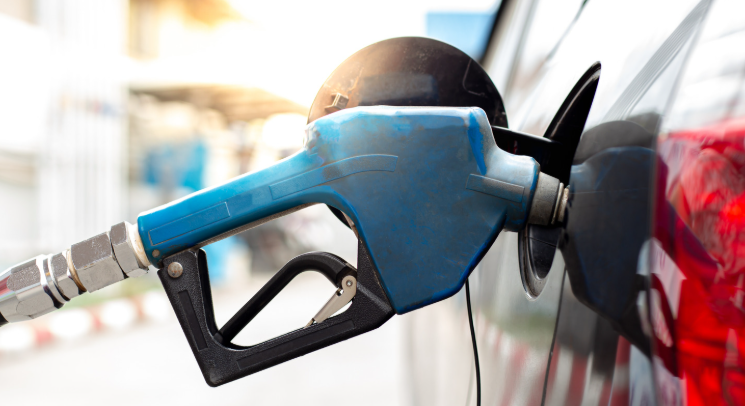
E15 didn't arrive in Louisiana because state lawmakers decided to allow it. The Louisiana Department of Agriculture and Forestry issued an emergency waiver on September 1, 2026, suspending the state's normal fuel-quality rules — and that followed a broader national emergency waiver EPA issued August 20, invoking its authority under the Clean Air Act to declare "extreme and unusual fuel supply circumstances." Both are tied directly to the U.S.-Iran conflict: Iranian attacks on tankers in the Strait of Hormuz — a chokepoint that handles roughly a fifth of global petroleum consumption — have squeezed global oil flows, on top of U.S. refining capacity that's been down about 800,000 barrels a day since 2020 due to pandemic-era closures and hurricane damage. This is a temporary, emergency measure, not a new fixture of Louisiana's fuel supply.
The "up to 10 cents" claim, and what it actually means
E15 is genuinely cheaper than regular E10 gasoline at the pump — GasBuddy's Patrick De Haan puts the gap at roughly 10 to 20 cents a gallon, and CSP Daily News reports Louisiana's first E15 location opened at a RaceTrac in Baton Rouge, part of a national total that's now reached 672 sites. But that's the price of E15 itself versus E10, at the stations that carry it — not a prediction that gas prices broadly are about to drop. De Haan has also said the waiver "will have virtually no impact on regular gas prices," and affects only a small fraction of U.S. stations — those are simply the stations equipped to sell it. If you don't drive to one of those specific pumps selling labeled E15, the waiver doesn't touch what you pay.
The mileage math, done honestly
Ethanol has less energy per gallon than gasoline. The Energy Department's fueleconomy.gov says vehicles typically get 3% to 4% fewer miles per gallon on E10, and 4% to 5% fewer on E15, compared with 100% gasoline. Almost nobody in Louisiana is starting from straight gasoline, though — regular at the pump is already E10 — so the actual mileage penalty from switching to E15 is the difference between those two numbers, on the order of a percent or two, not the full 4-to-5% figure on its own. A cheaper sticker price can still win on cost per mile if the pump discount is large enough to cover that gap. It can also vanish if the savings are thin.
Older cars genuinely can be damaged — this part isn't hype
This is the part drivers most need to actually see at the pump, not just hear about. E15 is approved only for flexible-fuel vehicles and conventional vehicles model year 2001 and newer. The federal government's own guidance is explicit that E15 is not approved for any conventional vehicle older than model year 2001, any motorcycle, boat, snowmobile, or small engine like a lawn mower or chainsaw, and any heavy-duty vehicle like a delivery truck or school bus. Using it in an unapproved engine risks real damage over time — corroded fuel lines and seals, engine wear the vehicle wasn't built to handle. Pumps are required to carry warning labels, but that only helps if drivers actually read them before fueling up.
So what gives with the "shortage" — where are the closed stations?
This is the fair question, and the honest answer is that the "shortage" behind this waiver isn't the kind that shows up as a line at the pump or a station running dry. EPA's own justification cites national inventory and refining data: gasoline inventories sitting about 6% below the five-year average as of early August, and refineries running at 96.2% utilization — meaning almost no spare capacity to absorb a shock like the Hormuz disruption. That's a wholesale-level, supply-chain tightness argument, not a claim that any specific town is about to run out of gas. Nothing in the public record shows actual gas station closures in Louisiana tied to this — the waiver is explicitly framed as preventing that outcome, not responding to it already happening. Whether that's prudent foresight or a preemptive fix for a problem that was never going to reach the pump this way is a fair thing to be skeptical about, and the record doesn't currently settle it either way.
Worth knowing if you're tracking this: Louisiana's waiver isn't indefinite — it runs 180 days from September 1 unless renewed or rescinded, and the state has said it intends to keep it in place only as long as EPA keeps the national waiver active. This is explicitly a temporary measure tied to a temporary conflict, not a new normal.
Sources:
Louisiana Department of Agriculture and Forestry, Emergency Rule — Weights and Measures — Fuel Waiver
CSP Daily News, "E15 Debuts in Louisiana"
Newsweek, "What Emergency E15 Waiver Could Mean for Gas Prices" and "Gas to Be Diluted From May. Here's Who Is Impacted"
U.S. Department of Energy, fueleconomy.gov — Ethanol
U.S. Department of Energy, Alternative Fuels Data Center, Ethanol (E15)
Comments
Loading comments...