Musk Says China Will Win the AI War - An Analysis of the Energy Reality Behind His Warning
Elon Musk has been blunt about China’s rising advantage in the AI race. New energy data and Tesla’s own practical choices in the Chinese market show why the frustration is real — and why the gap is structural, not inevitable.
By Lynn Matthews - July 28, 2026
Elon Musk has spent the better part of a year saying the quiet part out loud: China is going to win the artificial intelligence race. Not “might.” Will.
In March, responding to a critique of Google’s Gemini model on X, Musk laid out his prediction in a single line: Google would win AI in the West, China would win it on Earth, and SpaceX would win it in space. Months earlier, on a podcast recorded at Tesla’s Gigafactory Texas, he went further — arguing that China’s electricity generation is on pace to hit roughly three times that of the United States, and that raw energy capacity, not chip supremacy, is what will let Beijing “brute-force” its way past the compute bottlenecks everyone assumed would slow it down.
He’s not wrong. And the most interesting part of this story isn’t that Musk said it — it’s how clearly the numbers and the incentives explain his frustration.
Pragmatic choices in a constrained market
While Musk broadcasts the “China wins” thesis to millions of followers, Tesla has integrated Chinese-built AI models — DeepSeek and ByteDance’s systems — into the voice assistants of vehicles sold in the Chinese market. Not Grok. Not the model built by his own AI company, xAI.
That decision is less a statement about Grok’s absolute capability than a recognition of reality on the ground. China requires heavy localization, data residency, and rapid adaptation to local consumer expectations and regulatory rules. Tesla is competing in the world’s largest and most competitive EV market against domestic players who already ship with sophisticated Chinese AI assistants as standard. Using the best available local models is the practical move any company serious about winning in China would make. It doesn’t diminish the broader point Musk keeps making: the physical constraints that will decide the global race favor China right now.
Why the AI race isn’t close
Strip away the personalities and the underlying asymmetry is real. China is building out energy infrastructure and compute capacity at a pace the U.S. regulatory and permitting environment simply doesn’t allow for right now. American AI labs answer to safety reviews, public backlash, congressional hearings, and a citizenry that — rightly or not — pushes back hard on anything that smells like unchecked technological power. Chinese labs answer to the state, and the state has already decided AI dominance is a national priority worth building around, not debating.
You can view that difference as America’s strength or its liability. Reasonable people land in different places. But you can’t pretend it doesn’t produce different speeds. That difference is precisely what seems to frustrate Musk most.
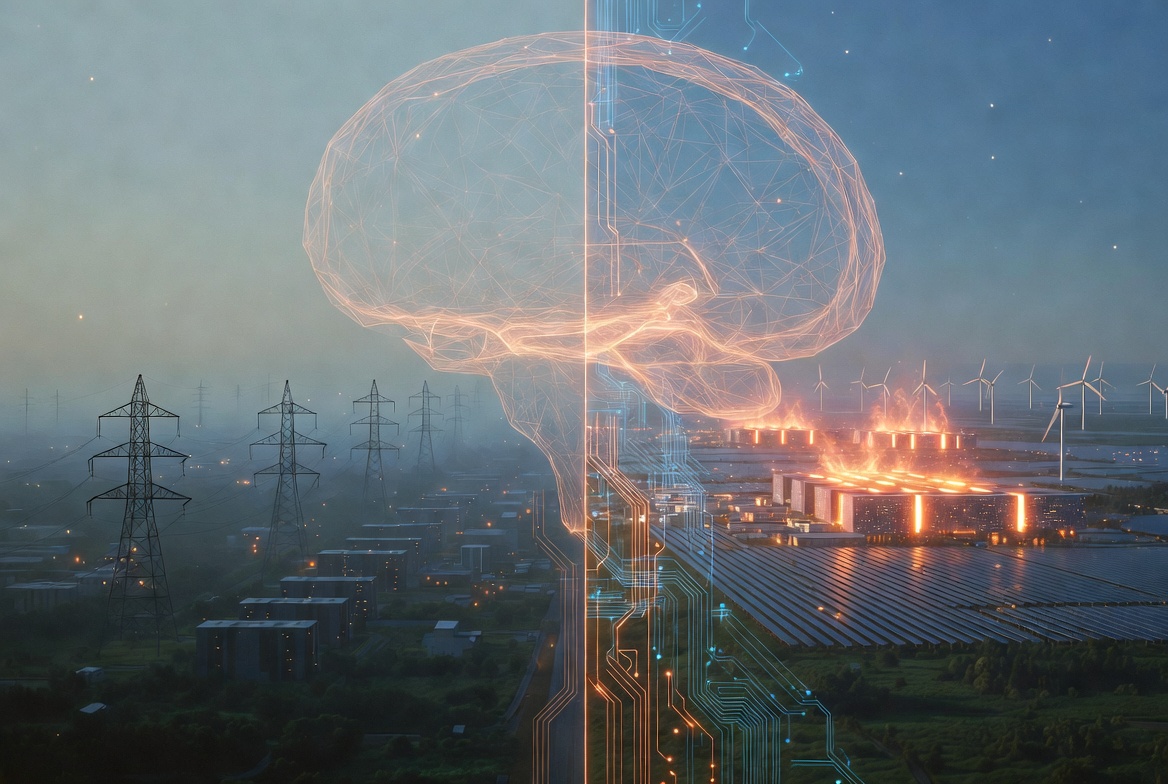
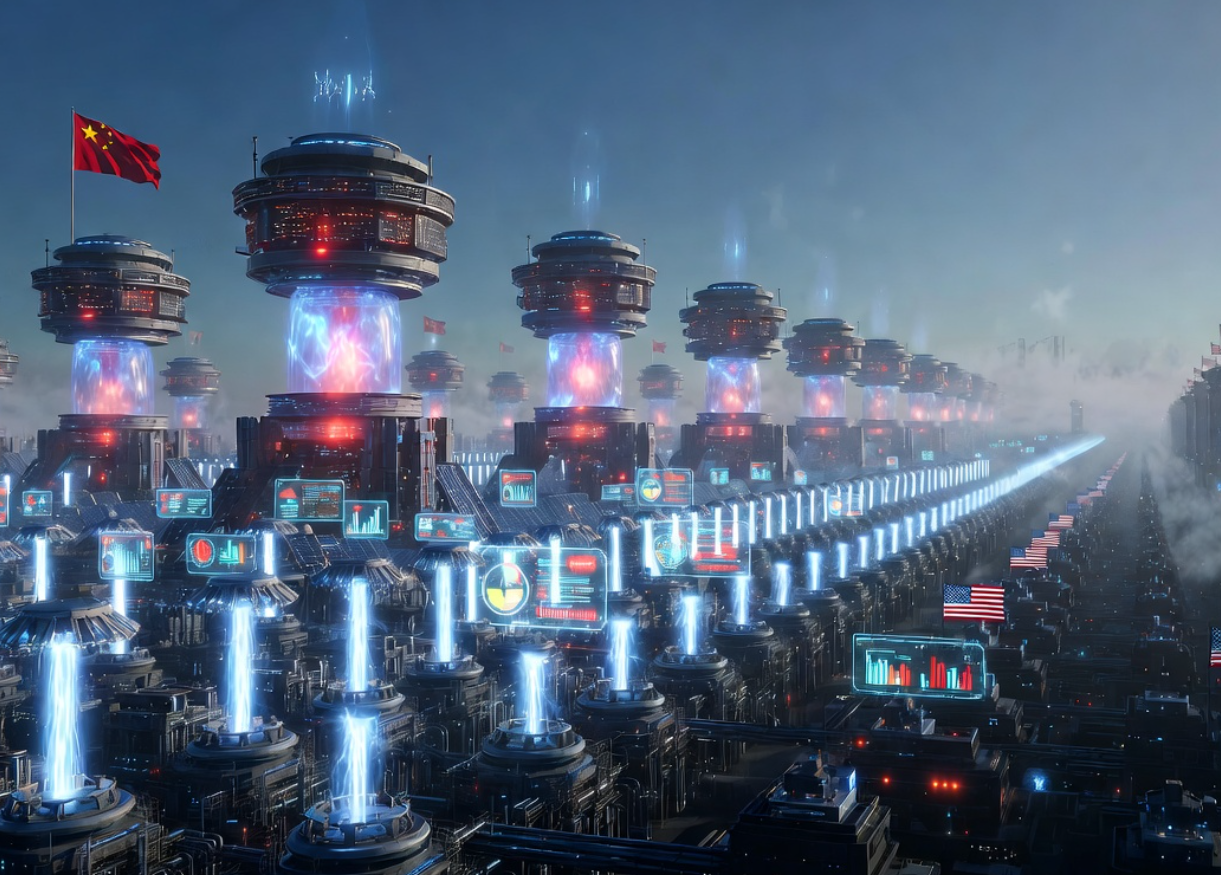
The numbers make his point better than any rhetoric. China’s installed electricity generation capacity hit 4.04 trillion watts by the end of June 2026, up 10.8 percent year-over-year, according to China’s National Energy Administration — a figure Chinese state broadcaster CGTN itself put at roughly three times the U.S. total earlier this year — the same multiple Musk cited. The U.S., by comparison, has about 1.3 trillion watts of total capacity, adding only tens of gigawatts annually. Actual electricity generated tells a slightly narrower story: China produces more than double the electricity the U.S. does — north of 10,000 terawatt-hours a year against roughly 4,400 to 4,500 here, still a commanding lead even if narrower than the capacity gap. Either way, electricity, not chips, is the real ceiling on how much AI compute either country can stand up, and right now China’s ceiling is simply higher.
image by Grok AI
None of that makes the gap unclosable, but closing it means treating this as a genuine infrastructure push, not business as usual. RAND estimates that permitting and interconnection reform alone could unlock somewhere between 92 and 297 additional gigawatts by 2030, without a single new plant sitting in a multi-year approval queue. Pair that with faster build-out of solar-plus-storage, natural gas as the fastest scalable firm power available today, and next-generation nuclear including small modular reactors, and the U.S. has a real path to competing where it actually matters — not matching China gigawatt for gigawatt, but delivering enough firm, reliable power fast enough to keep frontier AI labs building here instead of getting priced out by their own grid.
The honest read is this: the constraint isn’t physics, and it isn’t money. It’s the speed of American decision-making — permitting timelines measured in years instead of months, and a political culture that treats every new transmission line as a fight. China doesn’t have that problem, by design. Whether the U.S. finds the will to move at the speed this moment requires is the real open question here — not whether China’s advantage is real. That is the frustration Musk keeps voicing.
What “winning” actually means
Here’s the part that should concern everyone, regardless of where you sit on AI regulation: this isn’t a race for market share. Whoever ends up with the most capable, most widely deployed AI systems doesn’t just win a product category — they set the terms of information, economic infrastructure, and military capability for everyone else, for as long as the gap holds. That’s not hyperbole. It’s the plain logic of a general-purpose technology with no obvious ceiling.
Musk has been unusually blunt about that reality. His public warnings and the practical choices his companies make in constrained markets are consistent with the same diagnosis: the physical and regulatory bottlenecks are real, and time is not on America’s side under the current rules. Visibility may be the point. If more people have to reckon publicly with what the energy and permitting gaps actually mean, the incentives might finally shift.
So, plainly: Elon Musk is right that China is positioned to win the AI race as currently structured. The deeper sadness is that the United States still has the talent, the capital, and the technology to change that outcome — if it decides the race is worth winning at the speed the moment demands.