Federal prosecutors say an OpenAI engineer hid a recording device behind a television in an executive conference room at the company's San Francisco offices. Abdulrahman Alfozan, 35, a Saudi national and a U.S. legal permanent resident, was arrested Oct. 9 and charged with using a device to intercept oral communications. He has not been convicted. Everything below about his conduct is an allegation from court filings.
OpenAI Engineer Charged With Bugging Executive Meeting Room
Prosecutors want the engineer held and cite WhatsApp messages and travel. His lawyers say the tickets were bought in September.
By Lynn Matthews - October 19, 2026
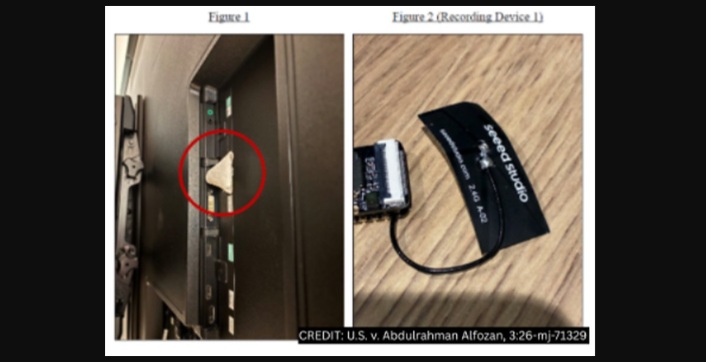
The Justice Department said the device was plugged into a USB port behind the TV on or about Sept. 28, hidden in toilet paper, and that its contents were encrypted. OpenAI found it on or about Sept. 30. The complaint says security video showed Alfozan near the room on several dates, and that he had no authority to attend meetings there.
What prosecutors allege
Before the device was placed, prosecutors say, Alfozan used a company productivity tool to look up office addresses, meeting rooms, room capacities, calendars and where executives would be. They also say a chatbot account tied to his spouse, which shared identifiers with his own, was used from Sept. 24 to Sept. 30 to ask about building, installing and remotely accessing a recording device and about encrypting an SD card. Prompts on Sept. 27 and 28 allegedly referred to the hardware address of the device later found.
On Oct. 5, the complaint says, he went into the conference room and appeared to look behind the television. That same day, company security opened a bag he had left unattended in another OpenAI room and found a similar recording device along with his wallet and ID.
OpenAI's statement
OpenAI said it has no indication that Alfozan accessed or took its model weights, source code or customer data. The company said it fired him on the day of his arrest.
Prosecutors ask the court to keep him jailed
The details in this section and the next come from news reports on court filings. WECU News has not reviewed the filings.
In an 11-page detention memorandum filed Oct. 18, prosecutors argued that Alfozan is a flight risk and that his conduct could endanger national security. They allege he was in frequent WhatsApp contact with an unnamed member of the Saudi royal family during 2025 and 2026, most recently on Oct. 5. According to the filing as reported, the royal told him an AI initiative was starting in Saudi Arabia and urged him to join. One message allegedly said Saudi Arabia needed him more than the U.S. did, and Alfozan allegedly replied that he would not leave until his stock vested.
Prosecutors also say his wife and infant son left the country on Oct. 10, the day after his arrest, on business-class tickets bought by a Saudi military official. The reports do not say when the tickets were bought. Prosecutors cite that help, along with his wealth and connections, as reasons he might flee.
The defense response
In a motion filed Oct. 16, Alfozan's lawyers, William Pernik and Nas Yasin, said he bought economy tickets to Riyadh on Sept. 13 under his own name, 17 days before OpenAI found the device, for $1,897.59 in total for all three travelers. They said his wife's work authorization ended Aug. 13, that Oct. 12 was the last day of her grace period, and that most of his past trips abroad were to Saudi Arabia and ended with a return. They said he had a naturalization interview set for Nov. 6.
The defense proposed release with GPS monitoring, home detention, surrender of all passports and a bond backed by Bay Area supporters and the Saudi Consulate General. The motion says the consulate would issue no travel documents. The lawyers also filed 54 letters of support.
Pernik told The National the allegations "appear wholly out of character for him" and that his client is charged under a federal recording law and not with trade secret theft or acting as a foreign agent. "Where someone was born is not evidence of anything," Pernik said.
The hearing
Magistrate Judge Alex G. Tse in the Northern District of California was set to hear arguments on release Oct. 19. WECU News had not found a report of the ruling when this was written. The charge carries up to five years in prison, a $250,000 fine and three years of supervised release.
What is not known
Prosecutors have not said why the device was placed, and the Justice Department release does not name a foreign government. The reports WECU News read do not say prosecutors allege that the royal directed the device, knew about it or received anything from it. U.S. Attorney Craig Missakian said, "For us it is a matter of national security." It is also unknown what the recorder captured, since its contents were encrypted, whether anyone else was involved, and how Alfozan will plead.
Sources:
The National (Oct. 14, 2026). Secondhand; used for the defense lawyer's statements.
Topics:OpenAI bugging suspectOpenAIAbdulrahman Alfozanrecording deviceSaudi royal familydetention hearingJustice DepartmentFBISan Francisco
Have a correction or tip? See our corrections policy or contact the newsroom.
Comments
to join the discussion.
Loading comments...