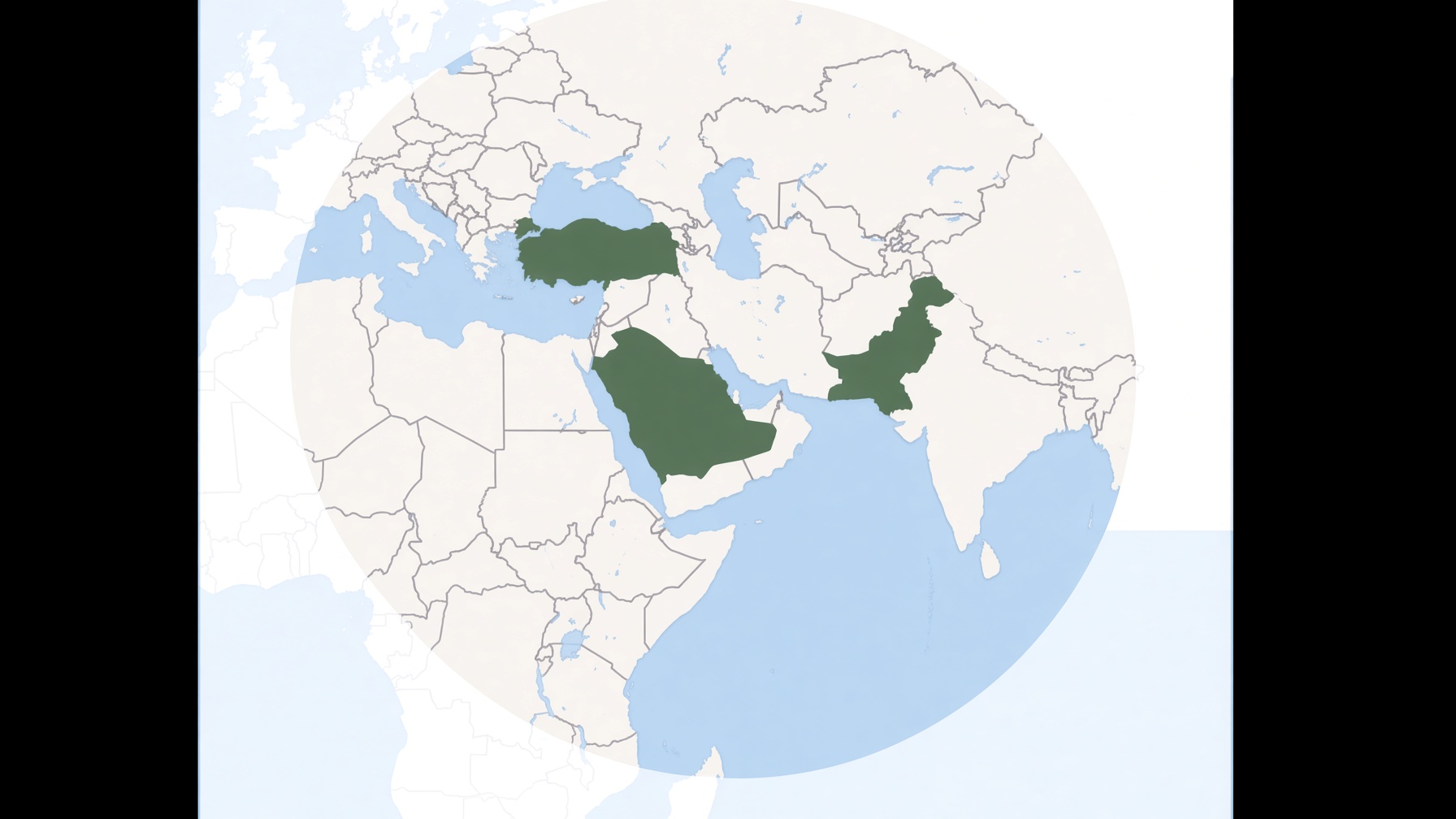
— Saudi Arabia, Turkey and Pakistan signed a sweeping mutual defense agreement in Mecca on Friday, formally binding three of the Muslim world's most capable militaries into a NATO-style collective security arrangement — even as all sides publicly insist the pact isn't directed at any specific country.
What the Pact Actually Says
The Mecca Joint Defence Agreement was signed by Turkish President Recep Tayyip Erdogan, Saudi Crown Prince and Prime Minister Mohammed bin Salman, and Pakistani Prime Minister Shehbaz Sharif. Its core provision states that "an armed attack against any of the three states shall be regarded as an attack against them all" — language Turkish Foreign Minister Hakan Fidan has described as "technically" similar to NATO's Article 5 collective-defense clause. Beyond the mutual-defense provision, the agreement establishes regular joint committee meetings among the three countries' foreign ministers, defense ministers, and military chiefs, along with a permanent secretariat to be based in Saudi Arabia. Defense-industry cooperation — including shared access to each country's military technology — was described as a significant focus of the talks in Mecca.
The combination is notable on its own terms: Saudi Arabia brings substantial oil wealth, Pakistan brings nuclear weapons, and Turkey brings NATO's second-largest standing army along with a rapidly growing domestic defense industry.
"Not Aimed at Iran" — But Preparations Predate the War
Fidan told Turkey's state-run Anadolu agency the pact "does not identify Iran, or any other country, as a common threat," and said countries that don't attack the signatories would not be considered targets. He noted preparations for the agreement had been underway for nearly two years and eight months — predating the current war — and said Egypt was expected to join "at the next stage," with other unnamed countries also expressing interest.
Regional analysts see it differently. The Atlantic Council's Middle East experts wrote that the agreement "bolsters [Saudi Arabia's] leverage as it both copes with an emboldened Iran and confronts the limits of US deterrence in the region," and comes as "the Iran war threatens to restart and Houthi attacks from Yemen already have." Al Jazeera's own analysis was more direct, noting that while signatories have avoided naming a threat explicitly, "Iran, meanwhile, has already attacked Saudi Arabia, as have other Iranian-backed groups. Saudi Arabia, for its part, has responded with strikes on Iranian-backed groups in Iraq."
Iran's Two Voices
Iran's official diplomatic response has echoed Turkey's framing. Iran's Foreign Ministry spokesman said this week there is "no reason to see the agreement between Turkey, Saudi Arabia, and Pakistan as an agreement aimed at Iran," characterizing it instead as regional countries recognizing that "security can no longer be achieved through the United States" and calling for regional states to build trust and security "without the involvement of external factors."