Seeing Without Eyes: Neuralink's Blindsight and the Dawn of Cortical Vision
Neuralink's Blindsight bypasses the eyes entirely, wiring visual signals straight into the brain — and the first human implant could come this year.
By Lynn Matthews - August 2, 2026
Imagine never having seen light—or losing every pathway that once carried it—and then, through a chip smaller than a coin, experiencing the world again as patterns of light and shape. That is the audacious promise of Neuralink's Blindsight: a brain implant that bypasses the eyes and optic nerve entirely and writes visual information straight into the visual cortex.
This is not incremental improvement of damaged eyes. It is a fundamental redesign of how humans can perceive the visual world.
How Blindsight Works
In natural vision, light hits the retina, which converts it into electrical signals that travel via the optic nerve to the brain's visual cortex for interpretation. Disease, injury, or congenital conditions can destroy the eyes or optic nerve, leaving the visual cortex intact but starved of input.
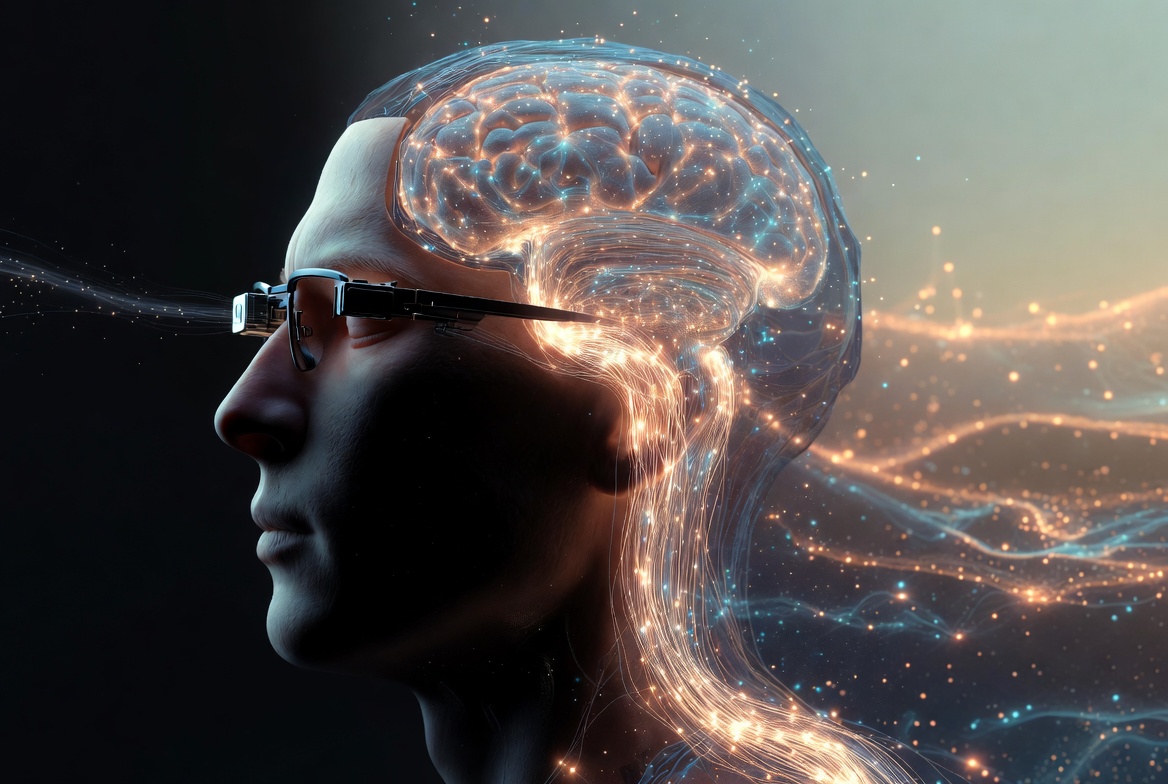
Blindsight short-circuits that pathway. An external camera—typically mounted on glasses—captures the scene. A wearable processor converts the video feed into carefully patterned electrical signals. Those signals are transmitted wirelessly to a Neuralink implant whose ultra-thin electrode threads are precisely placed in the visual cortex by the company's surgical robot. The electrodes stimulate neurons, producing phosphenes (points or flashes of light that the brain learns to interpret as edges, shapes, and eventually scenes).
The critical requirement is an intact visual cortex. Because the system does not rely on residual retinal or optic-nerve function, it is designed for people with complete vision loss—including those born blind.
From Monkeys to Humans: The Road So Far
Neuralink has reported that the Blindsight implant has been working in monkeys for years, with one animal living with an active device for about three years. In public demonstrations of related work, stimulated monkeys responded to artificial visual cues as if perceiving objects that were not physically present.
Elon Musk has repeatedly framed the timeline optimistically. In June 2025 he stated that the first human vision implants would occur within six to twelve months. In early 2026 he said the company was ready pending final regulatory approval. As of August 2026, no first human Blindsight implant has been publicly announced; the program remains in the pre-clinical-to-early-trial transition.
Meanwhile, Neuralink's parallel Telepathy program (motor and speech restoration) has enrolled dozens of participants worldwide with a reported strong safety record, giving the company surgical experience, manufacturing scale, and regulatory familiarity that strengthen the case for vision trials.
What “Seeing” Might Actually Feel Like
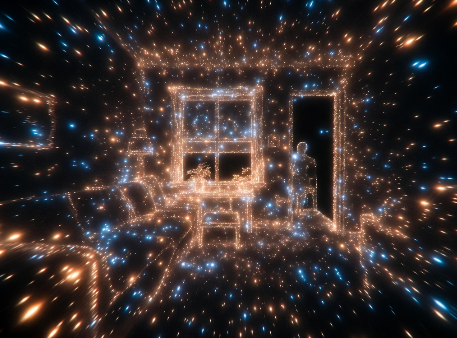
Expectations matter. Musk has been unusually clear on this point: initial resolution will be low—“like Atari graphics” or early Nintendo. Phosphenes are not the rich, continuous visual field most sighted people take for granted; they are discrete points of light that the brain must learn to assemble into useful perception. Over time, with more electrodes, better encoding algorithms, and neural plasticity, resolution is expected to improve. Longer-term ambitions include multi-spectral vision—infrared, ultraviolet, or even radar-like sensing—that would exceed natural human sight.
For people who once had vision, the brain already possesses maps and experience that may accelerate adaptation. For those born blind, the visual cortex has never processed light-based input; success will depend heavily on the brain's remarkable capacity to reorganize. Early results from other cortical visual prostheses suggest functional gains (navigation, object detection, light/dark discrimination) are possible, even if the experience differs from natural sight.
Why This Matters
Blindness affects tens of millions of people worldwide. Existing retinal implants help only a subset of patients whose eyes still have viable residual pathways. Cortical approaches like Blindsight open the door to a far broader population—those with optic-nerve damage, enucleation, or congenital absence of sight.
If the technology works safely and scales, the implications stretch beyond restoration. A high-channel cortical interface could eventually support enhanced or alternative senses, tighter human-AI collaboration, and new forms of communication. It also forces deeper questions about identity, perception, and what it means to “see.”
The Realistic Path Ahead
Challenges remain substantial: surgical precision and long-term biocompatibility of thousands of electrodes, real-time encoding of complex scenes into meaningful stimulation patterns, individual variability in cortical organization, regulatory hurdles, cost, and equitable access. Competing approaches—retinal chips such as Science Corporation's PRIMA (now commercially launching in Europe for certain macular conditions) and other intracortical systems—continue to advance in parallel, creating a richer ecosystem of options.
Neuralink's track record with motor implants, robotic surgery refinements (including through-dura techniques), and manufacturing ambitions for higher-volume production in 2026 provide reasons for measured optimism. Yet timelines in invasive brain technology have historically slipped, and first-in-human results will be the true test.
A New Chapter in Perception
Blindsight is still experimental. No commercial version exists, and the first human implants remain ahead. But the core idea—treating the visual cortex itself as the interface—represents one of the most profound attempts yet to restore a fundamental human sense by speaking the brain's native electrical language.
For the first time in history, technology is approaching the ability to give sight to people who have never seen light, and to return it to those who lost every conventional pathway. Whether the early images look like 1980s video games or something richer, the simple fact that the conversation has moved from theory to planned human trials is itself extraordinary.
The eyes may one day become optional. The brain's capacity to see, it seems, is far more flexible than we once believed.