The Senate Homeland Security and Governmental Affairs Committee voted Thursday to hold Dr. Anthony Fauci in contempt of Congress, a week after the former top infectious disease official invoked his Fifth Amendment right 111 times during a subpoenaed hearing rather than answer lawmakers' questions.
The resolution directs Vice President JD Vance, in his role as President of the Senate, to send the committee's report of contempt to the U.S. Attorney for the District of Columbia. The Justice Department will then decide whether to pursue criminal prosecution. Such prosecutions are rare, though two former Trump advisers, Steve Bannon and Peter Navarro, were imprisoned on contempt-of-Congress charges during the Biden administration.
Democrats' Objections Rejected
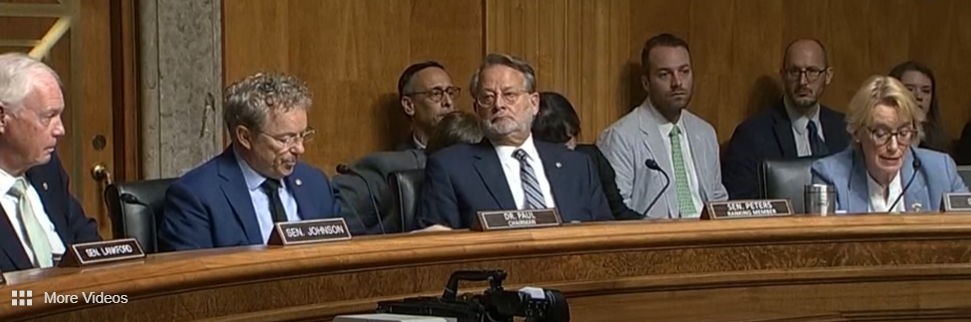
Committee Democrats sought to stop or delay the vote before it passed. Sen. Gary Peters, D-Mich., moved to table the resolution entirely. Committee Chairman Rand Paul, R-Ky., rejected the effort: "This motion to table is intended to avoid accountability. We only have one question — whether to hold a witness responsible for his contempt towards Congress. The witness had many chances to answer the questions pertinent to our investigation, and he made his decision 111 times."
Sen. Richard Blumenthal, D-Conn., separately called for delaying the vote until the committee could hear from Fauci's attorney, who was forcibly removed from last week's hearing by Capitol Police. Blumenthal argued Fauci "had a well-founded fear, based on facts, that he was in jeopardy of prosecution for perjury," and pushed back on the significance of Fauci's earlier pardon from President Biden: "This is a total myth and misconception that the pardon somehow is a factor here. The pardon makes no difference whatsoever because it is for actions before the beginning of the Trump term."
Sen. Gary Peters, D-Mich., separately argued more time was needed to review the underlying records before voting — an objection Paul dismissed, noting members had already had access to them for weeks.