Starship Reaches Orbit, Comes Home Early After Engine Trouble
Ship 41 reached orbit and deployed 26 Starlink satellites, then came home early after an engine failure cut the mission short.
By Lynn Matthews - September 29, 2026
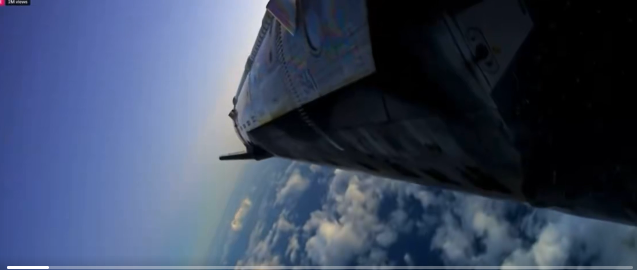
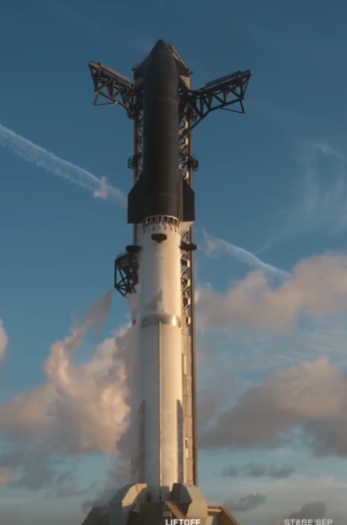
STARBASE, Texas. Starship reached orbit for the first time Monday, then came home about seven hours ahead of schedule after a Raptor vacuum engine shut down during ascent.
Flight controllers reviewed the vehicle's systems and cleared Ship 41 to proceed toward orbit despite the engine loss. It went on to release all 26 Starlink V3 satellites, the first operational payload Starship has ever deployed. The satellites came out one at a time through a door in the ship's payload bay, much like candy from a steel Pez dispenser, over about 30 minutes. SpaceX said it made contact with the satellites shortly after they were released.
Given the engine issue, SpaceX cut the mission short. The original plan called for six orbits and roughly 10 hours before a splashdown off the coast of Chile. Instead, after confirming the satellites were safely away, Ship 41 completed one to two orbits, then relit a single engine for its first-ever deorbit burn. It reentered the atmosphere and splashed down in the northern Pacific, north of Hawaii, at just before noon Eastern time. That change of target was the tell. Hawaii was the early-exit corridor. Chile was the test SpaceX didn't fly.
The splashdown itself went as these ocean splashdowns typically do. The ship settled into the water, then tipped over as residual propellant ignited, a result SpaceX and other outlets described as expected rather than a malfunction.
Three of the satellites carry cameras to photograph Ship 41's heat shield in space, a method SpaceX is testing for later return-to-launch-site flights. Whether the shortened timeline gave them the full look SpaceX wanted has not been made public. SpaceX says the satellites, once they complete checkouts, could begin serving customers within a few weeks.
SpaceX called Flight 14 a success, pointing to its two primary objectives: reaching orbit for the first time and delivering an operational payload. It was also widely described as Starship's first revenue flight, because the satellites were commercial Starlink hardware rather than test articles.
Splashdown confirmed. Congratulations to the entire SpaceX team on the first orbital flight of Starship! pic.twitter.com/urjmiwnvNl
What the flight didn't get to test is the harder question. The original six-orbit plan was built to put Starship through a longer thermal soak in space and a full run at the reentry corridor toward Chile, conditions closer to what an operational mission will demand. An engine that quits early doesn't prove the vehicle is ready for that. It proves Starship can still make orbit and deliver cargo even when something goes wrong on the way up, and that Ship 41 was brought down on command in a planned Pacific zone.