The Supreme Court on Monday let the Trump administration begin moving forward with an executive order restricting mail-in voting, pausing a Massachusetts judge's injunction that had blocked key provisions from taking effect in 23 states and the District of Columbia ahead of the November midterms.
Supreme Court clears path for Trump mail-ballot restrictions ahead of midterms
Path created for restrictions on mail in ballots prior to the midterm elections
By Lynn Matthews - August 25, 2026
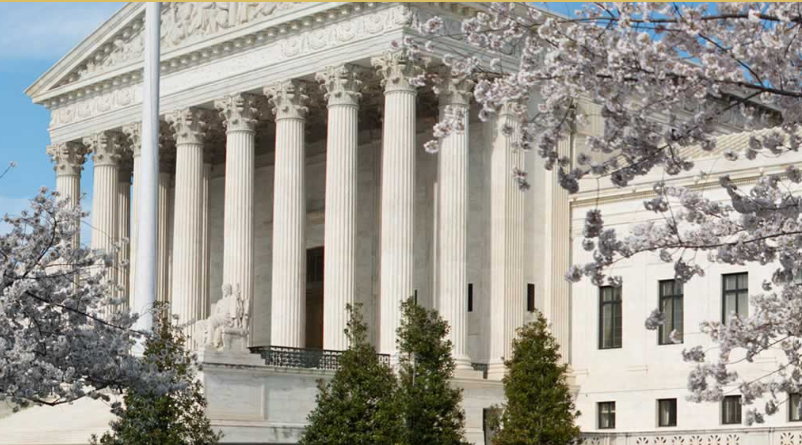
The 6-3 ruling split along ideological lines, with the court's Republican appointees in the majority. In an unsigned opinion, the majority found it was too early for the challenging states to sue, since the administration has not yet finished implementing the order — meaning the states have not yet suffered a legal injury.
President Donald Trump signed the order in March, directing the Department of Homeland Security to compile state-by-state lists of adult U.S. citizens, instructing the attorney general to prioritize prosecuting officials who issue ballots to ineligible voters, and requiring the U.S. Postal Service to build its own list of "enrolled" voters eligible to receive mail ballots.
California led a coalition of 23 states and the District of Columbia in challenging the order, arguing it conflicts with the Constitution's grant of election authority to the states. U.S. District Judge Indira Talwani sided with the challengers in June, and the 1st U.S. Circuit Court of Appeals declined to pause her ruling. The Trump administration appealed to the Supreme Court in late July, warning that further delay would leave the Postal Service unable to implement new ballot-design rules before mail voting begins in some states.
A second, separate nationwide injunction from Talwani — blocking the Postal Service specifically from acting on the order — remains in place for now, meaning the practical rollout is still constrained even after Monday's ruling.
The court's three Democratic appointees dissented. Justice Sonia Sotomayor, joined by Justice Elena Kagan, wrote that the ruling "merely postpones adjudication of those challenges" and does not address whether the administration's actions are constitutional. Justice Ketanji Brown Jackson wrote separately that the majority was missing the government's real aim: to secure the court's blessing for an effort to "foment chaos" ahead of November.
The ruling leaves the broader legal fight over the order unresolved. States are expected to press their challenge further once the Postal Service issues a final rule, which the majority indicated would give them clearer legal standing to sue.
Sources:
Amy Howe, "Supreme Court allows Trump administration to move forward with order imposing restrictions on mail-in voting," SCOTUSblog, Aug. 24, 2026: https://www.scotusblog.com/2026/08/supreme-court-allows-trump-administration-to-move-forward-with-order-imposing-restrictions-on-ma/
Have a correction or tip? See our corrections policy or contact the newsroom.
Comments
to join the discussion.
Loading comments...