They Called It Ridiculous. It's Now a Line Item in a SpaceX Filing.
The idea of putting AI data centers in orbit was once dismissed as physically impossible. It’s now in SpaceX filings, Google’s plans, and a Louisiana spaceport deal.
By Lynn Matthews - August 14, 2026
Years ago, in conversations that predate this publication, I kept telling people the same thing: AI data centers were eventually going to space. The response was consistent, and consistently dismissive. Space is cold, sure, but that’s exactly the problem — there’s no air up there, no way to actually cool anything down. The idea got laughed off as a nice thought experiment with a fatal flaw.
That objection wasn’t wrong. It was, and is, the single hardest engineering problem standing between orbital computing and reality. It also isn’t the dead end it was treated as — and this week, it stopped being a hypothetical for me personally, when Louisiana’s own SpaceX spaceport deal turned out to be built, in part, around exactly this.
The physics objection, and why it was real
On Earth, data centers cool themselves with air or circulating liquid — convection, carrying heat away by moving a fluid past something hot. In the vacuum of space, there is no fluid. Convection doesn’t exist up there. The only way to shed heat is by radiating it away as infrared energy, a process that is dramatically slower and less efficient than what every terrestrial data center relies on. Cooling one megawatt of AI compute in orbit requires a radiator surface of roughly 1,200 square meters — about the size of four tennis courts — according to recent industry analyses. “Space is cold, but it does not cool things,” one recent engineering breakdown put it. “The physics of heat rejection in vacuum are fundamentally different from anything used in terrestrial data centers.”
That’s a real, serious constraint. It is not, however, a wall anyone has hit and stopped at.
Where the industry actually is right now
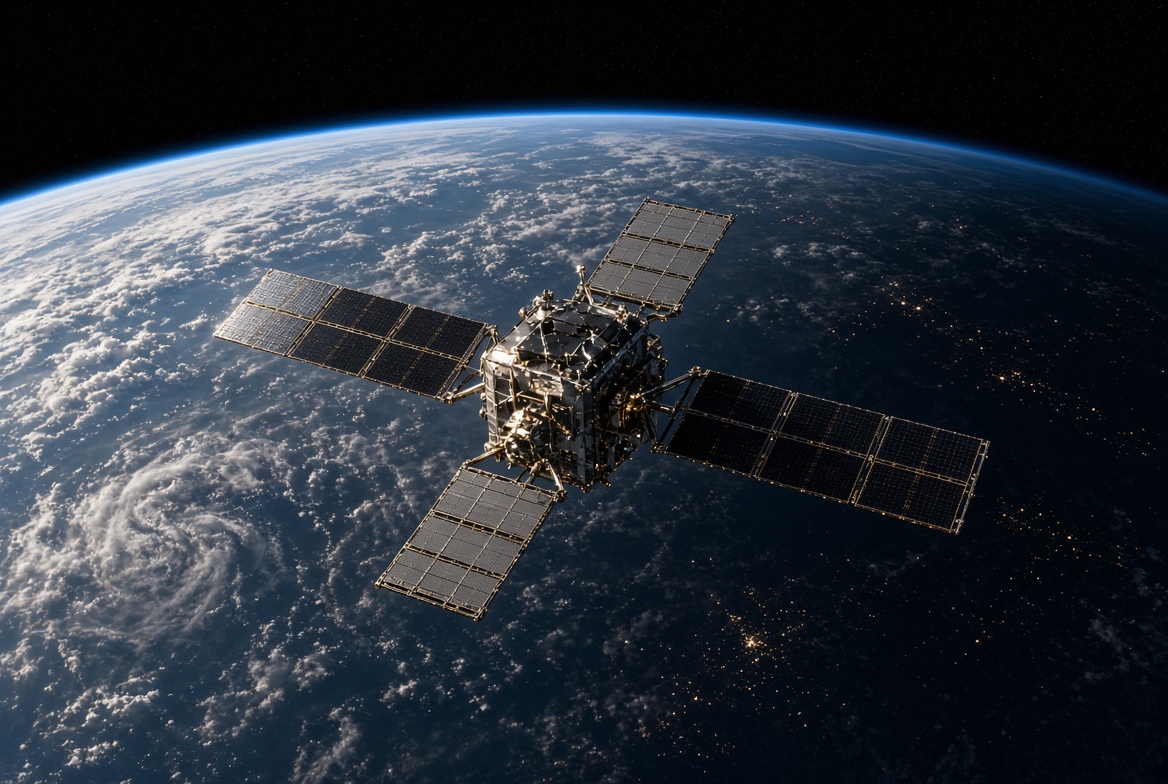
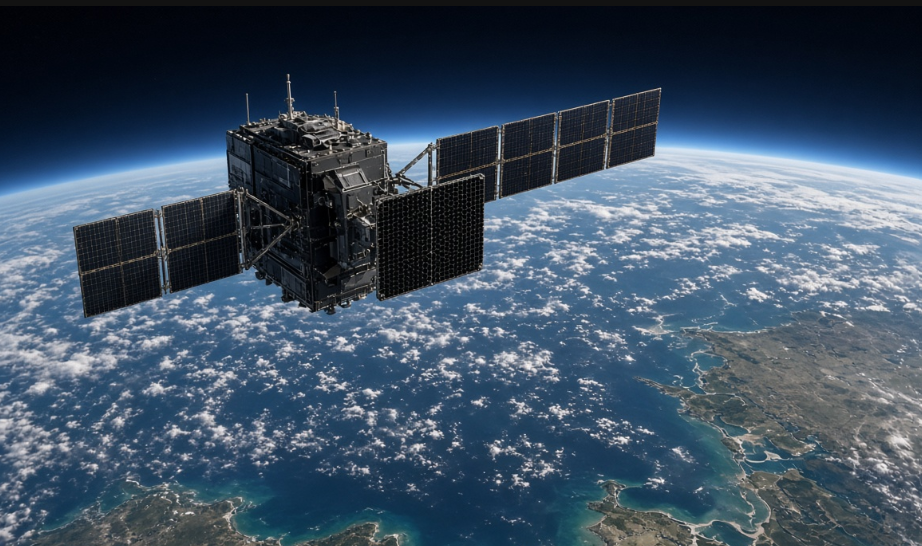
This has moved well past slide decks. Starcloud flew an unmodified NVIDIA H100 chip into orbit and trained a language model in space for the first time. Axiom Space launched its first orbital data-center nodes in January 2026. Google’s Project Suncatcher is preparing to launch TPU-equipped prototypes by early 2027, after a November 2025 feasibility study concluded that if launch costs to low Earth orbit fall to around $200 per kilogram — plausible if SpaceX’s Starship reaches roughly 180 launches a year — orbital computing becomes cost-competitive with ground-based data centers. Blue Origin has its own effort, Project Sunrise. SpaceX (now combined with xAI) is developing its Starmind constellation — a planned network of as many as one million data-center satellites.
On the power question — my own instinct, years ago, that the answer was simply keeping the panels in constant sunlight — the industry converged on almost exactly that idea, with a specific name attached to it: a dawn-dusk sun-synchronous orbit. It’s not that a satellite chases the sun through active maneuvering. It’s a fixed orbital plane that, because of how it precesses relative to Earth’s own orbit, rides the boundary line between day and night continuously — receiving sunlight more than 99 percent of the time, with almost no eclipse periods to plan around. Google, Blue Origin, and multiple peer-reviewed proposals are all building around this same orbital geometry for exactly that reason.
How big does it actually have to be
This is where the honest answer is “it depends which version you mean.” What’s actually in orbit today — Starcloud’s single chip, Axiom’s first nodes — is modest, well within the scale of something like the International Space Station or smaller. But the industrial ambition being chased by SpaceX, xAI, and Google isn’t a single chip. Multi-megawatt proposals under serious engineering study call for tethered chains of solar, compute, and radiator panels spanning kilometers — dramatically larger than the ISS, which spans roughly the length of a football field and generates about 120 kilowatts. Reaching the scale companies have publicly targeted means structures far bigger than anything humans have yet built in orbit.
The Louisiana connection
Grok Imagine Generated image
This isn’t an abstract industry trend anymore, not for Louisiana readers. In WECU News’ Aug. 8 reporting on the SpaceX spaceport deal taking shape in Vermilion Parish, SpaceX’s own SEC filing described plans to launch a constellation of AI-focused data-center satellites — the same orbital ambition described above — and explained why a south-facing Gulf coast launch site is uniquely suited to reaching the polar orbits those satellites need. The spaceport story and the space-data-center story are not two different things. They are the same infrastructure buildout, arriving in the same stretch of Louisiana coastline.
The idea that got laughed off years ago as physically impossible is now a specific line in a federal regulatory filing, tied to a specific parish, with a specific orbital mechanism solving the exact objection that was supposed to kill it. The cooling problem was real. It just wasn’t permanent.