Ordering lunch shouldn't come with a side of weeks-long illness.
Thousands Sick After Eating a Common Fast-Food Ingredient. Here's What Investigators Have Discovered.
The product tied to the current Cyclospora cluster.
By Lynn Matthews - July 19, 2026
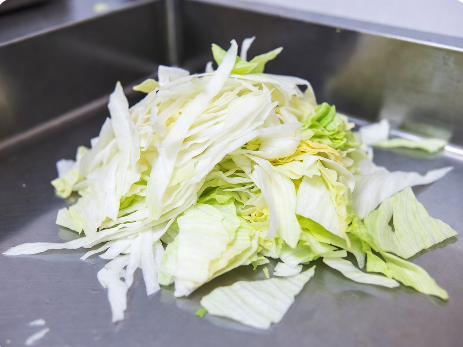
Yet federal health officials are investigating one of the largest Cyclospora outbreaks in recent U.S. history after tracing a growing cluster of illnesses to shredded iceberg lettuce served at Taco Bell restaurants in five states. So far, 1,644 laboratory-confirmed illnesses and 94 hospitalizations have been linked to the outbreak, with no deaths reported. Investigators emphasize that the numbers could continue to grow as additional cases are confirmed.
The investigation has led federal officials through an international supply chain stretching from restaurant kitchens in the Midwest to a lettuce supplier in central Mexico, raising new questions about food safety, traceability, and how quickly contaminated produce can move across borders before anyone realizes there's a problem.
What Investigators Know So Far
According to the U.S. Food and Drug Administration (FDA), epidemiologists found that a large percentage of infected patients had one thing in common: they had recently eaten at Taco Bell restaurants in Indiana, Kentucky, Michigan, Ohio, or West Virginia. When investigators compared menu items, shredded iceberg lettuce emerged as the strongest common ingredient.
The FDA's traceback investigation identified a single supplier of iceberg lettuce from Mexico. Taylor Farms de Mexico has since voluntarily removed iceberg lettuce sourced from central Mexico from the U.S. market while investigators continue examining where contamination occurred. Taco Bell also removed the affected lettuce from its supply chain.
Although this outbreak has been strongly linked to Taco Bell locations in five states, federal officials caution that the broader increase in Cyclospora infections nationwide may involve additional sources that are still under investigation.
Why Cyclospora Is Different
Unlike many foodborne illnesses that strike within hours, Cyclospora can take days or even weeks before symptoms appear.
That delay makes outbreaks especially difficult to investigate.
By the time someone becomes sick, the meal that caused the illness may be long forgotten, restaurant ingredients have been replaced, and contaminated products may have traveled through multiple distributors and retailers.
Symptoms commonly include:
Prolonged watery diarrhea
Stomach cramps
Nausea
Fatigue
Loss of appetite
Weight loss
Bloating and gas
Without treatment, symptoms may continue for weeks, disappear, and then return. Unlike viruses such as norovirus, Cyclospora is not spread through casual person-to-person contact but is typically acquired by consuming contaminated food or water.
How One Ingredient Can Reach Millions
Modern food distribution is remarkably efficient.
Fresh produce may be harvested in one country, processed in another facility, transported hundreds of miles across international borders, distributed through regional warehouses, and delivered to thousands of restaurants within days.
That efficiency helps keep grocery shelves stocked year-round—but it also means that when contamination occurs near the beginning of the supply chain, the impact can spread across multiple states before public health officials recognize a pattern.
Should Consumers Be Concerned?
The FDA advises consumers not to eat shredded iceberg lettuce from Mexico served at Taco Bell locations in Indiana, Kentucky, Michigan, Ohio, or West Virginia while the investigation continues. Not every Taco Bell in those states received the implicated product, and Taco Bell has stated that it has removed the affected lettuce from its supply chain.
Anyone experiencing prolonged diarrhea or other symptoms after eating at one of the affected locations should contact a healthcare provider. Because Cyclospora requires specialized testing, telling your provider about possible exposure may help speed diagnosis and treatment.
The Bigger Picture
Foodborne illness outbreaks are relatively uncommon, especially considering the millions of meals served by national restaurant chains every day. But when contamination occurs high in the supply chain, a single ingredient can affect thousands of people across multiple states before investigators identify the source.
For now, federal investigators continue testing products, tracing distribution records, and determining whether additional restaurants, retailers, or food products may also be connected to the outbreak. As new evidence emerges, public health guidance—and the list of affected products—may continue to evolve.
Have a correction or tip? See our corrections policy or contact the newsroom.
Comments
to join the discussion.
Loading comments...