President Donald Trump announced Friday that the United States has struck what he called “THE BIGGEST OIL DEAL IN WORLD HISTORY” with Venezuela, giving the U.S. majority control of oil fields holding more than 65 billion barrels of proven reserves. But within 48 hours, Venezuela’s own government and U.S. reporting on the deal’s structure had already produced conflicting details on some of its most basic terms.
Trump Announces Deal for US Control of 65B Barrels of Venezuelan Oil
Trump called it "the biggest oil deal in world history." But within 48 hours, U.S. officials, Venezuela's own president, and competing news reports had already given three different accounts of how it actually works.
By Lynn Matthews - August 30, 2026
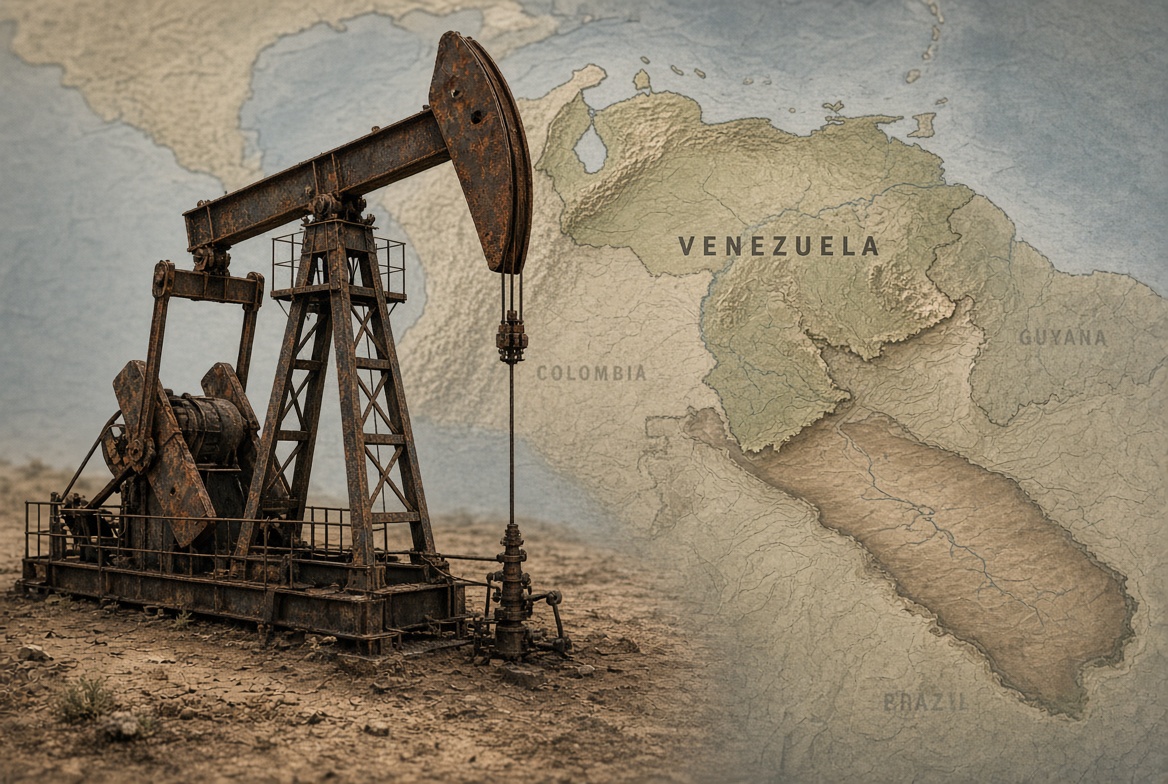
“At my direction, Secretary of State Marco Rubio, and Secretary of War Pete Hegseth, working closely with Highly Respected Interim President of Venezuela, Delcy Rodriguez, and, through a partnership with private business, have secured majority U.S. control of more than 65 BILLION BARRELS of proven Oil Reserves in Venezuela, at no cost to the American Taxpayer,” Trump wrote on Truth Social. He said the deal “more than doubles American oil reserves” and would “substantially lower” gas prices for Americans “long into the future.” That doubling claim is true only if the 65 billion Venezuelan barrels are counted as American reserves, which they are not unless and until they are actually produced under U.S. offtake rights.
The clearest unresolved fact: how long does this actually last?
Trump’s initial announcement did not specify the deal’s duration. U.S. officials speaking to reporters described 100-year concessions granted by Venezuela’s government. But in a televised address Saturday night, Rodriguez herself described something different: a 25-year bilateral project. “This 25-year bilateral project envisages the development of 17 strategic oilfields with a production target of more than 1.5 million barrels per day,” she said on state broadcaster VTV, adding that figure was an initial goal and that a broader plan includes eight additional greenfield oil blocks. She said Venezuela retains full “ownership of and sovereignty” over its natural resources under the arrangement. As of this writing, the discrepancy between the 100-year figure described by U.S. officials and Rodriguez’s 25-year framing has not been publicly reconciled by either government.
How the deal is structured — also still unsettled
Trump did not disclose the deal’s structure, specific fields, or participating companies in his announcement. A U.S. official told NBC News (MS NOW) that the State Department and Pentagon negotiated an arrangement giving the U.S. an effective 55% share of output from a new joint venture. Separate reporting from the Wall Street Journal on Saturday, citing people involved in the negotiations, described a 35% passive equity stake in North American Blue Energy Partners (NABEP) plus preferential rights to purchase 20% of the company’s production at cost — figures that, added together, describe roughly the same 55% effective share of output as the NBC report, just broken into equity and offtake components rather than presented as one number. NABEP is controlled by Venezuelan businessman Alejandro Betancourt López; it is already Venezuela’s second-largest private oil producer, pumping roughly 200,000 barrels a day. Betancourt has faced money-laundering investigations in Spain and Switzerland in the past; no charges have been reported in connection with the current coverage of this deal.
The real dispute isn’t necessarily the math — it’s the mechanism. The Pentagon’s Office of Strategic Capital was reportedly set to structure its position through financial instruments called penny warrants. Pentagon spokesperson Sean Parnell disputed that this amounts to equity when Reuters asked for comment: “The Office of Strategic Capital (OSC) does not take equity stakes in private companies. Under its statutory authority, OSC’s role is strictly limited to providing capital assistance in the form of a loan, loan guarantee, or technical assistance.” Whether warrants that function like equity without technically being labeled equity satisfy that statutory limit is the live legal and political question here — not yet resolved by either side.
Neither government has named the partner publicly. Rodríguez did not mention Betancourt or NABEP in her televised address, and the Trump administration has not named them in any official statement. Reporting from both the Wall Street Journal and the Washington Post, each citing people familiar with the negotiations, points to Betancourt and NABEP as the private U.S. partner — giving the identification real independent corroboration, even without an on-the-record confirmation from either government.
Venezuela’s side
Rodríguez said the arrangement is projected to generate about $209 billion for Venezuela's state treasury, based on a benchmark oil price of $65 a barrel, with roughly $19 of every barrel produced and sold under the deal flowing directly to Caracas. She acknowledged the figure would shift with oil prices. Rubio, in a separate statement, called the deal a “huge win” for both countries and said it would bring nearly $100 billion in private investment, support thousands of high-paying jobs, and drive Venezuela’s economic reconstruction.
Why Venezuela, and why now
Venezuela holds roughly 303 billion barrels of proven crude reserves — the largest of any nation on Earth, about 17% of global supply, according to the U.S. Energy Information Administration. Despite that, the country currently produces about 1.23 to 1.25 million barrels a day, its highest output since 2019 but still a fraction of its roughly 3.5-million-barrel peak in the late 1990s, the result of years of underinvestment, mismanagement and sanctions. Roughly half of current Venezuelan output already flows to U.S. Gulf Coast refineries.
The announcement lands with the national average U.S. gas price at $4.085 a gallon, per AAA/EIA weekly data for the week of Aug. 24, and as the war between the U.S. and Iran, now six months old, has badly disrupted flows through the Strait of Hormuz, which normally carries about a fifth of the world’s oil. It also arrives roughly nine weeks before the U.S. midterm elections.
Background: the Maduro operation
The deal follows a major U.S. military operation early this year that captured Venezuela’s then-president, Nicolás Maduro, and brought him to New York to face criminal charges; he remains jailed in the U.S. and has pleaded not guilty. In January, before Friday’s deal, Washington had already arranged for Venezuela to transfer 30 to 50 million barrels of previously produced, sanctioned crude to the U.S. — a smaller, one-time predecessor to the long-term production arrangement announced this week. Venezuelan lawmakers also passed a law change in January making it easier for foreign companies to participate in the country’s oil sector.
It’s worth noting that under international law, the United States has no inherent claim of ownership over Venezuela’s oil; the late Hugo Chávez seized property belonging to American oil firms decades ago as part of his nationalization of the industry, a dispute that has lingered for years. This week’s announcement represents a negotiated commercial arrangement with Venezuela’s current interim government, not a legal reclamation of previously seized assets. Some Venezuelan opposition figures have separately questioned whether a caretaker government installed after a U.S. military operation has the legitimate authority to commit the country to multi-decade resource agreements — a political and legal argument already circulating in Venezuelan media, though not yet tested in any court.
Chevron, ExxonMobil and ConocoPhillips — the three largest U.S. oil companies — had not directly commented on the deal as of this writing. Exxon and ConocoPhillips in particular still hold unresolved, unpaid expropriation claims stemming from Hugo Chávez’s nationalization of their Venezuelan assets in the 2000s; their silence on this deal may reflect that unresolved history as much as it does simple wait-and-see caution.
The ‘no cost to the taxpayer’ claim
Trump’s announcement emphasized the deal comes “at no cost to the American Taxpayer.” The Pentagon’s own statutory authority is limited to loans, loan guarantees and technical assistance — not equity, according to Parnell’s own statement. That distinction is the cleanest version of the risk in the “no cost” claim: if the penny warrants reportedly involved in this deal are ever exercised or converted in a way that functions as equity, that would sit in tension with both OSC’s statutory limits and the “no cost” framing Trump used to announce it. Rebuilding Venezuela’s dilapidated oil infrastructure is, on its own, a massive undertaking; if major oil companies remain cautious about direct investment given Venezuela’s history of nationalization and instability, the financial burden could still end up falling more on public or Pentagon-backed capital than the “no cost” framing suggests.
Sources:
CNN, “Trump says US reaches deal with Venezuela to control 65 billion barrels of country’s oil reserves,” Aug. 28, 2026: https://www.cnn.com/2026/08/28/politics/trump-venezuela-oil-deal
Al Jazeera, “Venezuela says it retains ‘sovereignty’ following US oil deal,” Aug. 30, 2026: https://www.aljazeera.com/news/2026/8/30/venezuela-says-it-retains-sovereignty-following-us-oil-deal
Reuters (via CNBC), “Venezuela’s interim president says US energy deal will last 25 years,” Aug. 30, 2026: https://www.cnbc.com/2026/08/30/venezuelas-interim-president-says-us-energy-deal-will-last-25-years.html
Reuters (via Business Recorder), “US to take 35% stake in Venezuelan mogul Betancourt’s oil venture, WSJ reports,” Aug. 30, 2026: https://www.brecorder.com/news/40437089/us-to-take-35-stake-in-venezuelan-mogul-betancourts-oil-venture-wsj-reports
The Wall Street Journal (via Yahoo Finance), “Pentagon to take 35% stake in Venezuela oil venture, WSJ reports,” Aug. 30, 2026: https://finance.yahoo.com/energy/articles/pentagon-35-stake-venezuela-oil-035001573.html
The Washington Post (via Yahoo News), “U.S. intervened in criminal probe of oilman helping Trump in Venezuela,” Aug. 27, 2026: https://www.yahoo.com/news/politics/articles/us-intervened-in-criminal-probe-of-oilman-helping-trump-in-venezuela-100946431.html
The Hill, “Delcy Rodriguez details $209 billion Venezuela oil deal with US,” Aug. 30, 2026: https://thehill.com/policy/international/6059462-venezuela-us-oil-deal/
NPR, “Trump says U.S. has entered deal with Venezuela to take control of 65 billion barrels of oil reserves,” Aug. 28, 2026: https://www.npr.org/2026/08/28/nx-s1-5948229/trump-says-u-s-has-entered-deal-with-venezuela-to-take-control-of-65-billion-barrels-of-oil-reserves
Axios, “Trump hails ‘biggest oil deal in world history’ with Venezuela,” Aug. 29, 2026: https://www.axios.com/2026/08/29/trump-venezuela-oil-deal
MS NOW (NBC News), “Trump announces deal giving U.S. majority stake in massive Venezuelan oil venture,” Aug. 28, 2026: https://www.ms.now/news/trump-venezuela-oil-deal
Topics:Trump Venezuela oil dealVenezuela 65 billion barrelsDelcy Rodriguez 25 year dealBetancourt López NABEPVenezuela oil deal structureTrump Rubio Hegseth VenezuelaVenezuela oil sovereigntyPentagon Office of Strategic CapitalVenezuela oil gas pricesMaduro capture oil deal
Have a correction or tip? See our corrections policy or contact the newsroom.
Comments
to join the discussion.
Loading comments...