New international data is renewing scrutiny of American education spending after a global skills survey found U.S. college students lagging behind their peers in basic reading ability — even as per-pupil spending and federal student debt both hit historic highs.
U.S. College Students Trail Global Peers in Basic Literacy, Despite Record K-12 Spending
College students are Trailing Globally
By Lynn Matthews - July 20, 2026

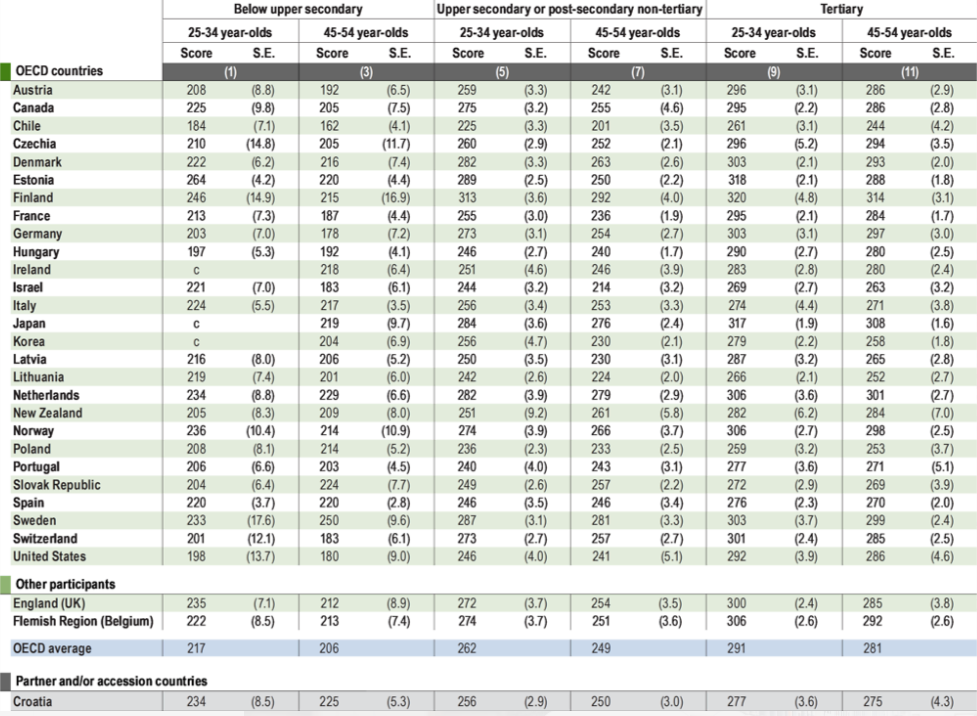
The OECD's 2023 Survey of Adult Skills (PIAAC), which tested roughly 160,000 adults across dozens of countries, found that 14% of U.S. college students scored at or below the lowest measurable literacy level — proficiency researchers have compared to a typical 10-year-old's reading level. That's nearly double the roughly 8% average among the 31 countries that reported comparable data. Germany and France came in under 5%; only Israel and Poland scored worse than the U.S. among wealthy nations.
The literacy gap doesn't appear to be a funding problem, at least not a shortage of it. U.S. Census Bureau data show public K-12 spending hit $983.7 billion in fiscal year 2024, with per-pupil spending climbing to a record $17,619 — up 6.6% from the year before. Meanwhile, federal student loan debt has ballooned to $1.7 trillion, spread across more than 42 million borrowers, as the cost of a four-year degree continues to outpace inflation.
Domestic testing tells a similar story.
The National Assessment of Educational Progress (NAEP) — often called "the Nation's Report Card" — found that just 35% of the high school class of 2024 scored proficient enough in reading to be considered ready for college-level coursework, down from 37% in 2019. Nearly a third of 12th graders scored below NAEP's "basic" level entirely, the highest share ever recorded.
Critics argue the numbers point to a disconnect between spending and outcomes, particularly at the federal level. Federal student aid — grants, subsidized loans, and loan forgiveness programs — has expanded college access without a corresponding rise in what enrolled students can demonstrably do. Some education researchers have argued that easy access to federal loan dollars allows colleges to raise tuition largely without consequence, since institutions face little pressure to justify costs when the government effectively underwrites demand.
Defenders of current spending levels counter that per-pupil increases reflect rising costs for staff, special education services, and post-pandemic recovery efforts — not waste — and that literacy gaps trace more to K-12 instructional practices (including pandemic-era learning loss) than to how much money flows through the system.
Either way, the numbers arrive at an awkward moment for policymakers: American taxpayers and borrowers are spending more on education than ever, while a shrinking share of graduates — at both the high school and college level — can demonstrate they're prepared for what that spending is supposed to produce.
Topics:Education
Have a correction or tip? See our corrections policy or contact the newsroom.
Comments
to join the discussion.
Loading comments...