Four words in the 14th Amendment decide who is automatically a U.S. citizen at birth. Here's what the Supreme Court says they mean, why diplomats' children are the exception, and why the phrase keeps coming up in immigration and citizenship debates.
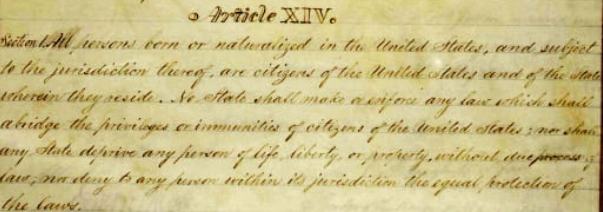
— The 14th Amendment to the U.S. Constitution says: "All persons born or naturalized in the United States, and subject to the jurisdiction thereof, are citizens of the United States." Nearly every debate over birthright citizenship — from executive orders to Supreme Court rulings to op-eds arguing over who should and shouldn't automatically become a citizen — comes down to five words in that sentence: "subject to the jurisdiction thereof."
This piece breaks down what that phrase actually means, according to the Supreme Court's own reading of it, and why it produces the specific, sometimes counterintuitive results it does.
The Short Answer
"Subject to the jurisdiction" refers to whether the United States government has legal authority over a person while they are physically present in the country — not their immigration status, not their citizenship elsewhere, and not how long they intend to stay. In Trump v. Barbara, the Supreme Court's majority held that this authority is territorial: it applies to virtually everyone standing on U.S. soil, because virtually everyone standing on U.S. soil can be arrested, taxed, sued, and prosecuted under U.S. law. The test isn't about who someone is. It's about what the government can legally do to them while they're here.
Why Diplomats Are the Exception
The one group of people clearly excluded from birthright citizenship under this standard is children of foreign diplomats — and the reason is specific, not general. Diplomatic immunity means a foreign ambassador or diplomat physically present in the U.S. cannot be arrested, sued, or prosecuted under U.S. law; their home country's legal system follows them instead. Because U.S. jurisdiction, in the legal sense, doesn't actually reach them, their children born on U.S. soil fall outside the citizenship guarantee too. It isn't about nationality or intent to stay — it's the literal absence of legal authority over the parent.
Why Almost Everyone Else Is Included
A tourist, a student, an unauthorized immigrant, or a foreign national on any kind of visa has none of that immunity. All of them can be arrested, fined, sued, or deported under U.S. law the moment they're here — meaning, under the Court's test, all of them are "subject to the jurisdiction" in exactly the way a diplomat is not. That's why a child born to someone in the U.S. without legal authorization, or to a tourist who traveled specifically to give birth, is a U.S. citizen at birth under current law, while a diplomat's child is not. The distinction isn't about who deserves citizenship. It's a narrow legal test about who the government has actual authority over.
Why the Phrase Keeps Coming Up in Immigration Debates
Every recent attempt to narrow birthright citizenship — including two executive orders signed in August 2026 — has had to work around this standard rather than through it, because the Supreme Court has now directly ruled on what the phrase means. An executive order can't redefine "jurisdiction" by itself; changing the legal meaning of a phrase the Supreme Court has already interpreted would require either a new constitutional amendment or the Court reversing its own precedent. That's why recent policy changes have instead focused on narrower tools — like restricting the visas of people believed to be traveling specifically to give birth in the U.S. — rather than attempting to reinterpret the citizenship clause itself.
The One-Sentence Version
"Subject to the jurisdiction" means "can the U.S. government legally arrest, tax, sue, or prosecute this person right now" — and for almost everyone except foreign diplomats, physically being in the country means the answer is yes.
Sources:
● SCOTUSblog, "Supreme Court strikes down Trump's order ending birthright citizenship" (Trump v. Barbara case coverage), June 2026
● National Constitution Center, "Supreme Court strikes down Trump's birthright citizenship executive order in landmark decision," June 2026
● National Constitution Center, 14th Amendment text and analysis
Have a correction or tip? See our
corrections policy or contact the newsroom.