"We have to build this to win the AI race" has become the default answer whenever a new hyperscale data center gets proposed near a town's power grid. It's also not a complete answer. If communities are being asked to absorb transmission lines and rising electricity costs, they're entitled to know what the resulting computing capacity is actually for — not just that it's "AI."
What Are All These AI Data Centers Actually Being Used For?
Communities are being asked to absorb the power and land costs of a massive computing buildout. Here's what that capacity is actually disclosed to be used for — and where the public record runs out.
By Lynn Matthews - September 1, 2026
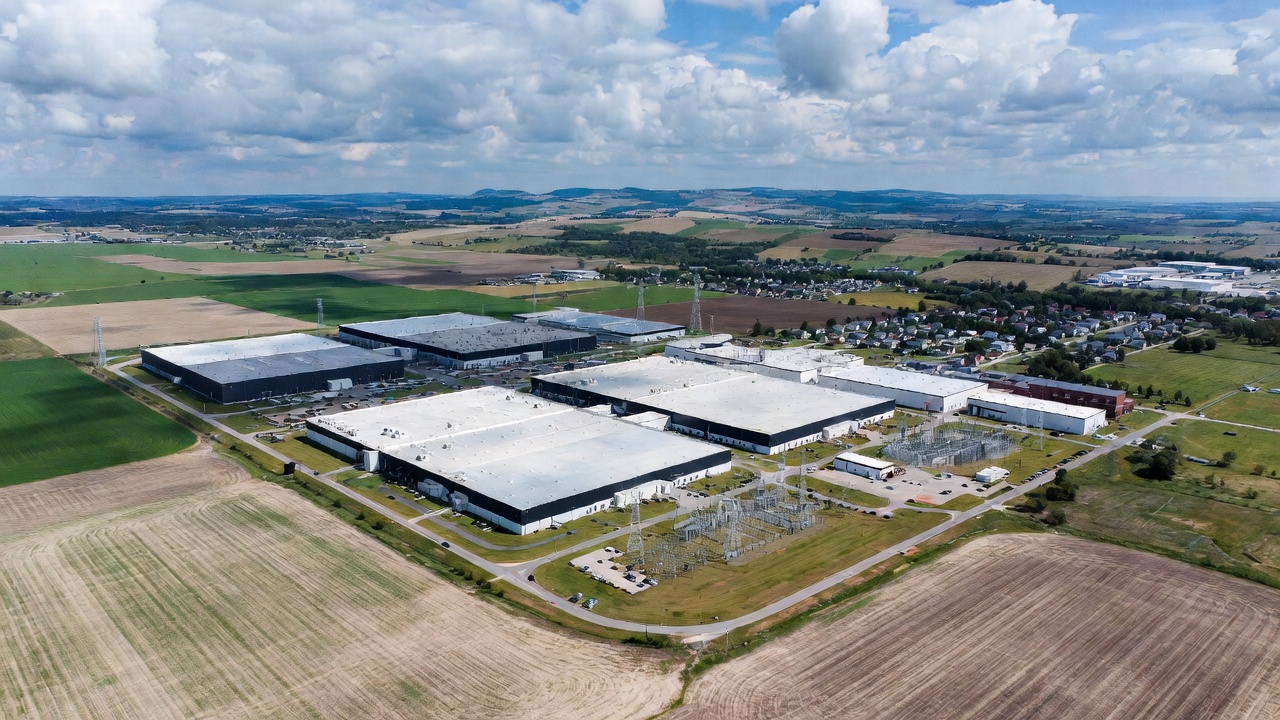
Some of that is a matter of public record. Some of it, it turns out, isn't published anywhere at all.
What gets modeled, and what's actually measured
The workload breakdown you'll see cited most often — roughly 54% cloud computing, 32% traditional enterprise, 14% AI — comes from Goldman Sachs Research, and it's worth being precise about what that number is and isn't. It's a model of the global data center power mix, not a U.S. government inventory, and Goldman's own scenario has AI's share climbing to 27% of the market by 2027, with cloud dropping to 50% and traditional workloads to 23%. It's also not a clean split: a ChatGPT query running on Microsoft's Azure, or Google's Gemini running on Google Cloud, sits inside the "cloud" bucket in that model, not a separate "AI" line. The 14% is Goldman's estimate of the AI-attributed slice of a modeled mix — not a meter reading.
U.S.-specific numbers, which are separately tracked, tell a related but different story. Lawrence Berkeley National Laboratory's federally funded data center energy usage report puts U.S. data centers at 176 terawatt-hours in 2023 — about 4.4% of total U.S. electricity consumption, projected to rise to somewhere between 6.7% and 12% by 2028. That figure doesn't include cryptocurrency mining, which LBNL tracks separately from data centers. Within that U.S. total, EPRI's 2026 "Powering Intelligence" analysis puts AI's current share of data center electricity at roughly 15% to 25% — already higher than Goldman's older global estimate, and rising.
Inference versus the campuses going up next to towns
Within AI specifically, most computing activity isn't training new models — it's inference, meaning running an already-trained model to actually answer a question or generate an image. MIT Technology Review's reporting on AI's energy footprint found that once a model exists, inference dominates its day-to-day compute hours by a wide margin. But that's not the same claim as saying the next gigawatt-scale campus going up next to a substation is "just search queries." Those large campuses are disproportionately built to train frontier models and then serve them at scale once they're ready — training is what demands the extreme power density that gets a data center compared to a power plant in size. A community fighting a proposed 1-gigawatt campus is more often fighting a training-and-serving cluster than something equivalent to a mail server farm.
It's also worth separating a campus's announced capacity from what's actually drawing power. EPRI estimates total U.S. data center operating peak demand at roughly 21 to 22 gigawatts in 2024 — a fraction of the gigawatts of capacity that have been publicly announced across projects still under construction. Utilization rates, cooling efficiency, and phased construction mean a "1-gigawatt campus" announcement is a target, not a number already on the meter.
The clearest branded example, and its actual numbers
OpenAI's Stargate project is the most politically visible piece of this buildout, though not necessarily the largest — Meta, Amazon, Google, and Microsoft have each announced multi-year capital spending in a comparable or larger range; Stargate is best described as the largest named, AI-specific U.S. infrastructure program, not the single largest buildout underway. OpenAI said this spring it had already secured more than 10 gigawatts of U.S. AI infrastructure, years ahead of its original 2029 target. That figure is contracted and committed capacity, not capacity already energized: independent tracking from Epoch AI puts Stargate's total planned capacity at roughly 9 gigawatts across seven U.S. sites, with only the flagship Abilene, Texas, site meaningfully online — about 0.3 gigawatts live as of this spring, working toward a projected 1.2 gigawatts by the end of the year. OpenAI has also continued expanding the project's footprint, announcing new sites including one in Michigan.
Worth naming plainly: OpenAI itself isn't the one pouring most of the concrete. The hyperscalers — Amazon, Google, Microsoft, and Meta — along with data center landlords like Oracle, CoreWeave, Vantage, and Crusoe that lease capacity to OpenAI and other AI companies, account for the large majority of the actual grid interconnection requests utilities are processing right now. Stargate is the political brand attached to this moment; the hyperscalers are most of the infrastructure.
The part with a genuinely specific answer: the military
The one place the use case is spelled out in real operational detail is defense. The Pentagon's roughly $30 billion fiscal 2027 budget request to modernize its AI supercomputing capacity — part of what officials are calling the "AI Arsenal" initiative — names its purposes explicitly: battle management and warfare operations, threat detection and analysis, and supply chain logistics. It's aimed at replacing "scattered clusters" of computing hardware with an integrated infrastructure portfolio built inside secure, classification-accredited facilities, separate from the commercial hyperscale campuses this piece is otherwise about.
The part that doesn't have a public answer
Here's where the honest answer runs out: there is no single published U.S. government document laying out how much total AI compute capacity the country needs, for what specific mix of purposes, by what date, or who ultimately pays for the generation and transmission infrastructure it requires.
The White House's "Winning the Race: America's AI Action Plan," released in July 2025 as the administration's central AI policy document, doesn't contain those figures. It's built almost entirely around deregulation — environmental review exemptions, faster permitting, opening federal land to data center construction — rather than a capacity plan with numbers attached. It makes more than 90 federal policy recommendations without mandating specific buildout targets or specifying who bears infrastructure costs.
Who pays" varies project to project rather than following a national rule. In Michigan, regulators approved DTE Energy’s contracts for a Stargate-linked campus of about 1.4 gigawatts and attached conditions intended to keep those costs off other customers: a 19-year power contract, an 80 percent minimum billing demand, customer-funded energy storage matched to the load, and a requirement that DTE — not residential ratepayers — eat any costs it cannot recover from Oracle’s project subsidiary. That is stronger protection than a handshake and weaker than a guarantee that the project funds every upgrade, period. It is also specific to that deal. Other utilities have structured large-load agreements differently, which is why the actual contract terms matter more than a general assurance either way.
For what it's worth, the country most often cited as the reason for urgency doesn't publish a clean national figure either: Beijing hasn't released a single public accounting of its own AI compute buildout tied to specific gigawatts and dates any more than Washington has. If the argument for urgency rests on the comparison, that comparison currently runs on the same kind of estimates and models on both sides, not verified totals.
What that means for the debate
None of this means the buildout is secretly for something else — the disclosed use cases (cloud services, consumer and enterprise AI products, and a separate, explicitly defined military compute program) account for the large majority of what's actually being built, and they're mundane rather than conspiratorial. But "AI is the future" genuinely isn't a substitute for the specific accounting that communities asked to host this infrastructure are entitled to: how much capacity, for which of these actual use cases, on whose timeline, and at whose cost. The workload breakdown is modeled. The U.S.-specific electricity numbers are measured. The national plan tying capacity, timeline, and cost together into one accountable document doesn't exist yet — at least not in one place, and not with a number the public can hold anyone to.
Sources:
Goldman Sachs Research, "AI to Drive 165% Increase in Data Center Power Demand by 2030"
Lawrence Berkeley National Laboratory, 2024 United States Data Center Energy Usage Report
MIT Technology Review, "We Did the Math on AI's Energy Footprint"
OpenAI, "Building the Compute Infrastructure for the Intelligence Age" and "Expanding Stargate to Michigan"
DefenseScoop, "DOD Wants Nearly $30 Billion to Modernize Its AI Supercomputing Arsenal in Fiscal 2027"
The White House, "Winning the Race: America's AI Action Plan" (July 2025)
Bridge Michigan, "Regulators Approve DTE Contracts for Michigan's First Hyperscale Data Center"
Topics:hyperscale data centersAI data centersdata center electricity usewhat are data centers used fordata center power demandAI inference vs trainingStargate OpenAIGoldman Sachs data center mixLawrence Berkeley data center energy reportEPRI Powering IntelligenceAI Action Plan data centersratepayer data center costsgrid interconnection data centers
Have a correction or tip? See our corrections policy or contact the newsroom.
Comments
to join the discussion.
Loading comments...