A White House Ban Is Now a Lawsuit. Access Is Not the Same Thing as Censorship.
Trump banned three outlets. They sued. Here's what he actually said, what they're actually claiming, and what the law actually says, kept separate on purpose.
By Lynn Matthews - September 21, 2026
His Words
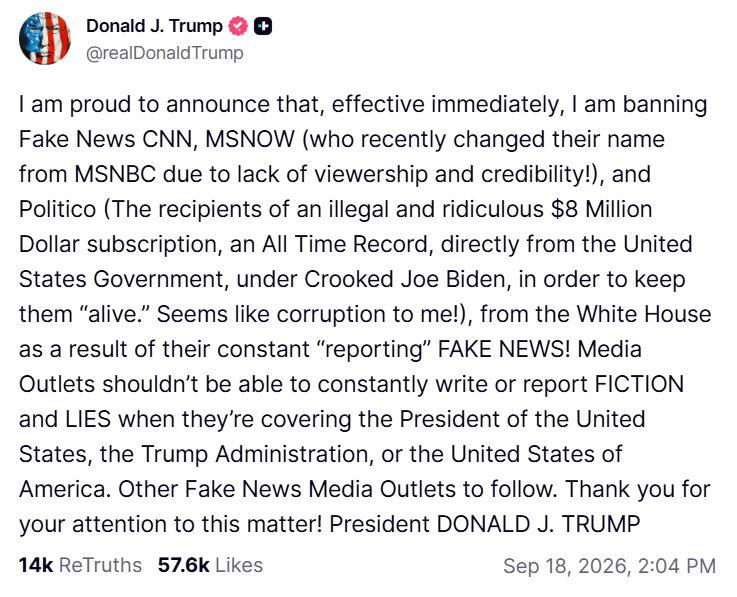
Friday, Sept. 18: President Trump posted on Truth Social that he is banning CNN, MS NOW (the network formerly known as MSNBC), and Politico from the White House, calling their coverage “Fake News” and accusing them of reporting “FICTION and LIES,” while threatening to add other outlets to the list. He followed it with remarks in the Oval Office the same day, telling reporters: “It's sick. I mean, there's something wrong with a country that can allow people to write purposely negative stuff. Now, if they want to write them, that's fine. But I don't have to let them into my, into the people's house.” He also said he supports a free press but that “you need a fair and honest press,” and denied trying to intimidate journalists.
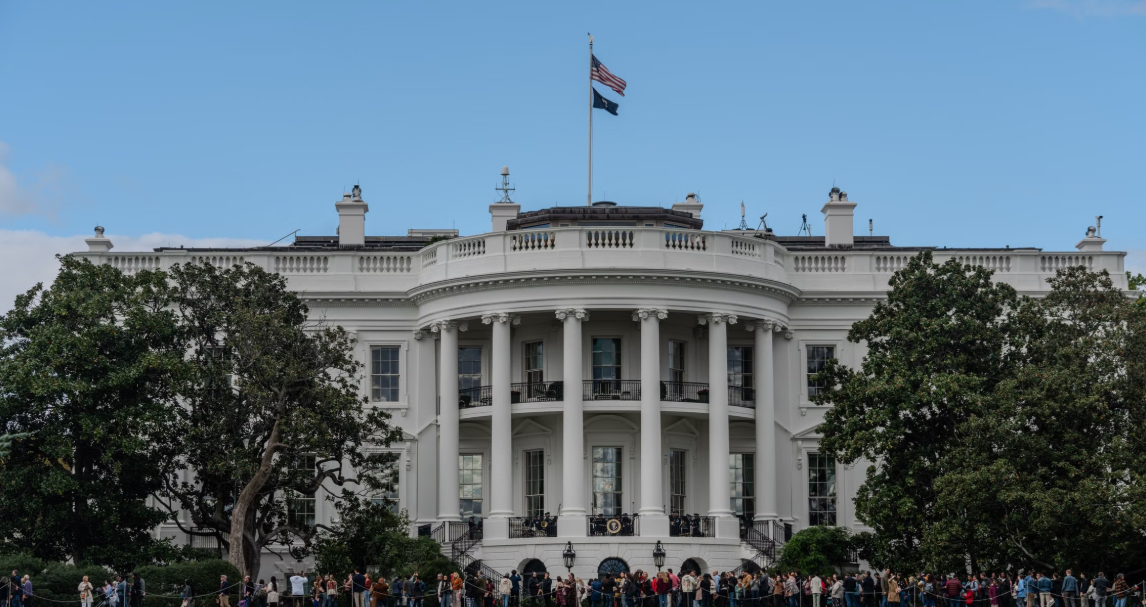
Saturday, Sept. 19: it stopped being just words. Reporters from all three outlets were turned away at the White House gate. CNN's Betsy Klein, who has covered the White House since the Obama administration, had her badge deactivated by a Secret Service agent with no explanation given. MS NOW's Akayla Gardner was told her badge was disabled and asked to hand it over, though her producer was let in. Politico's Cheyenne Haslett was denied entry outright.
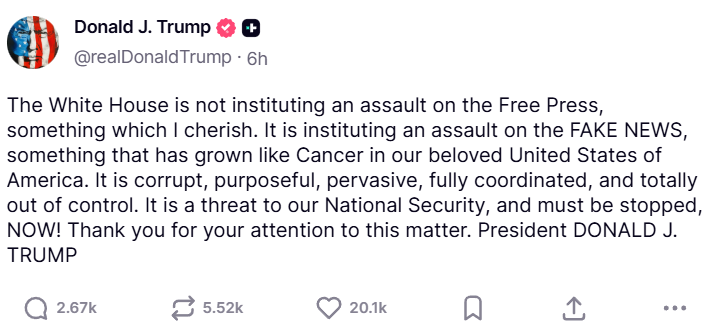
Monday, Sept. 21: CNN, MS NOW, and Politico filed suit, and Trump posted again the same day, writing: “The White House is not instituting an assault on the Free Press... It is instituting an assault on the FAKE NEWS,” and describing the press as “corrupt, purposeful, pervasive, fully coordinated, and totally out of control.”
Their Claim
CNN, MS NOW, Politico, and the three reporters - Klein, Gardner, and Haslett- filed suit Sept. 21 in federal court in Washington, D.C., against the Trump administration. The case was assigned to U.S. District Judge Timothy Kelly, a Trump first-term appointee, the same judge who handled the Acosta pass fight in 2018. The lawsuit argues three things, and all three are the outlets' claims, not settled findings: that the ban is retaliation for coverage the president dislikes, in violation of the First Amendment; that pulling access without notice or a chance to respond violates the Fifth Amendment's due process guarantee; and that this amounts to viewpoint discrimination, penalizing the outlets specifically for the substance of their reporting rather than any neutral rule. The suit asks the court to restore full access and reinstate the outlets in the White House press pool.
Three decisions sit behind this fight, and they are worth stating for what they actually held, not what either side wants them to mean.
Sherrill v. Knight, a 1977 D.C. Circuit case, did not create a right to a White House press pass. It held that once the White House makes press access a standing public practice, that access cannot be pulled arbitrarily. The reporter is owed notice of the reason, a chance to respond, and a written explanation. That is a due-process holding about how access can be taken away, not an entitlement to keep it.
The Acosta case is what that rule looks like in practice. In 2018, a federal judge ordered CNN correspondent Jim Acosta’s pass restored because none of that process had happened. It was the same administration, the same building, and — in the new lawsuit — the same judge, Timothy J. Kelly.
Associated Press v. Budowich, filed after the AP was barred over its refusal to use the administration's preferred name for the Gulf of Mexico. In April 2025, the district judge enjoined the ban as “pretty clearly viewpoint discrimination.” That's where most coverage of this precedent stops, but it isn't where the case stands now. A D.C. Circuit panel later stayed most of that injunction, holding that restricted presidential spaces like the Oval Office and Air Force One are “not First Amendment forums” and that the government is “likely to prevail” on excluding the AP from those specific spaces. The panel left the East Room portion of the order in place, finding the harms there less clear since it doesn't share the same restricted character as the Oval Office. Put plainly: this is not a finished case, and it is not simply a loss for the administration. The appeals court has already drawn a real line, some spaces get First Amendment protection, others don't, and the open question in the current lawsuit is whether the briefing room and the routine hard pass sit closer to the East Room side of that line or the Oval Office side.
Worth stating plainly, too: there's a real, non-fringe argument on the other side of this doctrine, and it's no longer just a law-review position. Nothing in the First Amendment's text obligates a president to grant, or keep granting, physical access to reporters he considers hostile, and a D.C. Circuit panel has already applied exactly that reasoning to the Oval Office and Air Force One. A textualist reading can reasonably extend that further, that these rulings have stretched a proximity question, who gets to stand in a room, into something closer to a speech question than the Constitution's language requires. That argument hasn't won on the merits of the underlying case yet. It has already won, provisionally, for the specific rooms the appeals court has ruled on so far.
Where This Actually Sits
Strip away the lawsuit language and the dispute is narrower than the press-freedom framing suggests. Nothing is stopping CNN, MS NOW, or Politico from publishing or airing anything they want about this administration — today, tomorrow, or after this case is decided either way. That is why this is an access fight, not a censorship fight.
It is still a fight the law recognizes. Sherrill and the Acosta case both treat White House access, and the process for taking it away, as protected in their own right — not as a lesser concern just because the presses keep running. What these outlets lost is proximity: the briefing room, the pool spot, the hallway where same-day questions happen. That is a real loss for how they do the job. It is also the loss this case is actually about, whatever a reader concludes about who should win it.