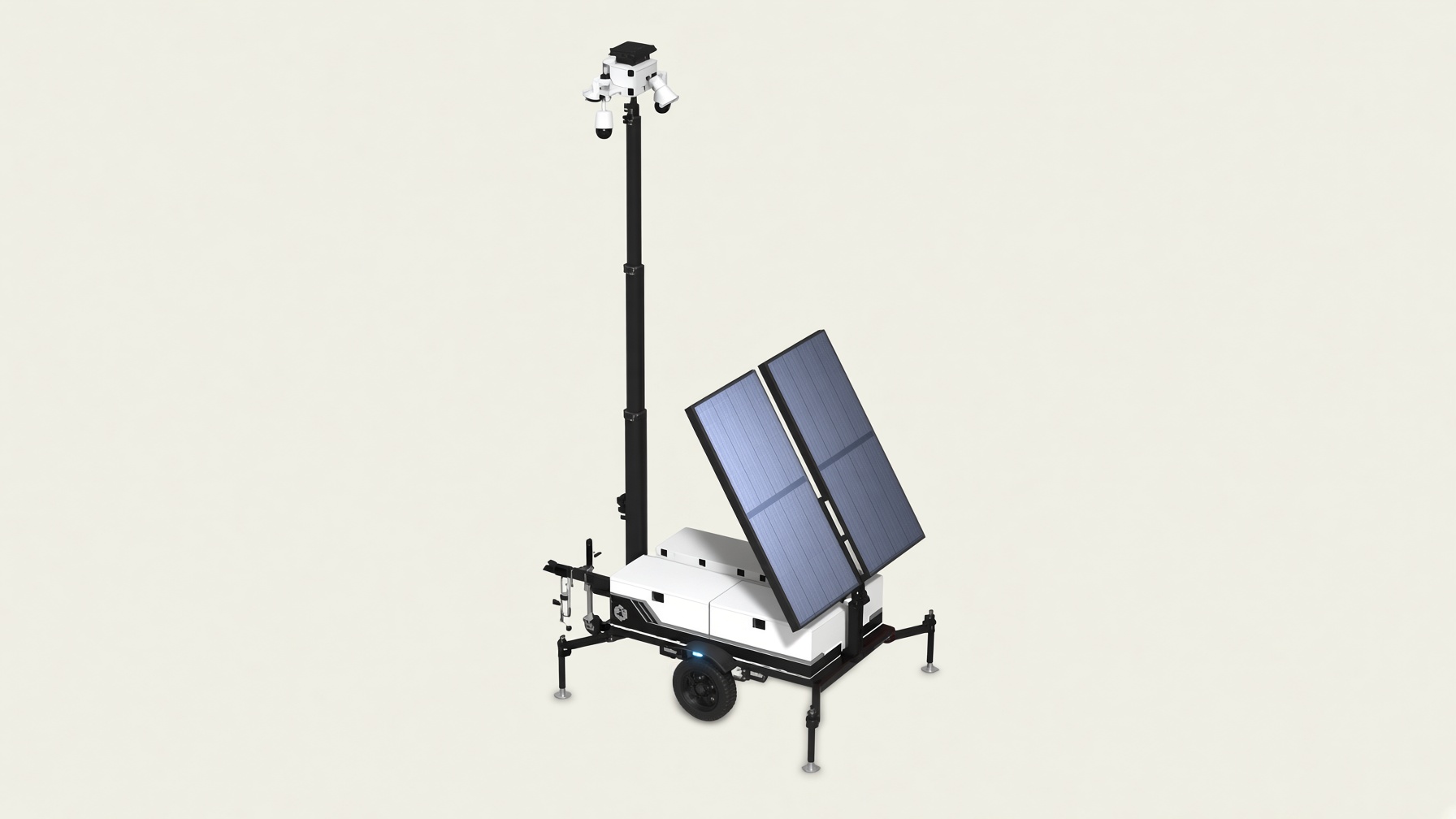
Flock just made it harder to catch the officers misusing its own surveillance network — right as documented abuse cases climb past 70 nationwide, and Louisiana debates banning the cameras outright.
Flock Safety, the private company whose license plate reading cameras now sit on roads in more than 6,000 communities nationwide, has spent months on the defensive over how easily its technology can be misused by the very officers entrusted with it. A new investigation from Gray Media's InvestigateTV shows the company's answer wasn't more transparency — it was less.
A critic, a camera, and 63 searches
Bob Sklar is a familiar face at town council meetings in North Manchester, Indiana, where he regularly challenges local police budgets and conduct. He came to suspect he was being watched more closely than the average driver, and Indiana’s public records law confirmed it: police had placed an alert on his vehicle, though the town refused to say who requested it or why, citing officer safety.
Using a third-party audit tool called HaveIBeenFlocked.com, plus records InvestigateTV independently obtained from other states, reporters found 63 searches logged against Sklar’s plate over about a year — run not just by local police, but through Flock’s national network, which can query up to roughly 98,000 connected devices in a single search. One officer, Sklar said, referenced knowing he’d recently been in Philadelphia — information he says could only have come from running his plate through the system.
More than 70 documented misuse cases
Sklar’s experience isn’t an outlier. InvestigateTV catalogued more than 70 cases nationwide of officers or agency employees investigated, disciplined, fired, or arrested for misusing the Flock system — including cases of stalking and harassment. In one, a Georgia police chief was arrested on a stalking charge involving an ex-partner and died by suicide while awaiting trial. Flock’s own chief communications officer, Josh Thomas, told InvestigateTV the company’s internal audit tools were behind several of the cases that came to light — evidence, he said, that the system’s safeguards work.
The rollback
That is what makes Flock’s recent change to its network audit logs so consequential. As of this summer, logs showing searches from partner agencies no longer display the searching officer’s name, the plate that was queried, or the open-text reason given for the search — the exact fields that let Sklar, and journalists, catch the pattern of surveillance against him in the first place.
Flock says the underlying data still exists and is preserved with the originating agency; it’s simply no longer visible to the network at large. The company says the change came after nearly 200 law enforcement leaders complained that activists were using the public logs to identify undercover officers by name alongside details of active investigations.
That is a legitimate concern on its own. But the fix Flock chose doesn’t narrowly protect undercover identities — it removes the exact data trail that has been the primary way outside audits have caught misuse at all. The tool that let the public catch surveillance abuse just lost the evidence it depended on, decided unilaterally by a private vendor, with no public agency, legislature, or court weighing in.
A private company holding public power
That points to a deeper structural problem: Flock Safety is not a government agency, so it isn’t directly bound by the public-records laws that would normally apply to a police department’s own record-keeping. When Sklar tried to find out who had tracked him, the town and the Wabash County Sheriff’s Office cited officer-safety and investigatory-records exemptions — exemptions that exist to protect government conduct, now shielding a private company’s product as well. And because Flock is private, it can change what its own audit logs disclose without the legislative or regulatory process a government agency would typically face.
Only four states — Washington, Oregon, Kentucky and Connecticut — have passed laws in the past year requiring some form of auditing for these systems. Louisiana is not one of them, and neither is Indiana, where Sklar lives.
Louisiana: expanding fast, regulated not at all
Louisiana has no statewide law governing how these cameras are used, retained, or shared — even as the technology has become deeply embedded in the state’s largest cities. In East Baton Rouge Parish, the Old Jefferson Crime Prevention District operates its own cameras and shares access with both the Baton Rouge Police Department and the East Baton Rouge Parish Sheriff’s Office, with Louisiana State Police access pending. Baton Rouge Police Chief TJ Morse has credited the cameras with helping solve murder cases, recovering a stolen truck with a child inside, and an average of more than $2.5 million in recovered stolen property annually.
That expansion is now colliding with a real legislative pushback. State Rep. Danny McCormick, R-Oil City, is drafting legislation that would ban the cameras statewide, arguing that warrantless, nationally shared license plate data amounts to a Fourth Amendment violation. McCormick has said he won’t argue the cameras don’t help solve crimes — his objection is that Louisianians shouldn’t have to trade constitutional protections for it. The bill isn’t yet filed; McCormick says he plans to introduce it when the Legislature convenes next spring.
Do the cameras actually lower crime?
Law enforcement agencies, including Baton Rouge’s, point to individual solved cases and recovered property as proof the cameras work. But solving a case after the fact and lowering the underlying crime rate are two different claims, and the independent evidence for the second is much thinner than the marketing suggests.
Flock’s own commissioned research, conducted with academics from Texas Christian University and the University of Texas at Tyler, found that agencies adding one camera per sworn officer saw a 9.1 percent increase in clearance rate — the rate at which crimes get solved, not the rate at which they occur. A separate, independent review of FBI data by the Atlanta Community Press Collective found that despite a heavy Flock buildout in Atlanta from 2021 to 2025, clearance rates for homicide, robbery, larceny and shoplifting actually declined over that period, and motor vehicle theft clearance — the crime type license plate readers are built to catch — improved by only three-tenths of a percentage point, with police still solving just one in ten auto theft cases in 2025.
The most credible independent academic study found, examining Atlantic City’s ALPR expansion from 2022 to 2024, reached a more cautious conclusion still: the technology was associated with reductions in shootings, motor vehicle thefts and property crime, but not violent crime overall — and the researchers said even those associations were hard to separate from the nationwide crime decline happening over the same period, with or without the cameras.
The most honest question a community can ask its own police department isn’t how many individual cases the cameras helped close — it’s whether the department’s overall clearance rate has moved, and by how much, compared to before the cameras went up. That’s the number the marketing rarely leads with.
Sources:
InvestigateTV / WDRB — wdrb.com/news/business/flock-alters-system-tracking-transparency-while-shadow-of-alleged-misuse-cases-expands
CNN — cnn.com/2026/07/26/us/flock-cameras-surveillance-abuse
NewsBreak / BRProud (East Baton Rouge Parish) — newsbreak.com/brproud-1590545/4788234742908-flock-safety-cameras-spark-privacy-debate-in-east-baton-rouge-parish
WBRZ (Baton Rouge PD) — wbrz.com/news/baton-rouge-police-credit-license-plate-cameras-with-helping-solve-crimes
Shreveport-Bossier Advocate (McCormick bill) — shreveportbossieradvocate.com/news/reel-this-back-in-caddo-legislator-wants-to-ban-flock-cameras-statewide
Police1 / TCU-UT Tyler study — police1.com/tech-pulse/study-validates-impact-of-flock-safetys-lpr-technology-on-crime-clearance-rates
Yahoo / Atlanta Community Press Collective (FBI clearance-rate data) — yahoo.com/news/us/articles/flock-surveillance-cameras-actually-horrible-190200216.html
Have a correction or tip? See our
corrections policy or contact the newsroom.