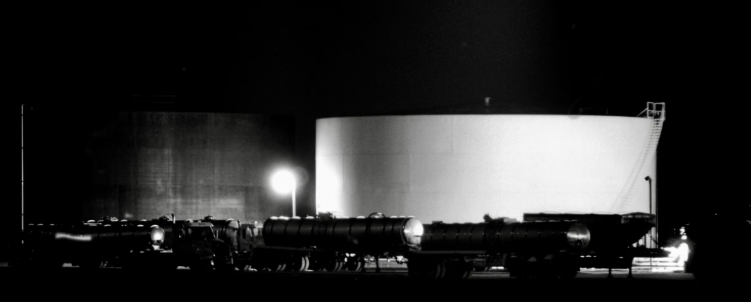
We do not have a crude problem. We have a factory problem.
The United States can pull oil out of the ground with anyone on Earth. What it cannot do, not at the scale a country this size should, is turn that oil into gasoline, diesel, and jet fuel here and leave the finished product sitting in American tanks. That missing middle is why a driver in Ohio can watch a war on a strait and a bid in Amsterdam show up on the same pump. The villain is not the citizen. It is the refinery we refused to build.
Look at the fleet. About 130 operable plants. Distillation capacity near 18 million barrels a day and falling after Houston and Los Angeles went dark. Utilization stuck in the mid- to high-90s. That is a system with no spare stills. When something breaks, a unit in Joliet, a plant on the West Coast, a mine in Hormuz, there is nowhere for the shortage to go except the price. The last large greenfield refinery that mattered on the Gulf came online in the 1970s. Since then we expand what already exists because permitting a new one is a career, not a project.
People will tell you the pattern is mysterious: export diesel, import some gasoline, ship light shale out, bring heavy foreign crude in. It is not mysterious. Gasoline and diesel leave the same barrel. Our plants make more diesel than this country burns, and without enough capacity and storage aimed at us, that diesel leaves. Gulf hardware was built for heavy imported crude. Shale is light. So we sell the oil we drill and buy the oil the old units want. That is not destiny. That is a factory built for a different decade.
The fix is not a ban on diesel ships. Trap the surplus distillate in the Gulf and the tanks fill, the runs get cut, and gasoline and jet fuel fall with them. That is how you raise the price you meant to cut. The fix is more stills, new Gulf plants designed for the light crude we actually produce, and a rule that American tanks fill first. Surplus can go to Rotterdam and take whatever the world will pay. Surplus should not leave while Houston is tight. We lay out how a first-fill rule would actually work, without tipping into an export ban, in our policy paper on domestic refining capacity.
That is the only version of “our own damn price” that is not a fairy tale. Easing permits does not let a politician pick a number. It builds enough capacity and inventory that this country stops being a price-taker for lack of factories. When our tanks are full, Amsterdam's bid is their problem. When our tanks are empty, it is ours.
Permitting is the brake. A refinery is not one stamp. It is air, water, waste, federal review when it applies, state rules, local fights, and years of lawsuit risk after the decision. Capital does not sit still for a six-year injunction climate. It adds a pipe at a plant that already exists, or it leaves. You can keep real emissions limits and still demand a clock: one lead agency, concurrent reviews, a short window to sue, remand instead of instant shutdown. Time and certainty, not a permission slip to poison a town. The policy paper behind this piece puts a number on that clock: a single 150-day deadline for judicial challenges, the same window already proposed in the SPEED Act and the Energy Permitting Reform Act, against a current default that can run six years.