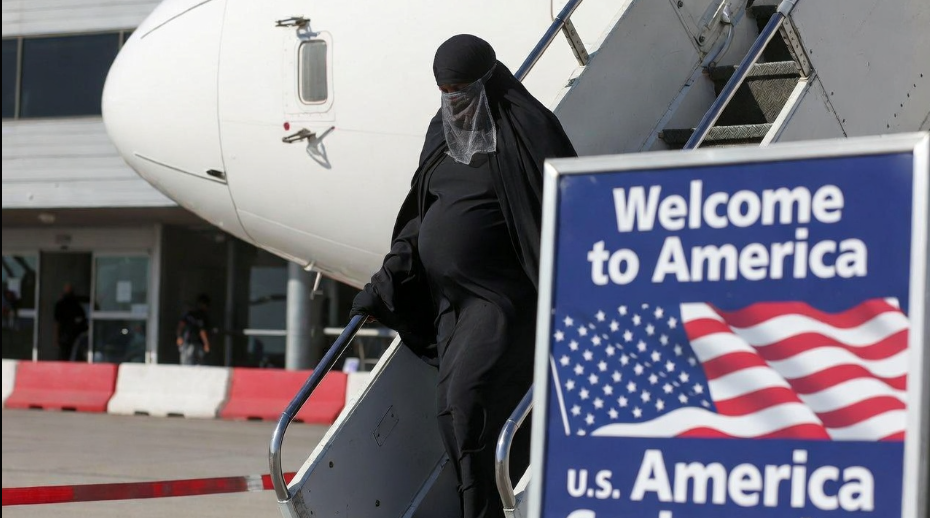
WASHINGTON — President Donald Trump signed two executive orders Thursday narrowing who qualifies for automatic U.S. citizenship at birth, weeks after the Supreme Court dealt his first attempt a decisive 6-3 defeat in Trump v. Barbara. The new orders are careful not to repeat that mistake. Neither one touches the legal question the Court already settled. Instead, they go after the edges — and in doing so, they leave the most important loophole standing untouched.
To understand why, start with the two words at the center of the whole fight: "jurisdiction thereof." The 14th Amendment grants citizenship to anyone born on U.S. soil "and subject to the jurisdiction thereof." In Barbara, the Court's majority defined that phrase as sovereign legal authority over a person while they are physically present in U.S. territory — not their immigration status, not their motive for being here, not their allegiance. A foreign diplomat's child is the one clear exception, because diplomatic immunity puts the parent outside U.S. law entirely. Everyone else — including a woman who crosses the border pregnant, and including a tourist who flies in on a visa specifically to give birth — is fully bound by U.S. law while she's here. That is exactly why both of their children walk out of the hospital as American citizens.
Trump's new orders don't quarrel with that ruling. One expands the diplomat-style exception to cover children of people connected to designated terrorist organizations or acting on behalf of hostile foreign governments. The other directs the State Department and Homeland Security to deny, revoke or bar entry for visa applicants believed to be traveling specifically to give birth here — so-called "birth tourism." Federal law already prohibits obtaining a visa for that purpose; this order mostly directs agencies to enforce it harder, not to rewrite it.
Here's the problem nobody in the West Wing briefing wants to say out loud: "subject to the jurisdiction" is a territorial condition, not a permanent one. It applies exactly as long as the person is standing on U.S. soil. The moment a birth tourist boards a flight home with her new American citizen, U.S. jurisdiction over that child goes with her — right up until the next time he sets foot back in the country.
What Does "Subject to the Jurisdiction" Actually Mean? A Plain-English Guide
That is not a hypothetical gap. It is a 14-year, fully legal on-ramp.
Picture a woman traveling from a country hostile to the United States — Iran, for the sake of argument — who gives birth on U.S. soil. Her child holds a U.S. passport before he can walk. She takes him home. He spends his entire childhood there, absorbing a worldview shaped by a government that considers America the enemy. There is nothing in U.S. law that reaches him during those years, because he isn't here and isn't subject to anything. Then, at 18, he uses the citizenship he never had to ask for to enroll at an American university. He has four years — the length of a degree — to look, sound and vote like he belongs. By 35, if he's logged the 14 years of U.S. residency the Constitution requires of a president, he is fully eligible to run for the highest office in the country whose passport was handed to him in a delivery room.